Hungary and Romania fought alongside Germany on the Eastern Front, and their helmets are found on the same battlefields, from the Don to Stalingrad. Both are often confused with German helmets or with each other’s models. This guide explains what each one is, what it is called, and how to recognise it.
Hungarian helmet: 35M, also called M38 or M37
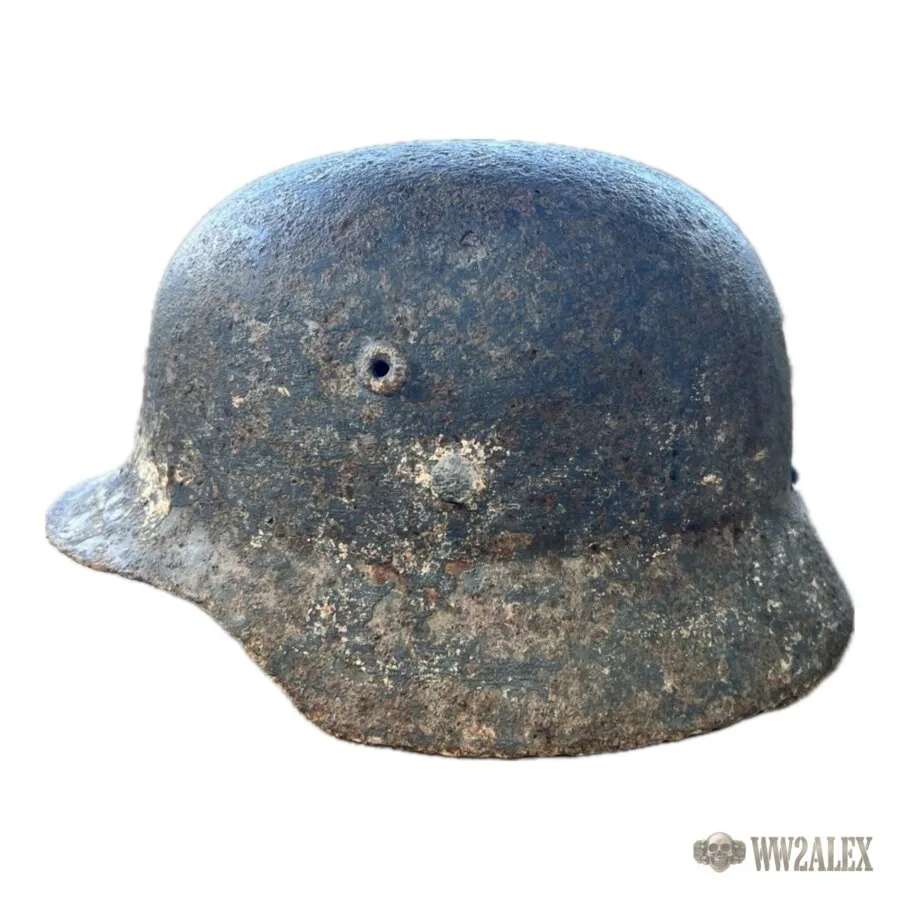
The standard Hungarian helmet of the Second World War was made in Hungary on the pattern of the German M35. Its name depends on who you ask:
- 35M (35 minta, “model 35”) is the Hungarian designation.
- M38 is the name most English-language references use. Helmets that Hungary supplied to Finland in 1939–40 are known there as the M38.
- M37 is the name commonly used by collectors in Russia, where most of these helmets are found today. Our listings use this name.
All three names describe the same helmet. How to tell it from a German M35:
- A small bracket on the back of the shell, above the rear brim, used to hang the helmet on the pack. German helmets do not have it.
- Liner rivets placed differently from those on German shells.
- Maker stamps: “MÁVAG” (Budapest) or “GY” (the Győr works). Some shells are stamped “GY” and “MÁVAG” together, made in Győr and finished in Budapest after the Győr plant was bombed in April 1944.
- Shell sizes 62, 64, 66 and 68.
- Liner and chinstrap of a Hungarian pattern; original wartime liners are rare, many surviving helmets have later Finnish replacements.
- No decals as a rule, unlike German helmets of the early war.
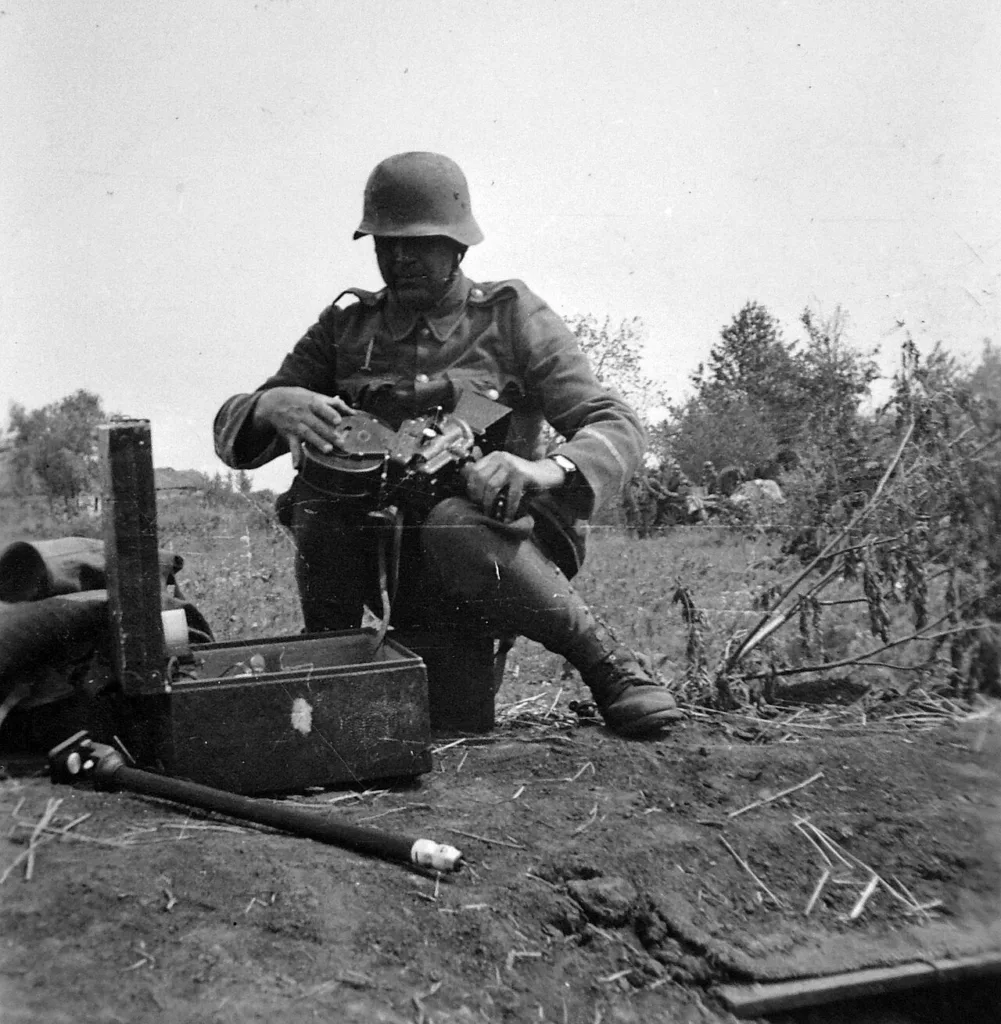
Hungarian Second Army units held the Don front south of Voronezh until the Soviet offensive of January 1943, which is why helmets from this region, including bunker finds near Ostrogozhsk, are often Hungarian.
The Hungarian Second Army on the Don
In the summer of 1942 the long front along the Don south of Voronezh was handed to Germany’s allies, and the Hungarian Second Army under Colonel General Gusztáv Jány took over a sector opposite the Soviet bridgeheads on the western bank. On 13 January 1943 the Soviet 40th Army broke out of the Storozhevoye bridgehead, and other Soviet forces struck from the south. The fighting took place in temperatures of −30 to −40 °C. Jány forbade any withdrawal, and most Hungarian units were encircled and destroyed. The helmets found today in the bunkers and positions along this stretch of the Don are a direct trace of that winter. Read more in our page on the Don front and the Ostrogozhsk–Rossosh offensive.
Romanian helmet: M39
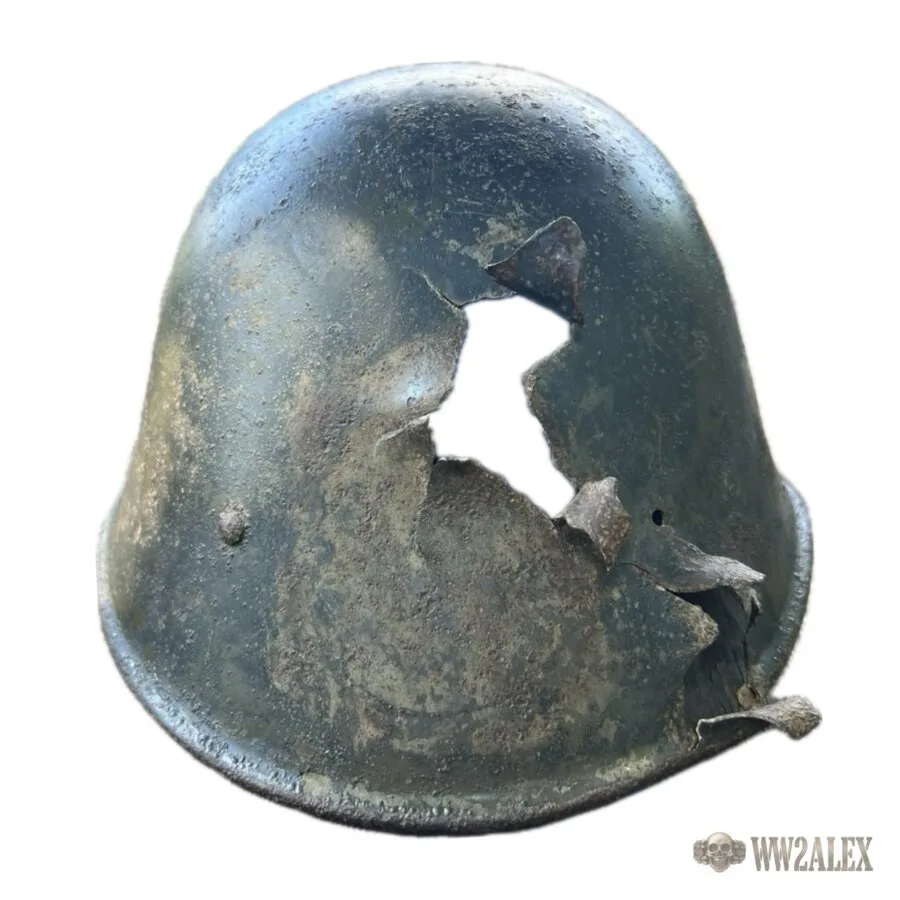
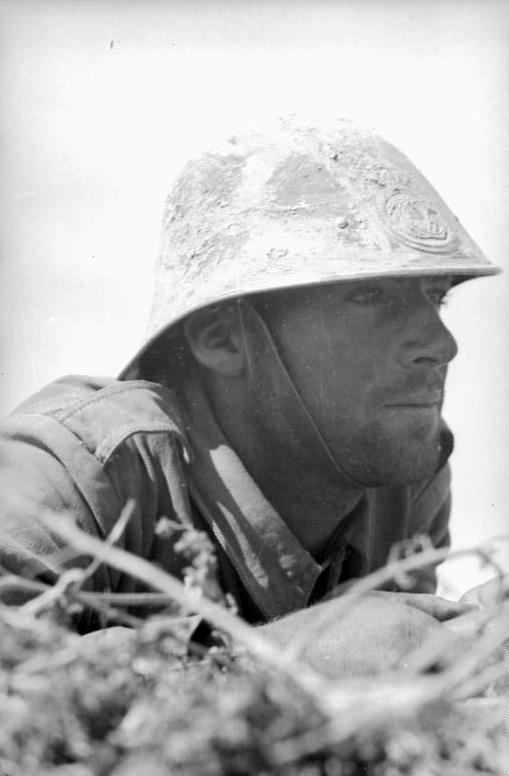
Romania’s main helmet of the war looks nothing like a German one. The M39 is a close copy of the Dutch M34 helmet: a rounded shell with a narrow brim all the way round. It was ordered from the Dutch company Verblifa in 1938 and delivered from 1939 onwards.
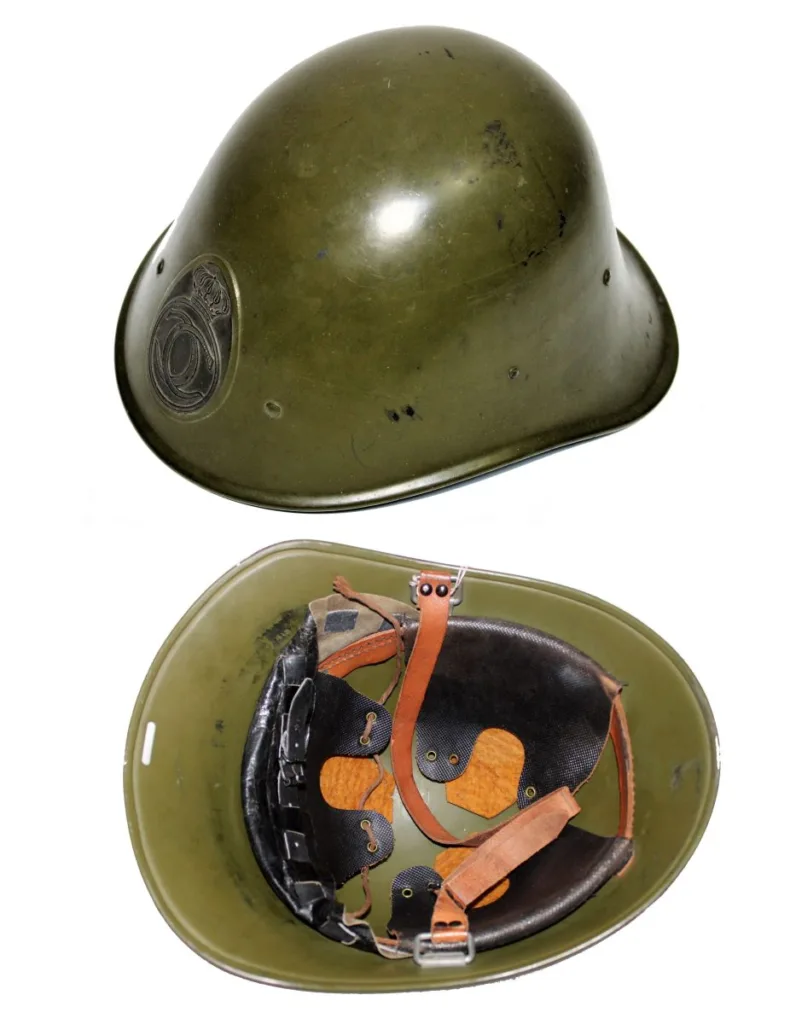
- Front badge: early helmets carried an oval badge with the crowned double “C” monogram of King Carol II. It was meant to be removed after his abdication in September 1940, but many helmets kept it.
- Liner: leather tongues on a band, in the Dutch style; a later version, the M39/42, used a German-type liner and no front badge.
- Markings: a “CRR” stamp of the Romanian acceptance commission may be found inside.
- Paint: green or khaki.
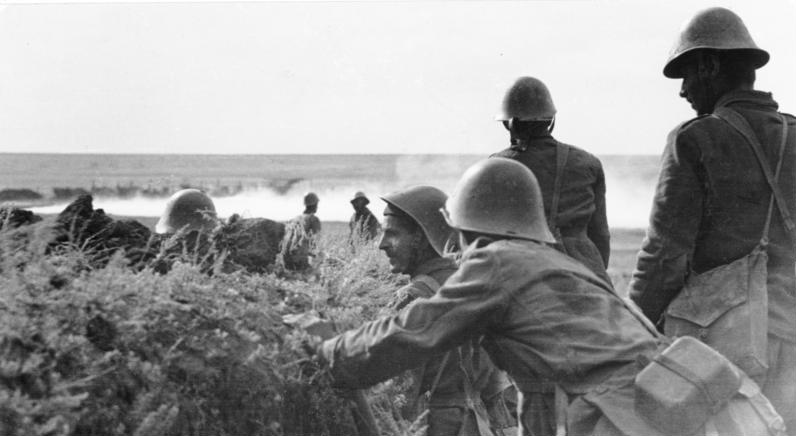
Romania also used older French Adrian helmets during the war, and some German helmets. The Romanian Third and Fourth Armies held the flanks at Stalingrad, so Romanian helmets are regularly found in that region.
Romanian armies at Stalingrad
Romania sent two whole armies to the southern sector of the Eastern Front in 1942. During the Battle of Stalingrad the Romanian 3rd Army held the line on the Don north-west of the city and the Romanian 4th Army the steppe to the south, guarding the flanks of the German 6th Army. On 19 November 1942 the Soviet counter-offensive, Operation Uranus, broke through the Romanian 3rd Army, and the next day the Romanian 4th Army; on 23 November the two Soviet pincers met near Kalach and the 6th Army was surrounded. This is why Romanian M39 helmets are found on the battlefields around Stalingrad and on the Don. See the Battle of Stalingrad.
What collectors watch for
- Hungarian helmets offered as German M35s: check for the rear bracket or the holes where it was, the maker stamp and the rivet positions.
- Dutch M34 shells dressed up with a Carol II badge and sold as Romanian: look for tampering around the badge.
- Repaints and replaced liners are common on both; an original wartime Hungarian liner is a plus.
See our Hungarian helmets and Romanian helmets. Every listing states where the helmet was found and what is original; the terms are explained on How we describe items.