
Witold Pilecki (1901–1948) was a Polish cavalry officer and one of the founders of the Polish underground who, in September 1940, let himself be taken by the Germans in a Warsaw round-up so that he could get into Auschwitz. For two and a half years he built a secret resistance organisation inside the camp and smuggled out reports that became the Western Allies’ main source of intelligence on Auschwitz. He escaped in 1943, fought in the Warsaw Uprising, and was executed by Poland’s communist authorities in 1948.
Scout and soldier
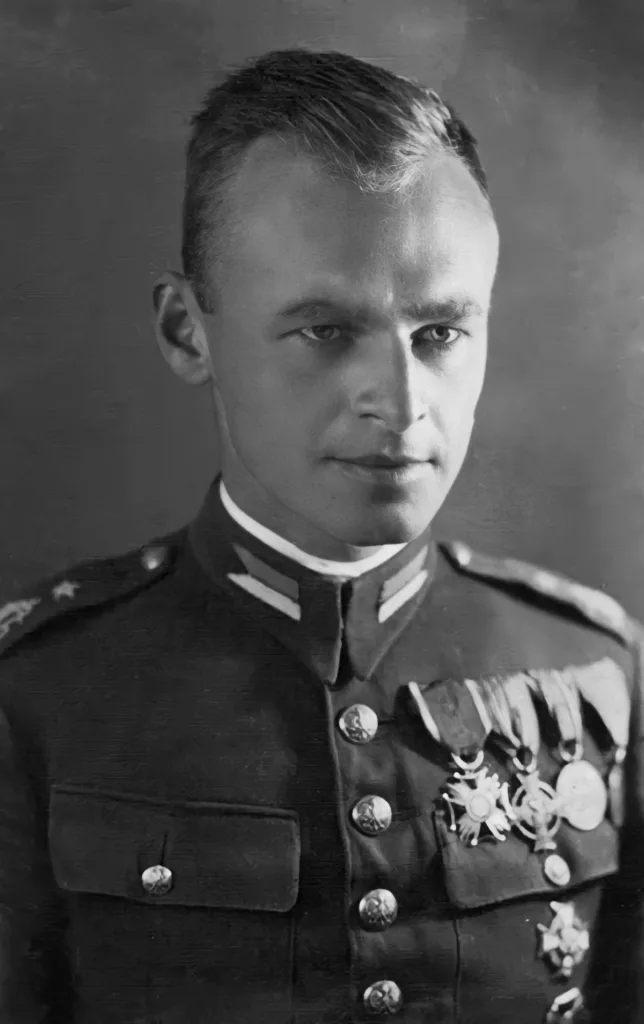
Pilecki was born on 13 May 1901 in Olonets in Karelia, in the Russian Empire, into a Polish noble family whose estates had been confiscated after the uprising of 1863. In 1910 his mother took the children to Vilnius to attend Polish schools, and there he joined the then-underground Polish scouting movement; when the First World War took him to Oryol in Russia, he founded a scout troop there too.
In 1918 he returned to Vilnius and joined the self-defence militia that disarmed retreating German troops and prepared to defend the city against the Red Army. When Vilnius fell in January 1919 his unit fought on as partisans, and he then enlisted as a private in the new Polish Army. In the Polish–Soviet War he took part in the Kiev offensive, the defence of Grodno and, with the 211th Uhlan Regiment, the decisive Battle of Warsaw in August 1920.
Between the wars
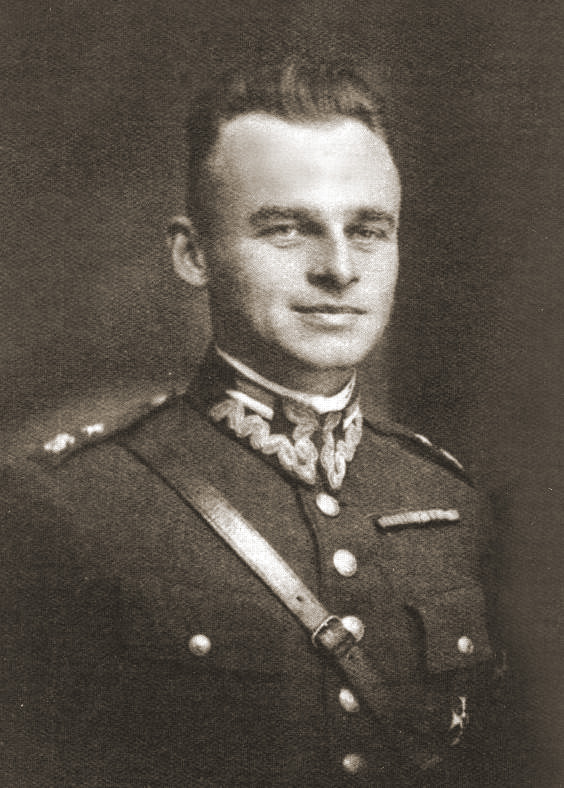
After the war Pilecki trained as a reserve cavalry officer, briefly studied fine art at Stefan Batory University in Vilnius, and was commissioned as a second lieutenant in the 26th Lancer Regiment. In 1926 he took over the family estate of Sukurcze near Lida, where he farmed, helped the local farming community, painted and wrote poetry. In 1931 he married Maria Ostrowska; they had two children, Andrzej and Zofia. He organised a cavalry training squadron for local volunteers, and in 1938 received the Silver Cross of Merit.
September 1939 and the Secret Polish Army
Mobilised on 26 August 1939 as a cavalry platoon commander in the 19th Infantry Division, Pilecki fought against the German invasion from the first days of the war. After his division was shattered at Piotrków Trybunalski, he served as second-in-command of the cavalry of the 41st Infantry Division; his men destroyed seven German tanks and three aircraft. When the division capitulated on 22 September, he chose not to leave Poland but to fight on underground.
On 9 November 1939 in Warsaw he was one of the founders of the Secret Polish Army (TAP), one of the first resistance organisations in occupied Poland, and became its organisational head as it spread across central Poland. He worked under cover as the manager of a cosmetics warehouse. TAP later joined the main underground army, which became the Home Army.
Prisoner 4859
In the summer of 1940 almost nothing was known about the new German camp at Auschwitz, and in August the underground proposed that Pilecki get himself sent there. He agreed. On 19 September 1940, carrying the papers of Tomasz Serafiński, he was among some 2,000 men seized by the Germans in Warsaw. On 21–22 September he arrived in Auschwitz with 1,705 other prisoners and became prisoner number 4859.
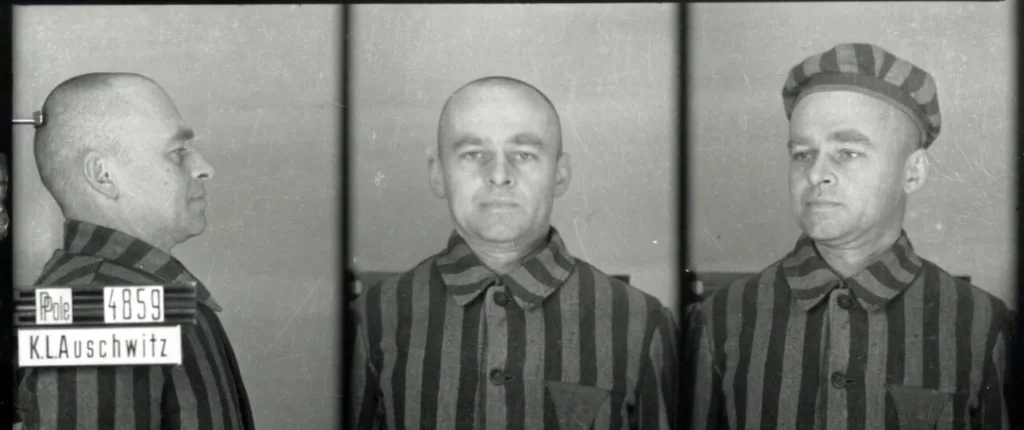
Working in slave-labour details and surviving pneumonia, Pilecki built up the Union of Military Organisations (ZOW), organised in secret cells of five. It raised prisoners’ morale, passed on news from outside, shared out extra food and clothing, gathered intelligence and trained groups to take over the camp if it were ever attacked from outside. Over time most of the smaller resistance groups in the camp joined it.
His first report reached the Home Army in October 1940, carried out by a released prisoner; it described the camp and the killing of prisoners by starvation and brutal punishment. Further reports followed with escapees. In 1942 his organisation even built a radio transmitter from smuggled parts over seven months and used it to broadcast the numbers of arrivals and deaths, until it was dismantled in the autumn for fear of discovery. Pilecki’s information was the principal source of intelligence on Auschwitz for the Western Allies.
Escape, April 1943
As the camp Gestapo hunted down ZOW members, Pilecki decided to break out and persuade the Home Army to attack the camp. On the night of 26–27 April 1943, on a night shift in a camp bakery outside the fence, he and two comrades forced open a metal door, overpowered a guard, cut the telephone and alarm wires and escaped, taking German documents with them. They made their way on foot to Alwernia and Tyniec, where a priest and local people helped them, and finally to a Home Army safe house near Bochnia – which turned out to belong to Tomasz Serafiński himself, the man whose name Pilecki had used in Auschwitz. On the way a German patrol fired at him and he was wounded, though not seriously.
Back with the Home Army, Pilecki wrote a first account of the camp in June 1943 and, in Warsaw, his full “Witold’s Report” on the Auschwitz underground. The Home Army command concluded that it did not have the forces to free and shelter the prisoners. Pilecki joined the Kedyw sabotage directorate under the name Roman Jezierski and was promoted to cavalry captain (rotmistrz) in February 1944. He also passed resistance money to Barbara Newerly, who used it to help Jewish families hiding in Warsaw.
The Warsaw Uprising
When the Warsaw Uprising began on 1 August 1944, Pilecki joined the Warszawianka company of the Chrobry II battalion as a private soldier, without revealing his rank. After many officers had been killed in the first days, he made himself known and took command of the 1st Warszawianka Company in the city centre. When the uprising was crushed in October, he was taken prisoner and held in the officers’ camp Oflag VII-A at Murnau in Bavaria until it was liberated on 29 April 1945.
The last mission
In July 1945 Pilecki joined the intelligence section of General Władysław Anders’s Polish II Corps in Italy, and in the autumn he was sent back to Poland to report on the situation under the new Soviet-backed regime. Living under false names and changing jobs often, he built an intelligence network from former comrades of TAP and ZOW. He was arrested by the communist security service on 8 May 1947 and tortured, but gave nothing away that could endanger others. After a show trial he was sentenced to death, and pleas for clemency from Auschwitz survivors were rejected. On 25 May 1948 he was shot in Mokotów Prison in Warsaw. His grave has never been found.
Memory
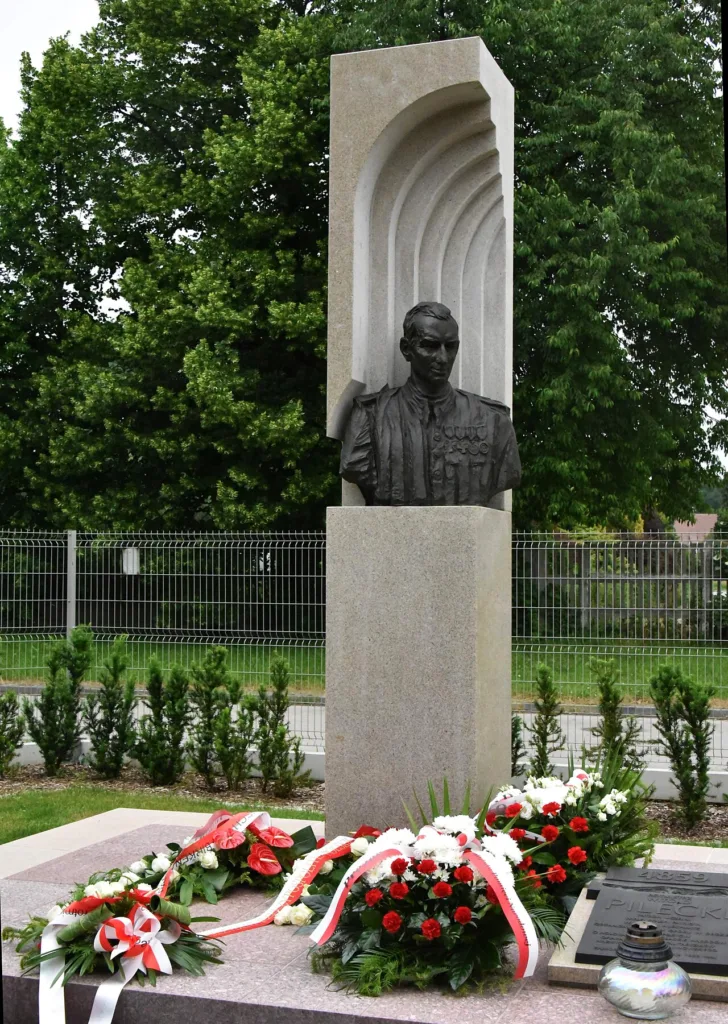
After the fall of communism Pilecki was rehabilitated. In 1995 he was awarded the Order of Polonia Restituta, in 2006 Poland’s highest decoration, the Order of the White Eagle, and in 2013 he was posthumously promoted to colonel. His Auschwitz report was published in English in 2012 as The Auschwitz Volunteer: Beyond Bravery. Schools, streets and monuments across Poland bear his name, and the Pilecki Institute in Warsaw, founded in 2017, is named after him.
More: Desmond Doss · Audie Murphy · the end of the war in Europe · all heroes of the war
Sources and further reading
- Witold Pilecki – Wikipedia
- Witold Pilecki – Wikipedia (Polish)
- Witold Pilecki, The Auschwitz Volunteer: Beyond Bravery (English edition 2012).