The Red Army went through three steel helmets in a few years: the SSh-36, the SSh-39 and the SSh-40. “SSh” stands for stalnoi shlem, steel helmet, and the number is the model year. The three are easy to tell apart once you know where to look: the shape of the shell and the rivets that hold the liner.
The three models at a glance
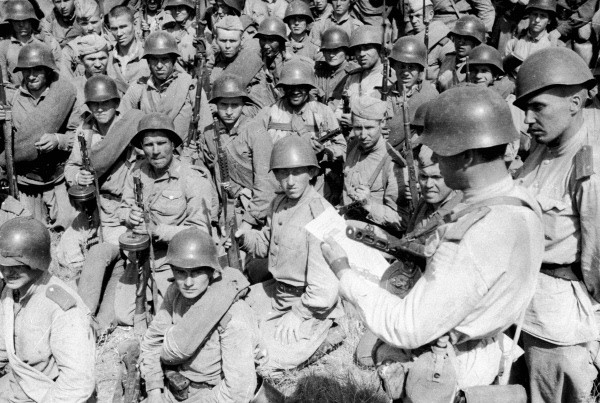
Two quick checks: an SSh-36 has a comb on top and a wide, flared brim; the smooth SSh-39 and SSh-40 are told apart by the rivets that hold the liner – three set high on the SSh-39, six set low on the SSh-40. The post-war Czechoslovak vz.53 looks like an SSh-39 from the outside, so check the liner and chinstrap. Details are in the table below.
| Model | Introduced | How to recognise it | Liner |
|---|---|---|---|
| SSh-36 | Adopted at the end of 1935, issued from 1936 | Comb on top, wide brim at the front, flared sides over the ears | Leather at first, later cloth |
| SSh-39 | 1939 | Smooth rounded shell, three rivets set high on the shell | Leather “finger” liner, later other materials |
| SSh-40 | Mass production from mid-1941 | Same shape as the SSh-39, six rivets set low around the shell | Three cloth pads on a drawstring |
SSh-36: the helmet with the comb
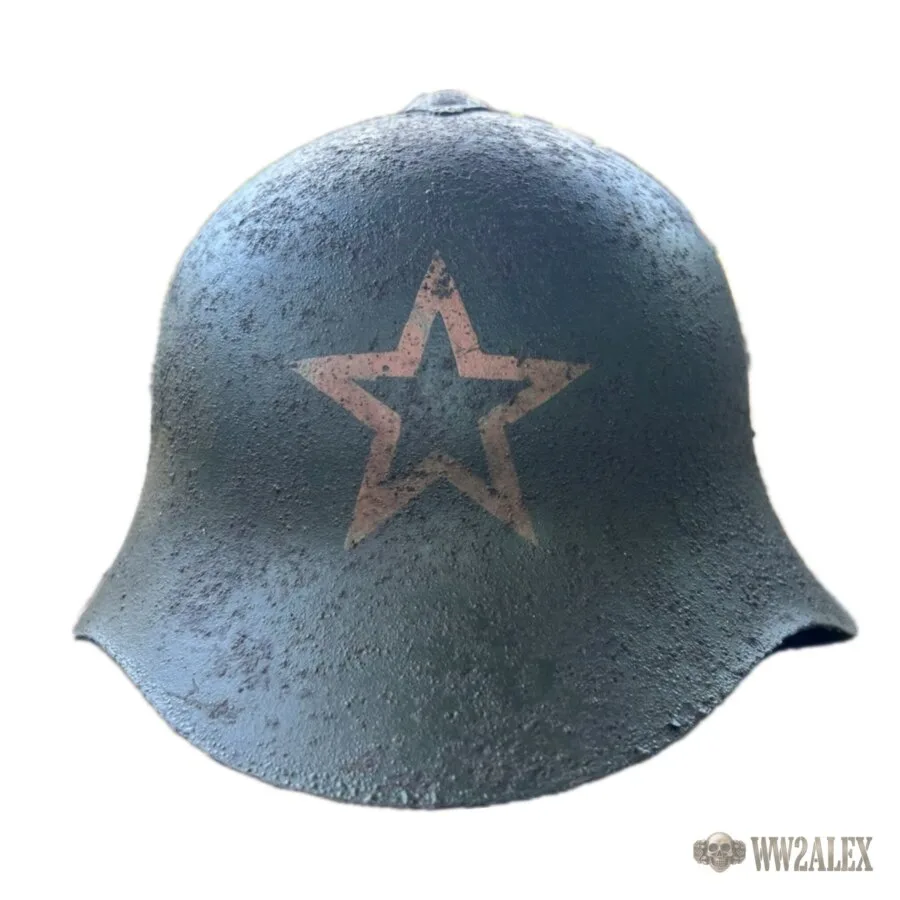
The SSh-36 is the easiest Soviet helmet to recognise: a raised comb runs along the top of the shell, the front brim is wide and the sides flare out over the ears. The comb covered a ventilation opening at the top of the helmet. Early helmets had leather liners and chinstraps, later replaced by cloth because the leather did not last. Factory stamps inside give the year, the size and the batch.
The SSh-36 was more complex to make than the models that followed and was soon replaced, but it was still in use when Germany invaded in 1941, so it turns up on battlefields of the first war years. Helmets of this pattern were also sent to Spain during the Civil War; those usually lack the Soviet factory stamps.
SSh-39: three rivets
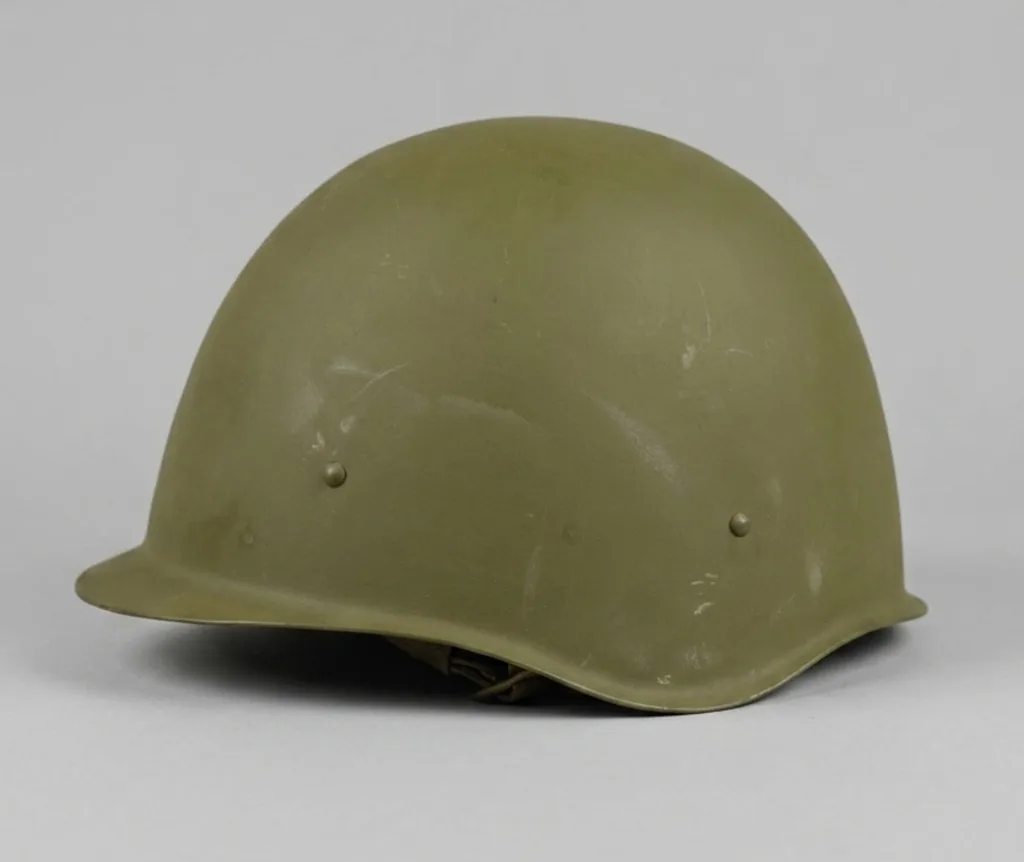
The SSh-39 introduced the smooth, rounded shape that the Soviet Army would keep for decades. It was much simpler to make than the SSh-36. The quickest identification point is the three rivets set high on the shell, which hold metal tabs for the liner. The first liners were made of leather with fingers and a drawstring, similar in idea to the German liner; later versions used substitute materials and cloth.
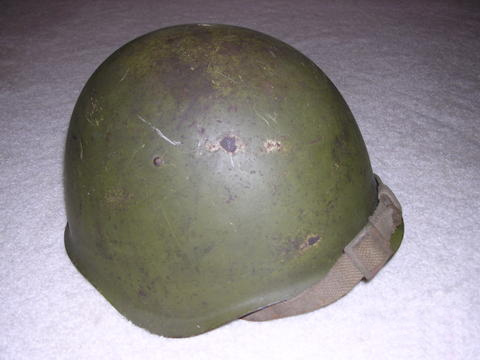
Be aware that the Czechoslovak post-war vz.53 helmet looks almost identical from the outside and is sometimes sold as an SSh-39. Its liner and chinstrap are different.
SSh-40: six rivets
The SSh-40 has the same shell shape as the SSh-39 but a different liner system, fixed with six rivets set lower around the shell. The liner is made of three padded cloth sections joined by a drawstring. Early chinstraps were khaki webbing with metal tips; from late 1942 plain undyed cotton straps without metal tips were common. Mass production began in 1941, and the helmet stayed in Soviet service long after the war, so many surviving SSh-40s are post-war or were refurbished with new liners, straps and paint.
Stamps, sizes and factories
- Size: marked with a number, often after “РОСТ” (size) or the letter “Р”. The SSh-40 came in sizes 1 to 3, with sizes 1 and 2 by far the most common.
- Factory: most wartime helmets came from the Lysva metal works in the Urals, marked “ЛМЗ” and later just “Л”, usually with a two-digit year. The Krasny Oktyabr (Red October) works in Stalingrad also made helmets until production there stopped in late 1942; its stamps use a four-digit year.
- Year: stamped or printed inside the shell. On helmets from the ground the stamps are often faint or rusted away.
- Post-war signs: a later Lysva factory logo used from 1948, four-pad liners and smooth or pebbled liner material point to a post-war helmet or a post-war refurbishment.
What collectors watch for
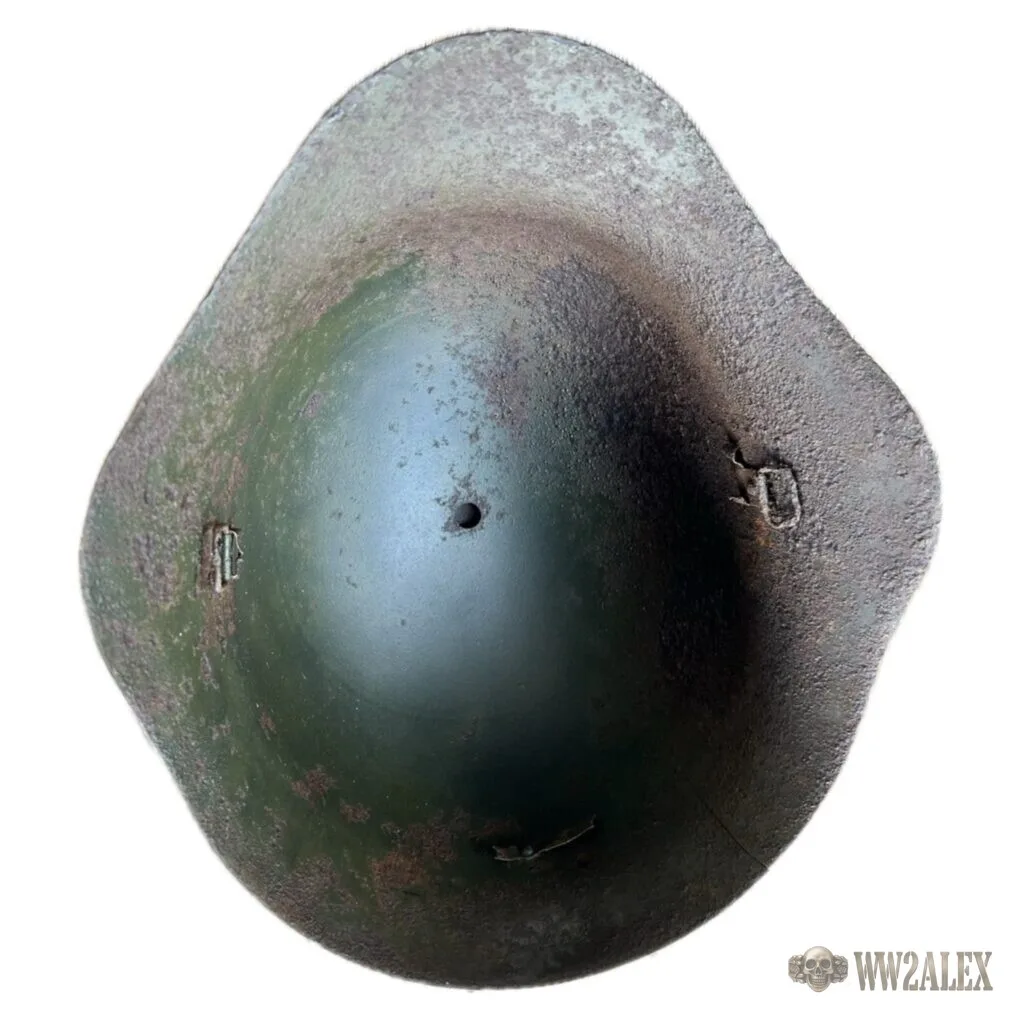
- Untouched early-war SSh-40s are scarce; altered dates and removed post-war stamps are the usual tricks.
- Good reproductions of the SSh-36 exist, and the model is often misidentified.
- Paint: wartime helmets were finished in green tones; a fresh, even coat on a “battlefield” helmet is a warning sign.
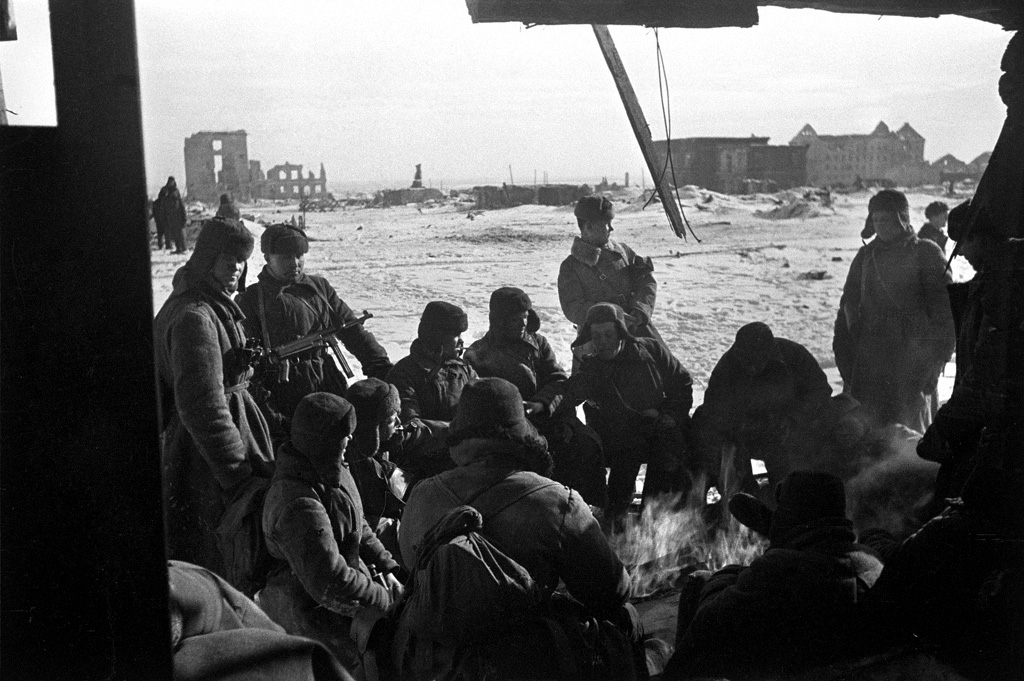
See our original Soviet helmets. Every listing states where the helmet was found and what condition it is in; the terms are explained on How we describe items.