
The Battle of Kursk was fought from 5 July to 23 August 1943 around a large bulge in the front line centred on the city of Kursk. It began with the last major German offensive in the East, Operation Citadel, and turned into a series of Soviet counteroffensives that freed Orel, Belgorod and Kharkov. After Kursk the strategic initiative on the Eastern Front stayed with the Red Army until the end of the war.
The Kursk salient
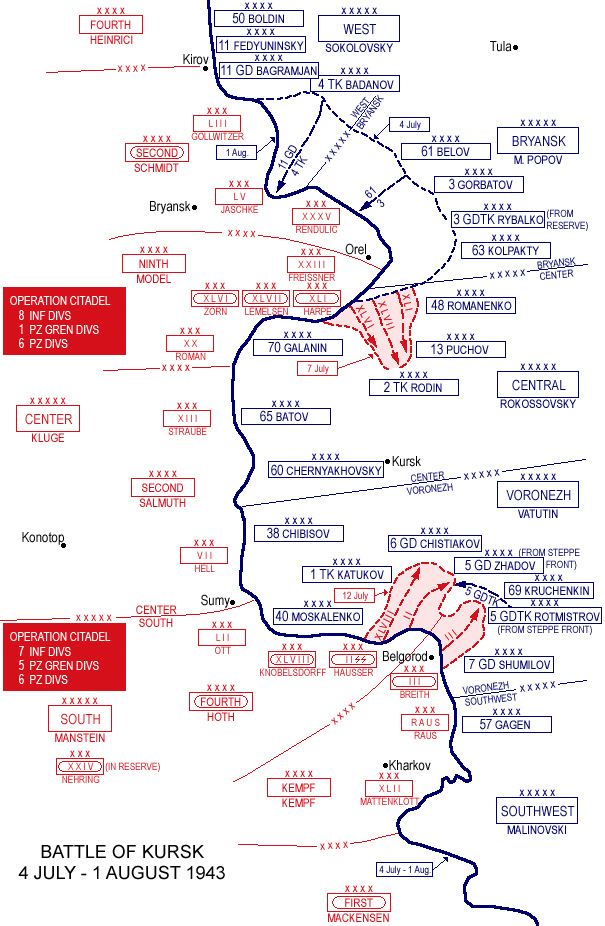
After the winter battles of 1942–43 the front left a salient around Kursk, about 250 kilometres from north to south and 160 kilometres deep, pushing west into the German lines. The German plan was to cut it off with two attacks at its base: from the north by General Walter Model’s 9th Army (Army Group Centre, Field Marshal Günther von Kluge), and from the south by General Hermann Hoth’s 4th Panzer Army and Army Detachment Kempf (Army Group South, Field Marshal Erich von Manstein). The start was postponed several times while new tanks, including the Panther and the Tiger, reached the front.
A defence prepared in depth
Soviet intelligence learned of the German plan, and the Soviet command decided to absorb the attack first and counterattack afterwards. The Central Front under General Konstantin Rokossovsky held the northern face, the Voronezh Front under General Nikolai Vatutin the southern face, and the Steppe Front under General Ivan Konev waited in reserve. The troops and civilian workers dug thousands of kilometres of trenches and laid dense minefields and anti-tank strongpoints in several belts, up to about 300 kilometres deep in total.
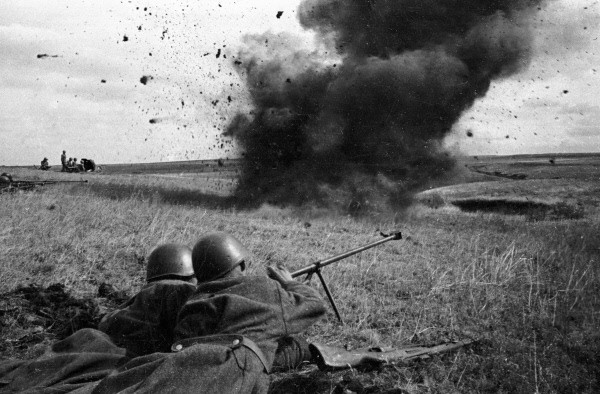
The scale of the preparations was enormous. More than 300,000 civilians helped the troops dig trenches and anti-tank ditches. Red Army combat engineers laid some 504,000 anti-tank and 439,000 anti-personnel mines, reaching densities of about 2,200 anti-tank and 2,500 anti-personnel mines per kilometre of front in the main belts – six times as dense as in the defence of Moscow. Each anti-tank strongpoint typically had four to six anti-tank guns, six to nine anti-tank rifles and several machine guns. Behind the German lines, partisans attacked the railways: in June 1943 alone those operating behind Army Group Centre destroyed 298 locomotives, 1,222 railway wagons and 44 bridges.
Warned that the attack was about to begin, the Soviet command opened a pre-emptive artillery bombardment on the German assembly areas at about 2 a.m. on 5 July, a few hours before the German offensive started.
Operation Citadel, 5–16 July
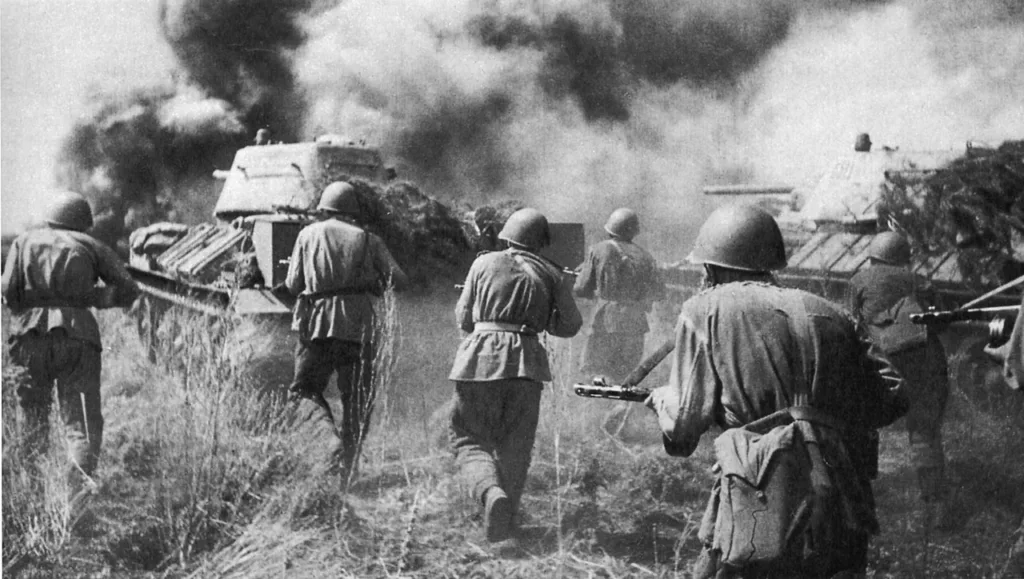
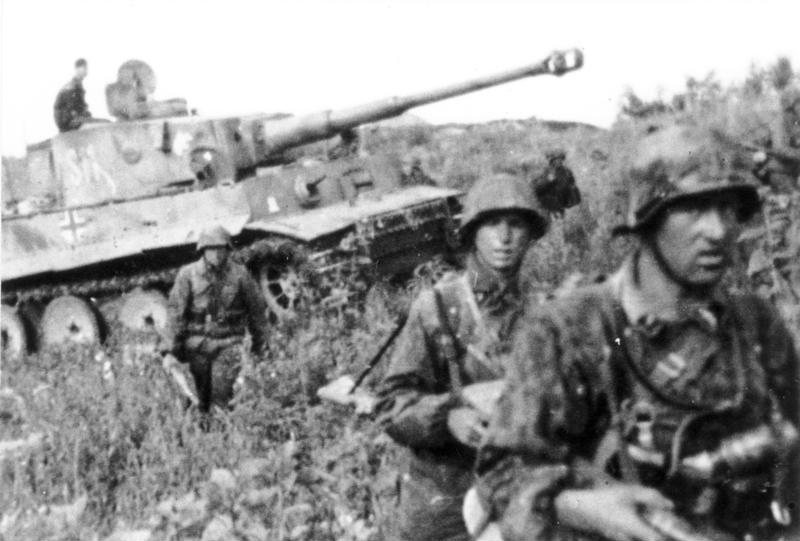
The offensive began on 5 July 1943. In the north, Model’s 9th Army advanced only a few kilometres into the defences around Ponyri and Olkhovatka before it was stopped. In the south, the German panzer forces pushed deeper towards Oboyan and Prokhorovka. On 12 July the Soviet 5th Guards Tank Army counterattacked the II SS Panzer Corps near Prokhorovka, in one of the largest tank battles of the war. The Soviet tank army suffered heavy losses, but the German advance did not break through.
On 10 July the Western Allies had landed in Sicily, and on 13 July Hitler ordered Citadel to be halted, partly to free forces for Italy. Fighting in the south went on for several more days before the Germans withdrew to their starting lines.
The battle in the air
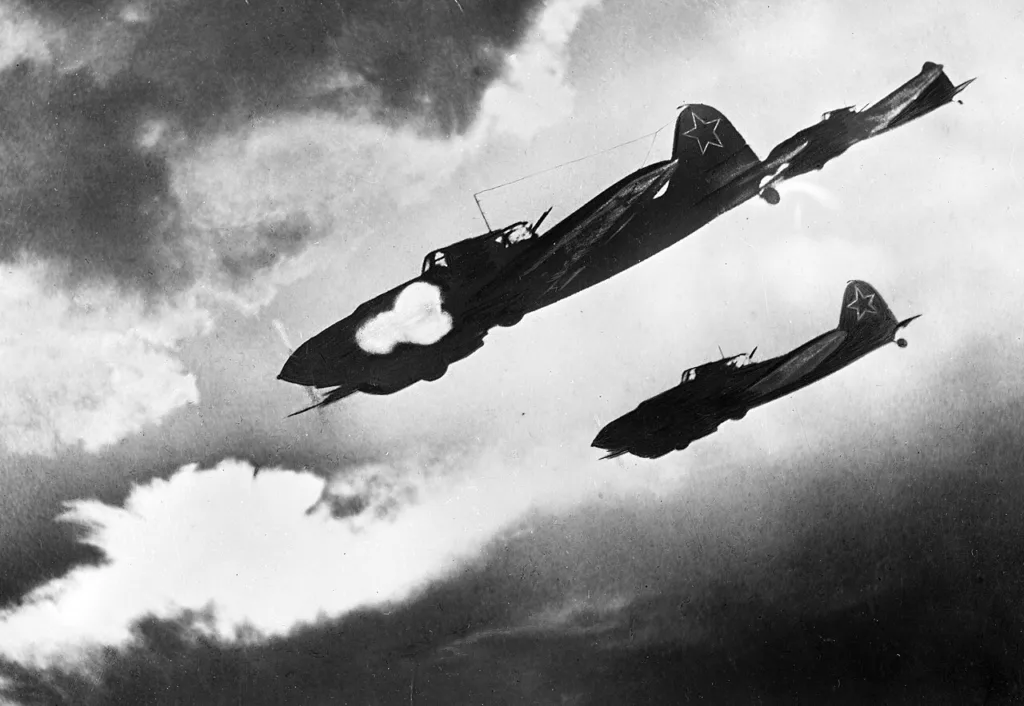
Over the salient the Soviet and German air forces fought some of the biggest air battles of the war, with hundreds of aircraft in the sky at once. Soviet Il-2 ground-attack aircraft struck German tank columns with bombs and rockets. On 6 July 1943, the second day of the battle, Guards Senior Lieutenant Alexander Gorovets of the 88th Guards Fighter Aviation Regiment attacked a large formation of German dive bombers alone and was credited with nine of them in a single sortie – a record for the Soviet Air Forces – before he was killed; he was posthumously made a Hero of the Soviet Union. On the same day Ivan Kozhedub, the future top-scoring Allied ace, shot down his first enemy aircraft, and over the Kursk salient Alexei Maresyev, flying again after losing both legs, shot down three Focke-Wulf fighters in one battle.
The counteroffensives: Orel and Belgorod
On 12 July the Western and Bryansk Fronts launched Operation Kutuzov against the German-held Orel salient north of Kursk. On 3 August the Voronezh and Steppe Fronts began Operation Polkovodets Rumyantsev in the south. Orel and Belgorod were liberated on 5 August 1943, and that evening Moscow fired its first artillery salute of the war to mark a victory. Kharkov was taken on 23 August, the date usually given as the end of the battle.
Scale and losses
Kursk is often described as the largest battle in history by the number of tanks and aircraft involved. At the start of Citadel the Germans committed roughly 780,000 men and about 2,450 tanks and assault guns; the Soviet fronts in the salient had about 1.9 million men and nearly 5,000 tanks, not counting reserves. German casualties in Citadel itself are put at about 54,000 men; for the whole battle, including the counteroffensives, German losses are put at between about 165,000 and 200,000 men or more. Soviet losses were far higher: about 178,000 in the defensive phase and some 863,000 killed, missing, wounded and sick for the whole battle, according to Soviet statistics. Both sides lost thousands of tanks and aircraft.
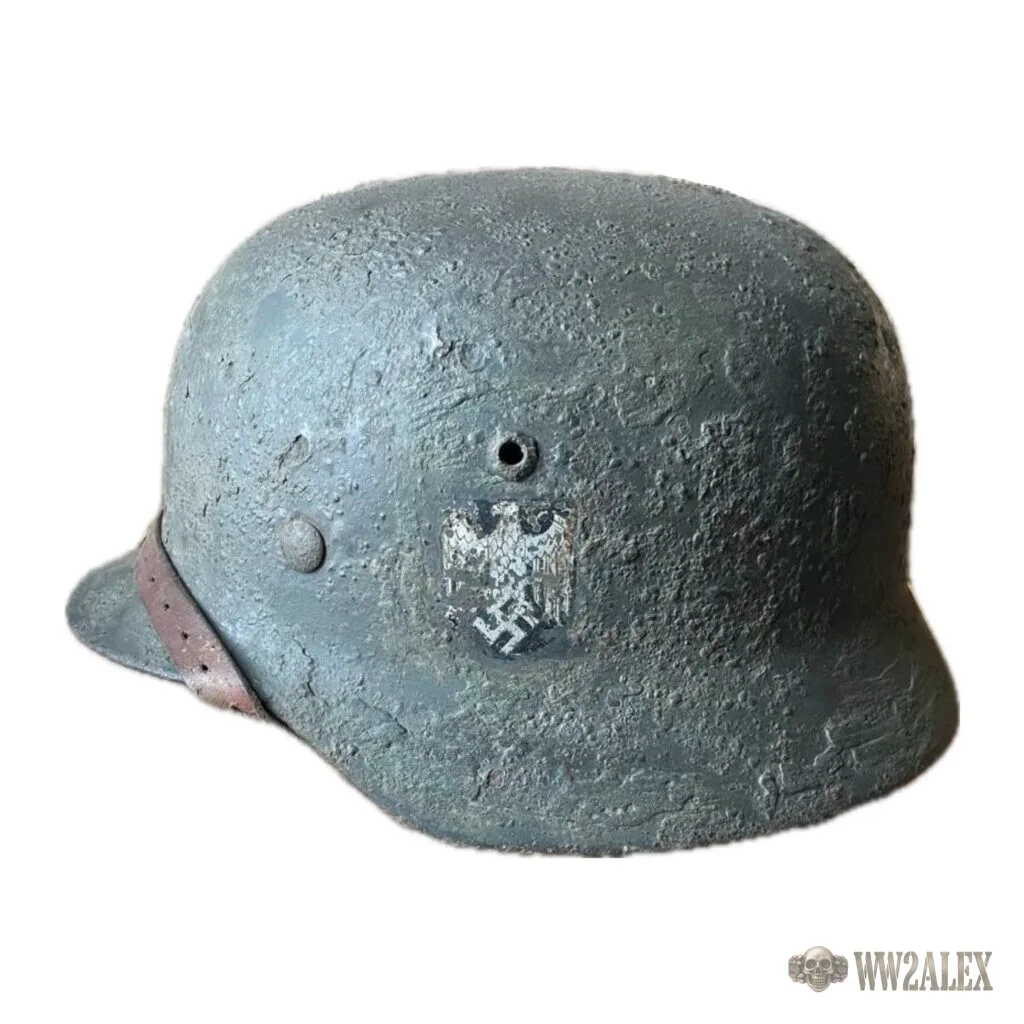
See our German and Soviet helmets, and the collector guides.
Sources and further reading
- Battle of Kursk – Wikipedia
- Battle of Prokhorovka – Wikipedia
- David M. Glantz and Jonathan M. House, The Battle of Kursk (1999).
- G. F. Krivosheev (ed.), Soviet Casualties and Combat Losses in the Twentieth Century (1997).
Written by WW2ALEX from the sources listed above.