
A German infantryman of the Second World War carried almost everything he needed on his belt and back: ammunition, food, water, a spade, a gas mask and a shelter quarter that doubled as a rain cape. This guide describes each item of the standard field equipment of the Heer (army) rifleman, what it was called, how it was worn and what collectors look for. Helmets have their own guide: German WW2 helmets M35, M40, M42.
How the equipment was worn
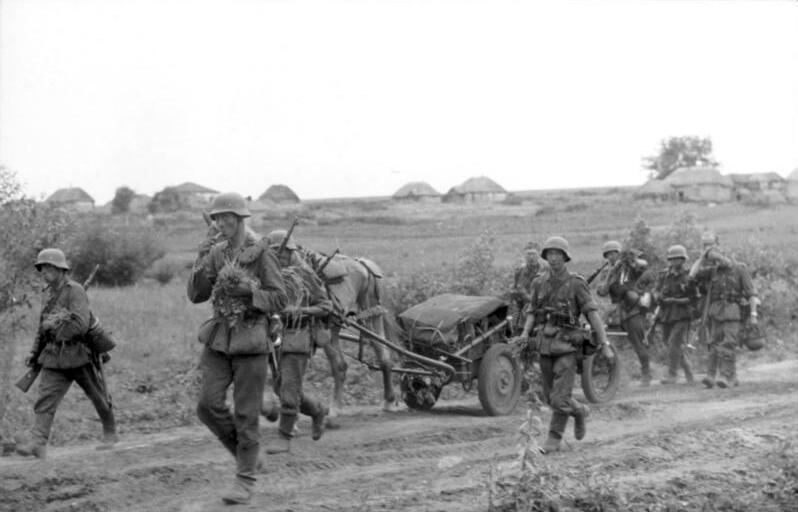
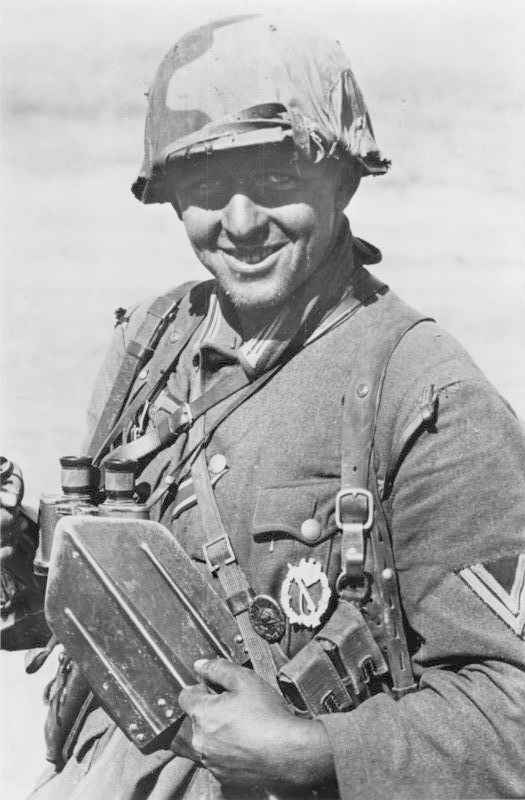
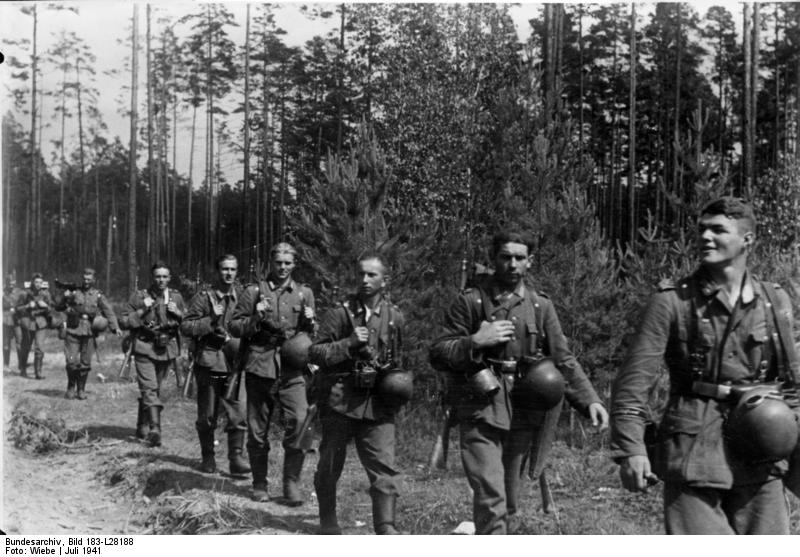
Everything was built around the leather belt. Two ammunition pouches sat at the front, the spade and bayonet on the left hip, the bread bag with the canteen on the right hip towards the back. Y-straps carried the weight of the belt on the shoulders, and from 1939 they also held the combat pack frame on the back, with the mess tin and the rolled shelter quarter. The gas mask canister hung on its own strap. The diagram shows the usual arrangement of a rifleman; details varied with unit, period and personal preference.
Belt and buckle (Koppel and Koppelschloss)
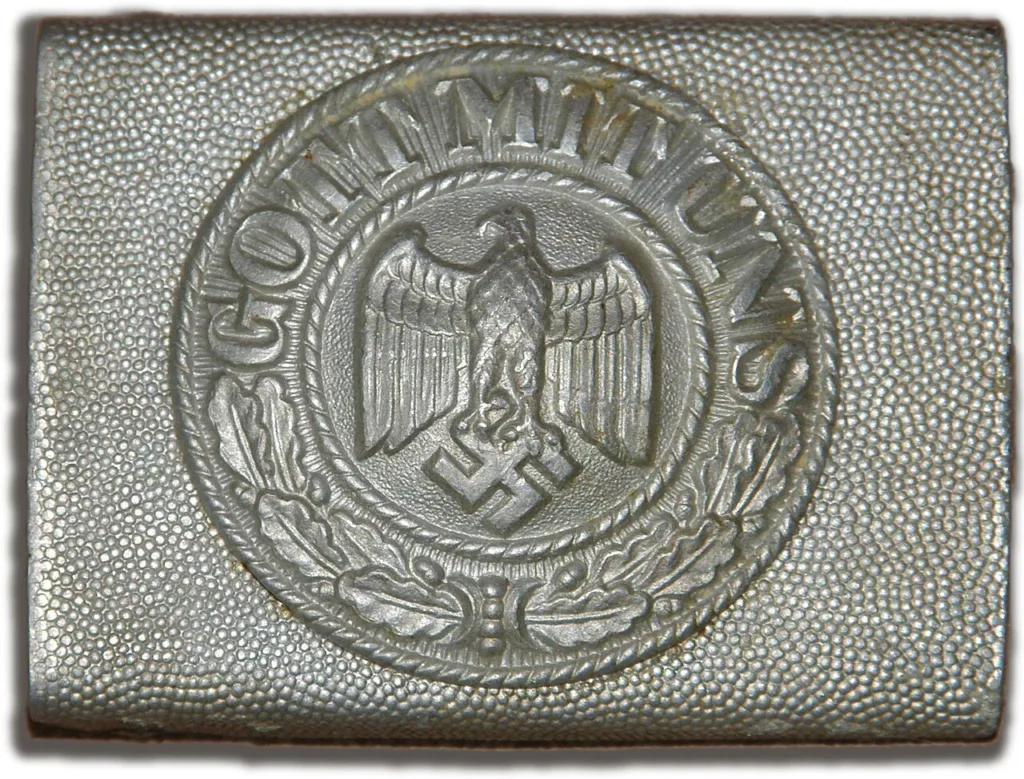
The black leather belt (Koppel) carried the rest of the equipment. Enlisted men of the army wore a buckle stamped with an eagle and the motto Gott mit uns (“God with us”); buckles were made of aluminium early on and later of steel, painted field grey or green. Makers’ marks and the material on the back help to date a buckle. Belt buckles are among the most reproduced German items, so the construction of the back and the wear should be checked carefully.
Y-straps (Koppeltraggestell)
Leather Y-straps took the weight of the loaded belt onto the shoulders. The infantry pattern introduced in 1939 had two front straps that hooked to the ammunition pouches and a single rear strap, with side straps and D-rings for attaching the combat pack frame. Later in the war web versions were made as well.
Ammunition pouches for the K98k
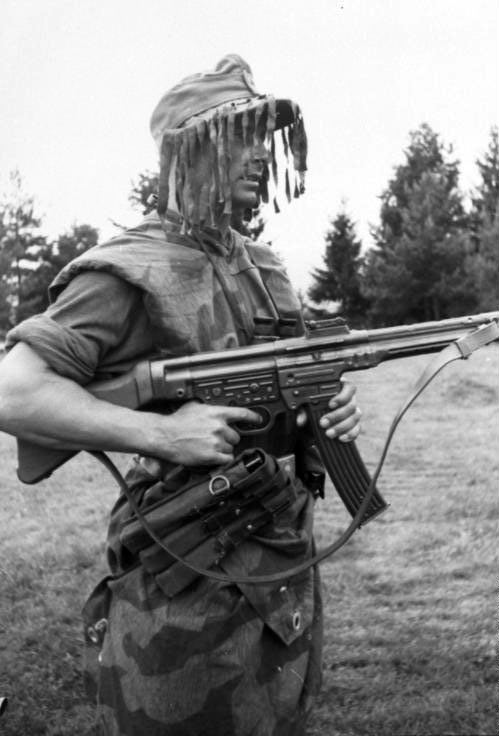
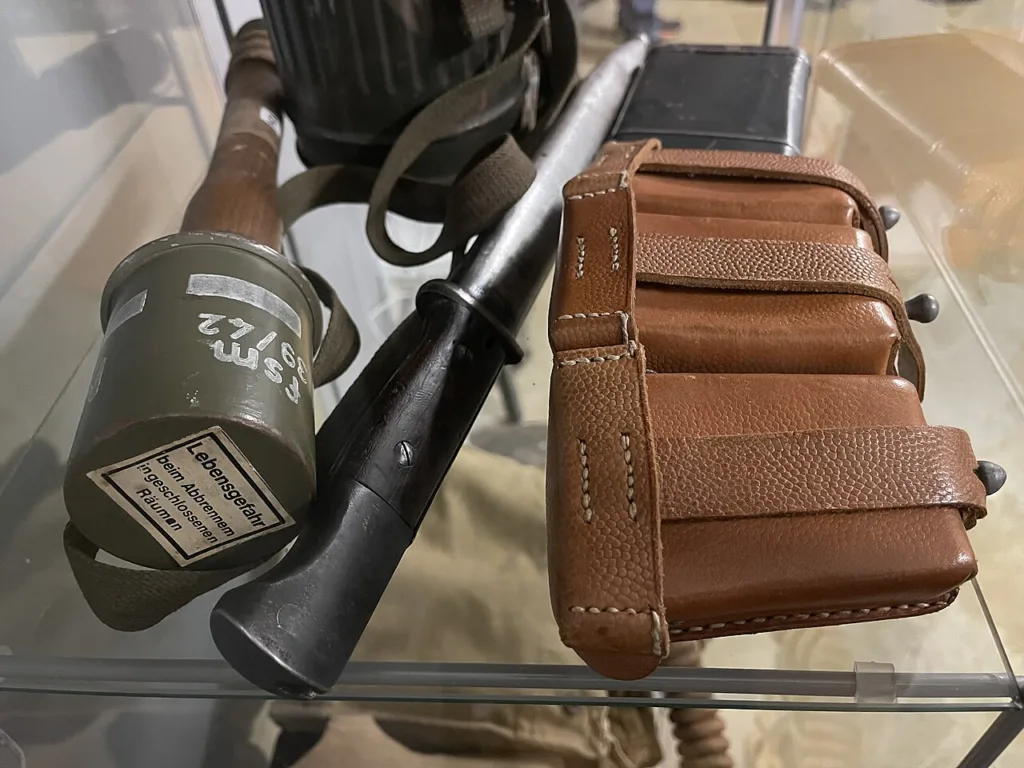
The rifleman carried two leather three-pocket pouches (Patronentaschen) for the Mauser 98k rifle, one on each side of the buckle. Each pocket held two five-round stripper clips, so a pair of pouches held 60 rounds. Black leather was standard; brown leather and pressed-fibre (Presstoff) examples appear later in the war. Pouches are usually stamped with the maker and year on the back.
Bayonet and entrenching tool
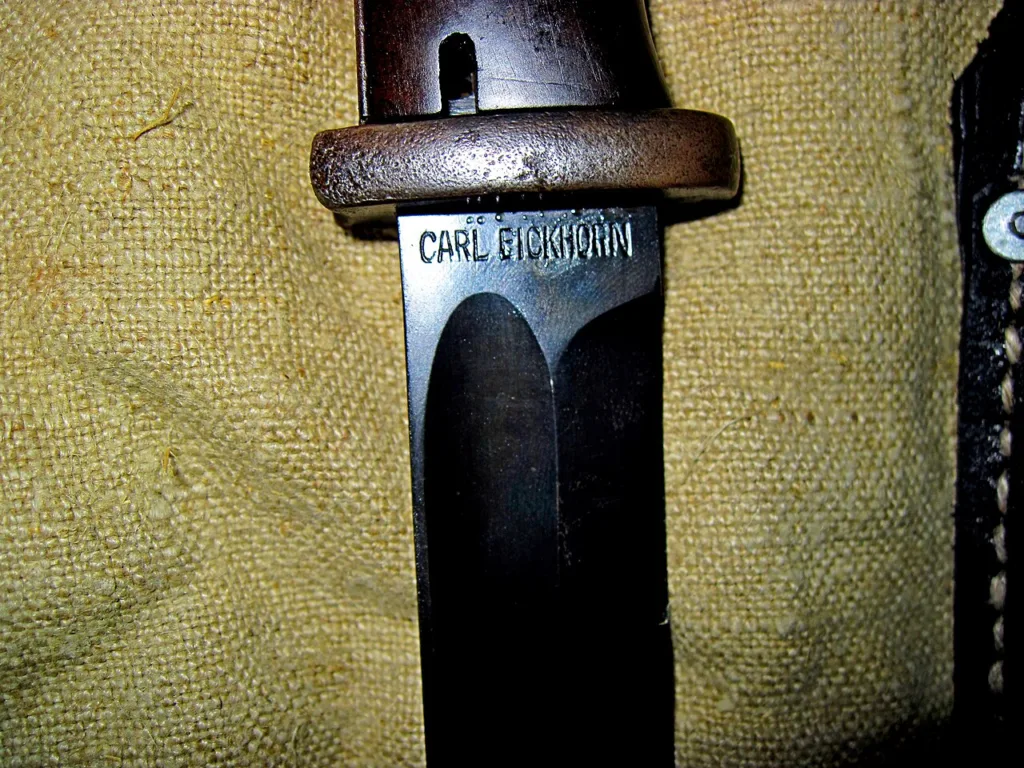
The bayonet for the 98k was the Seitengewehr 84/98, carried in a steel scabbard in a leather frog on the left hip. The short entrenching tool (kleines Schanzzeug) hung on the same side, often with the bayonet frog strapped to its carrier. Early spades had a fixed wooden handle; in November 1938 a folding spade (Klappspaten) with a longer handle was introduced to replace it, although both were used throughout the war.
Bread bag, canteen and mess tin
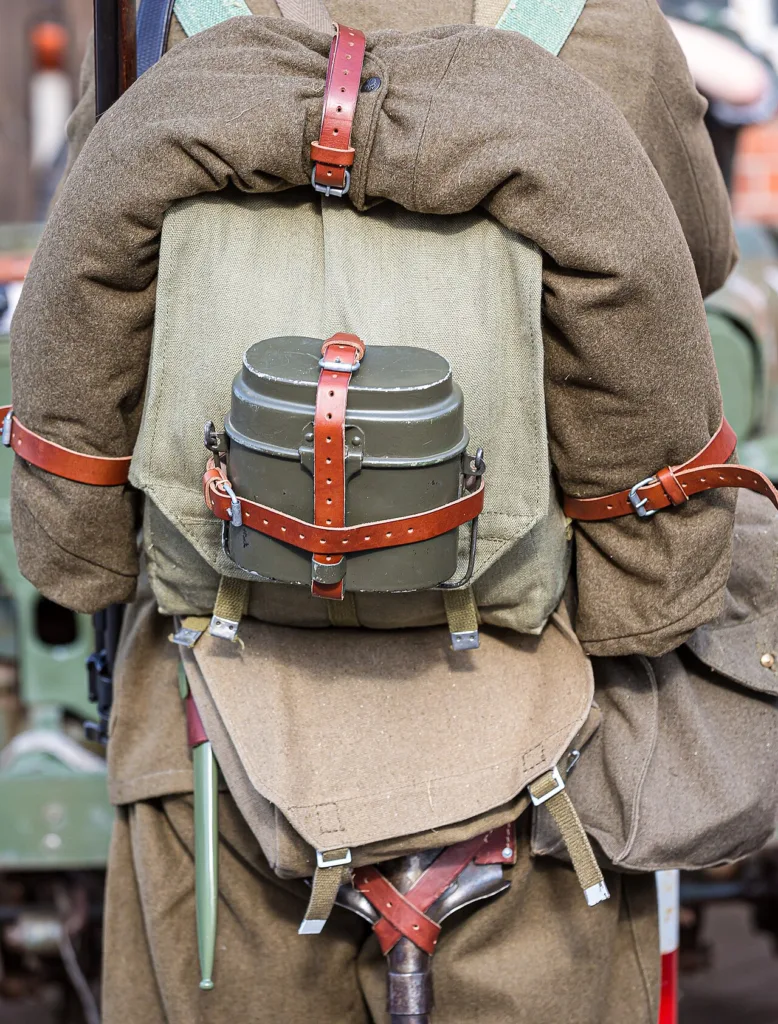
- Bread bag (Brotbeutel 31): a canvas bag worn on the right hip, used for rations, eating utensils and personal items. Belt loops at the back, and leather or web tabs and rings for hooking the canteen and mess tin.
- Canteen (Feldflasche 31): an aluminium bottle in a felt cover with a cup, usually 0.8 litre; a larger 1 litre version was used by mountain troops and medics. Later in the war steel and enamelled versions appear, and cups were made of aluminium, steel or bakelite.
- Mess tin (Kochgeschirr 31): a two-part kidney-shaped pot with a lid that served as a pan, made of aluminium and later of painted steel. It was carried on the pack frame or on the bread bag.
Gas mask canister
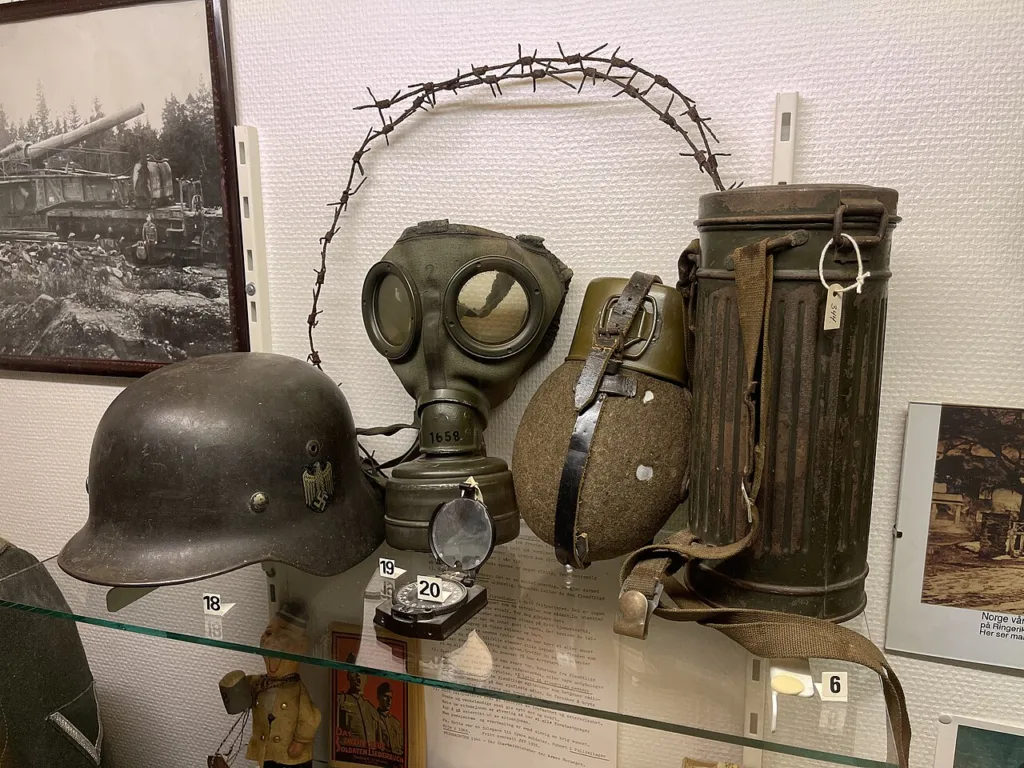
Every soldier carried a gas mask in a fluted steel canister (Gasmaskenbüchse) slung on a strap, together with a small gas cape bag often strapped to it. There are two main canister models, of 1930 and 1938. Canisters were painted field grey or, later, dark yellow, and many carry the soldier’s name scratched or painted on them. Poison gas was not used in combat on the scale of the First World War, and soldiers often used the canister to store other things. See our named relic gas mask canister.
Shelter quarter and combat pack
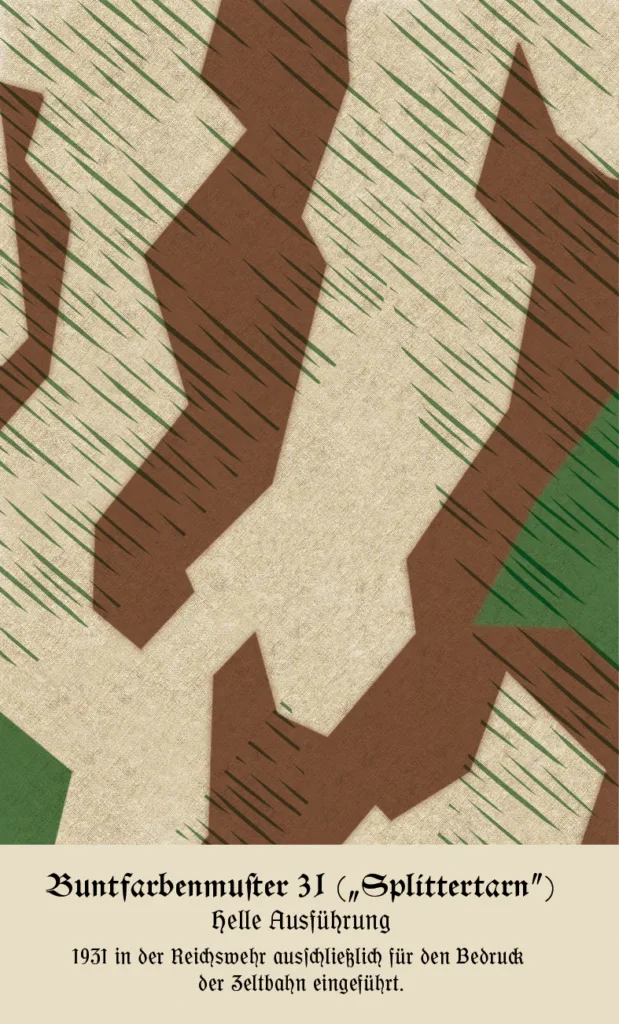
The Zeltbahn 31 was a triangular piece of waterproofed cotton printed in splinter camouflage. It could be worn as a rain cape, and several of them buttoned together made a tent. In the field it was rolled and carried on the combat pack frame (Gefechtsgepäck), a web A-frame attached to the Y-straps from 1939, which also held the mess tin and a small bag for rifle cleaning kit and personal items. The larger backpack (Tornister) with spare clothing usually stayed with the unit’s baggage.
Identity disc and pay book
Each soldier wore an oval zinc or aluminium identity disc (Erkennungsmarke) on a cord around the neck. It was perforated across the middle and stamped twice with the same unit abbreviation and number; if the soldier was killed, the lower half was broken off and sent back, the upper half stayed with the body. The Soldbuch, a pay book with photograph, served as the soldier’s identity document. Found discs are important to battlefield researchers because they can lead to a name.
What collectors watch for
- Leather items (belts, pouches, Y-straps) are widely reproduced. Look at stitching, the feel of the leather, makers’ stamps and honest, even wear.
- Battlefield finds of metal items, such as canisters, buckles, canteens and spades, usually show corrosion and missing parts. Their value lies in being genuine and in the find location.
- Mixed sets are common: a “complete” kit assembled from parts of different years is normal for a display, but should be described as such.
See also the guide to the equipment of the Red Army rifleman, and our field equipment and collectibles.
Sources and further reading
- Klappspaten – Wikipedia (German)
- Zeltbahn – Wikipedia (German)
- Erkennungsmarke – Wikipedia (German)
- Patronentasche – Wikipedia (German)
- Karabiner 98k – Wikipedia
Written by WW2ALEX from the sources listed above. Photographs from Wikimedia Commons are credited in their captions.