The Red Army rifleman of 1941–1945 was equipped more simply than his German opponent. Shortages after the losses of 1941 meant that canvas replaced leather, glass replaced aluminium and many men went into battle without part of the regulation kit. This guide describes what a Soviet rifleman wore and carried, what the items were called, and what collectors should know about them. For helmets see the separate guide: Soviet WW2 helmets SSh-36, SSh-39, SSh-40.
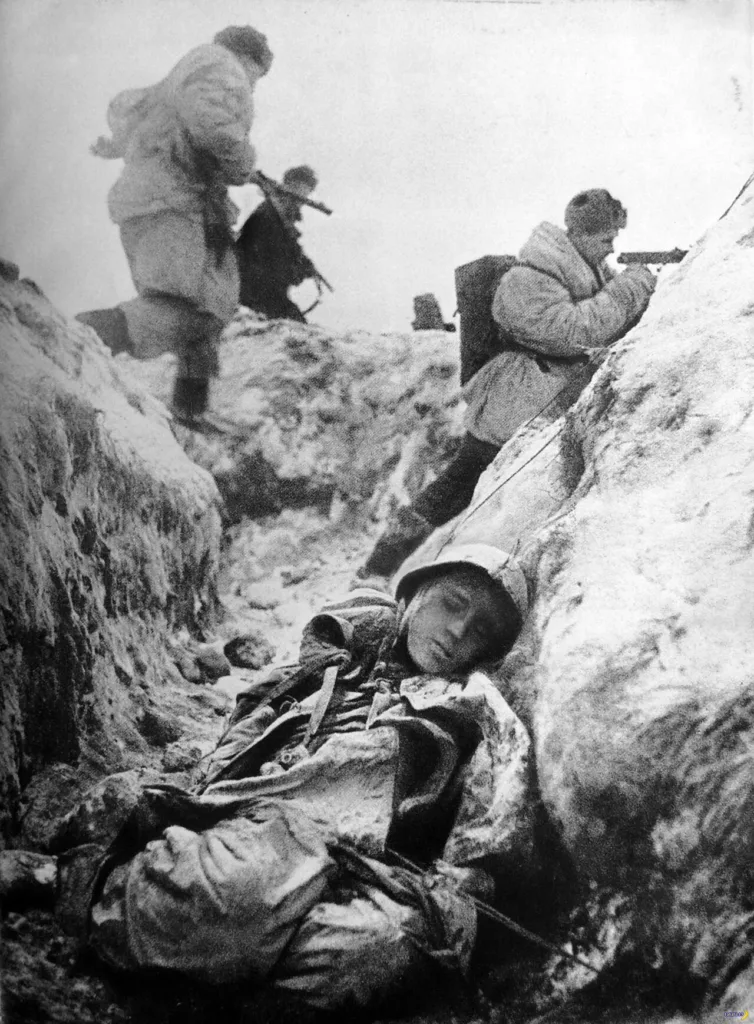
What the rifleman carried
The diagram groups the regulation items by where they were worn. In practice the kit of an individual soldier depended on what his unit had received, and photographs from the front show many variations.
Uniform: gymnastyorka, pilotka and greatcoat
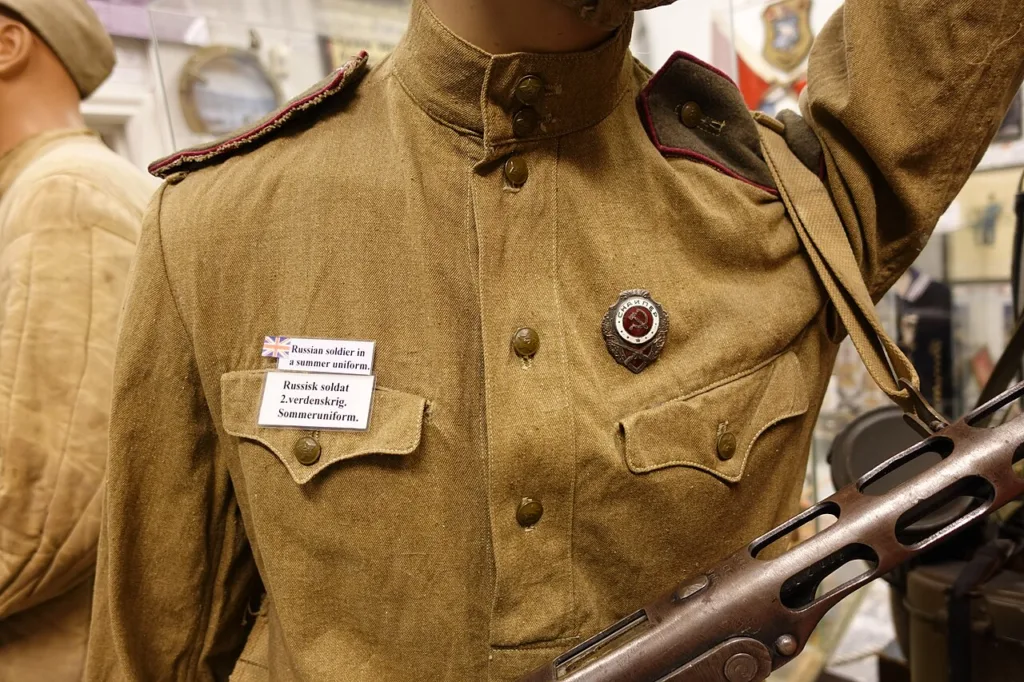
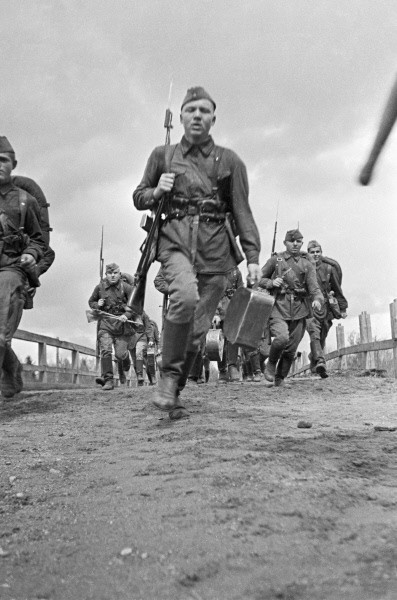
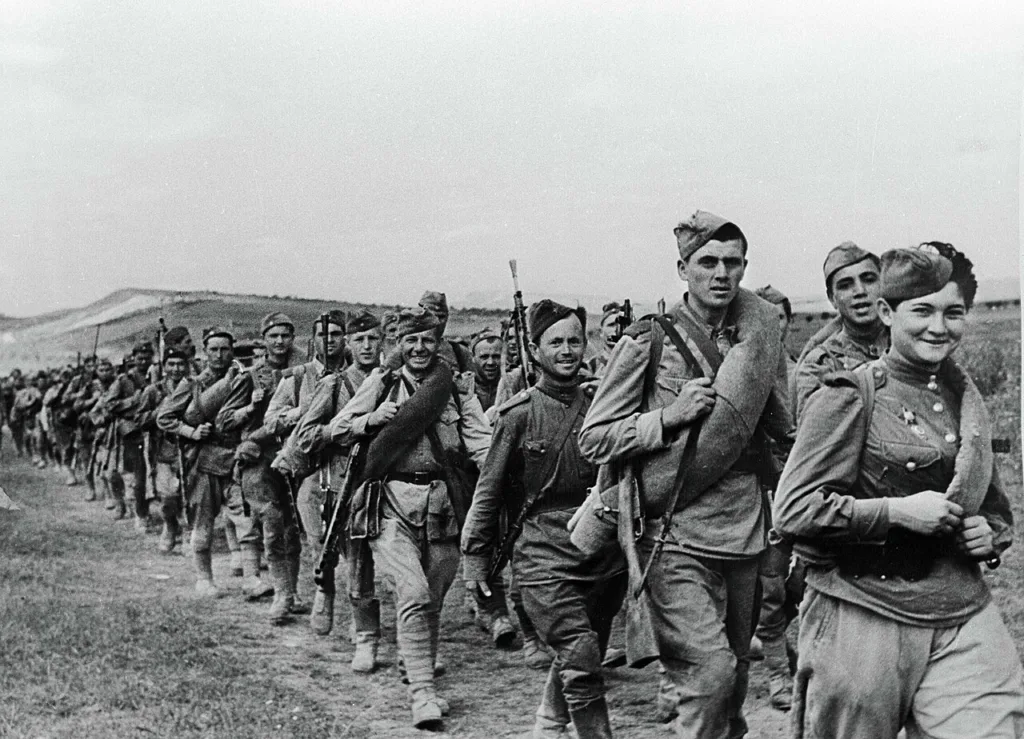
The basic garment was the gymnastyorka, a pullover shirt-tunic in khaki cotton. The 1935 pattern had a turn-down collar with collar tabs showing rank and branch. In January 1943 the Red Army introduced shoulder boards, and the new 1943 pattern had a stand-up collar instead. A tunic with a stand-up collar and shoulder board loops therefore dates from 1943 or later. The side cap (pilotka) was worn when the helmet was not. The woollen greatcoat (shinel) was carried in summer rolled into a ring (skatka) and worn over one shoulder and across the chest.
Belt, pouches and bayonet
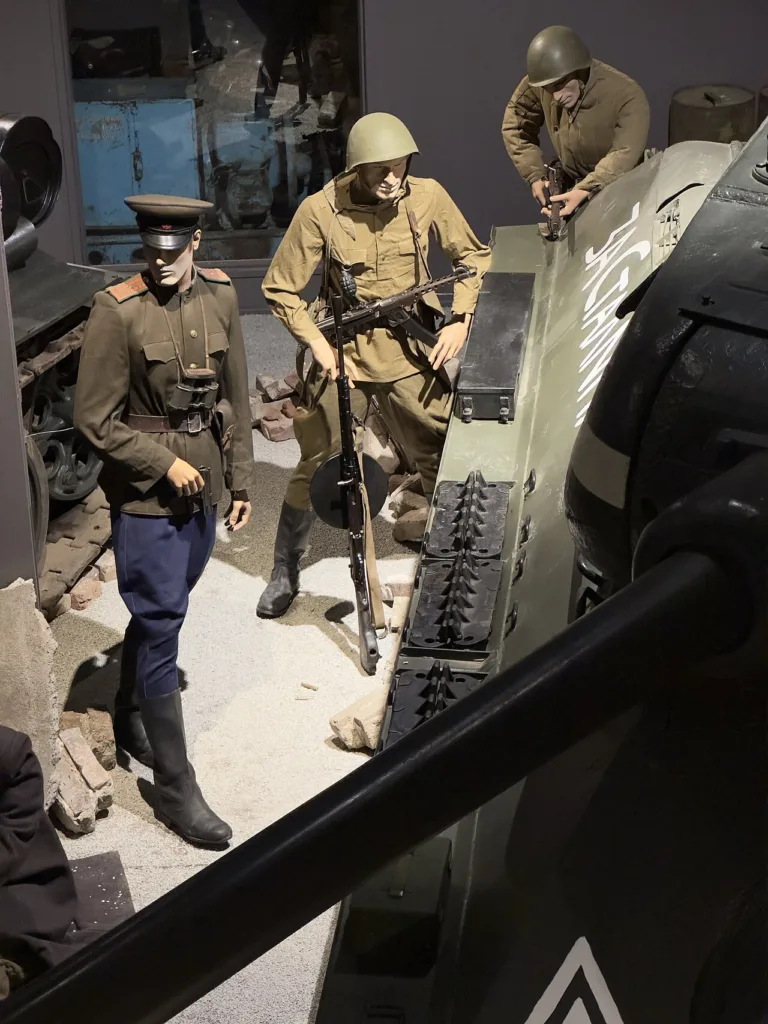
Enlisted men wore a waist belt of leather or, increasingly, of canvas or leather substitute, usually with a simple open-frame buckle; brass plate buckles with a five-pointed star were also issued. Two ammunition pouches for the clips of the Mosin–Nagant 1891/30 rifle sat on the front of the belt, with a canvas pouch for hand grenades beside them. The bayonet of the Mosin rifle was normally carried fixed to the rifle, so a separate bayonet scabbard is rare.
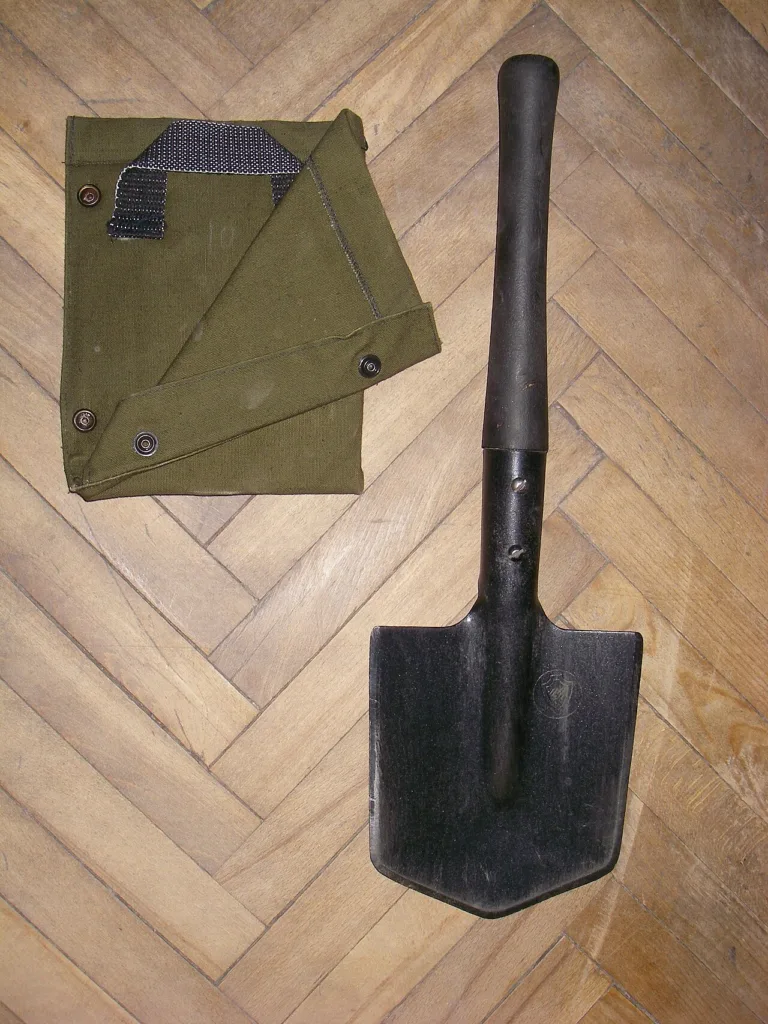
Entrenching tool, flask and mess tin
- Entrenching tool MPL-50: the small infantry spade, about 50 centimetres long, with a fixed wooden handle and a flat steel blade, carried in a canvas or leather cover on the belt. It was used for digging and as a close-combat weapon, and the same design remained in service for decades after the war.
- Flask (flyaga): made of aluminium, or of glass when aluminium was short, carried in a cloth cover on the belt. Glass flasks are a typical find on battlefields of 1941–1942.
- Mess tin (kotelok): a round or flattened pot with a lid and a wire handle, carried in or tied to the kit bag.
Kit bag, rain cape and gas mask
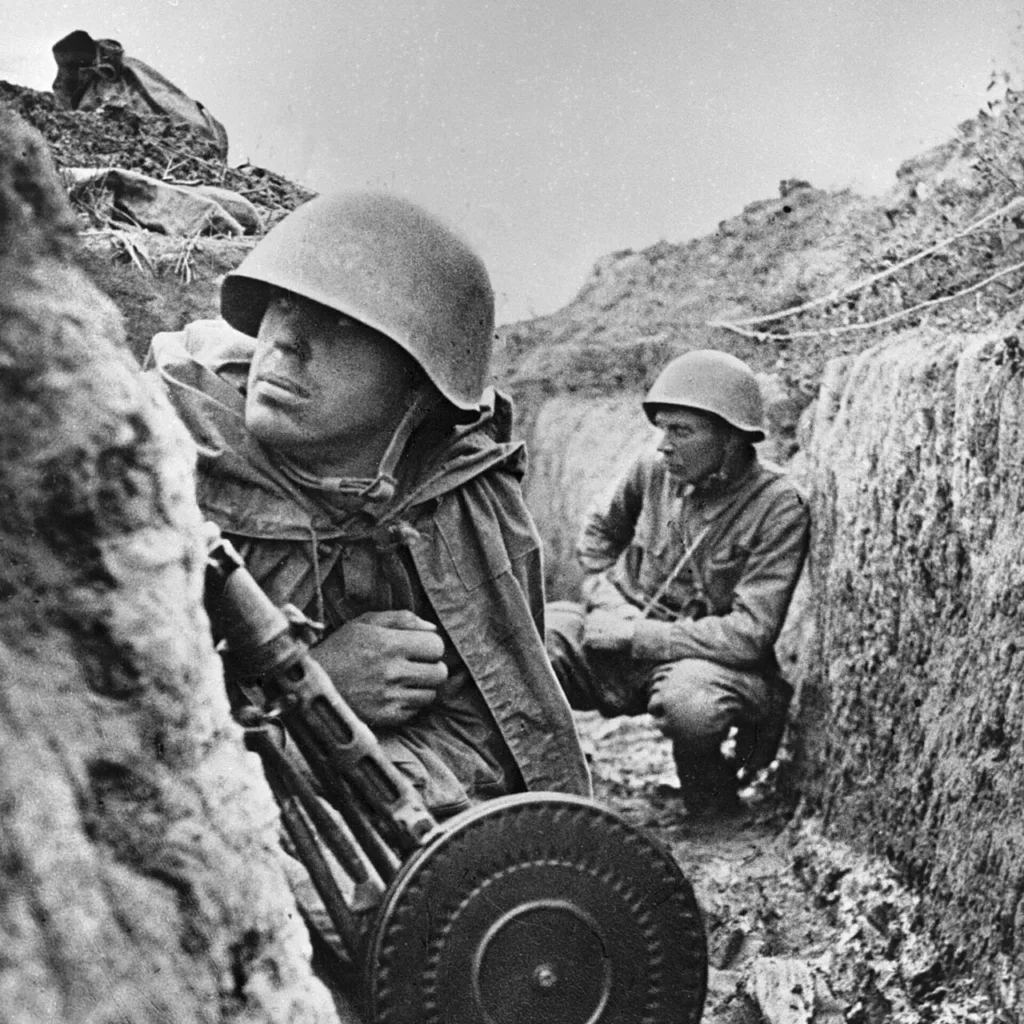
Personal kit, rations and spare foot wraps went into the veshchmeshok, a simple canvas sack with a drawstring and shoulder straps, known among soldiers as the sidor. The plashch-palatka was a large square of waterproof canvas that served as a rain cape and, combined with others, as a tent. Every soldier was issued a gas mask in a canvas bag carried on a strap across the shoulder.
The soldier’s medallion
The Red Army did not issue metal identity discs. Instead each soldier received a small black screw-top capsule of carbolite (a bakelite-type plastic) that held a paper slip with his name, place of birth and family address. The slip was meant to be filled in twice, so that one copy could go to the unit records and the other remain with the body. Not all slips were filled in, and paper inside capsules buried for decades is often illegible, which is one reason why so many of the fallen are still unidentified. A capsule with a readable slip found by search teams can restore a soldier’s name.
What collectors watch for
- Post-war Soviet equipment (belts, spades, flasks, canvas items) was made to similar patterns into the 1980s and is often sold as wartime. Markings with post-war dates or factory logos give it away.
- Star buckles and officers’ belts are widely reproduced.
- Battlefield finds such as flasks, spades, mess tins and medallion capsules are usually corroded or broken. Their value lies in being genuine and in the find location. A medallion with a readable name should be passed to a search organisation so that the family can be found.
See also the guide to the equipment of the German rifleman, our Soviet helmets, and the pre-war Soviet budenovka.
Sources and further reading
- Gymnastyorka – Wikipedia
- Жетон военнослужащего (soldier’s identification, Soviet medallion) – Wikipedia (Russian)
- Dog tag: Soviet Union – Wikipedia
- MPL-50 – Wikipedia
- Mosin–Nagant – Wikipedia
Written by WW2ALEX from the sources listed above. Photographs from Wikimedia Commons are credited in their captions.