Germany fought the Second World War in one basic steel helmet, the Stahlhelm Model 1935. Collectors divide it into three versions: M35, M40 and M42. The differences are small, but they tell you roughly when a helmet was made, and they matter for value. This guide explains how to tell them apart, what the stamps inside the shell mean, how decals were used, and what to expect from a helmet recovered from a battlefield.
The three versions at a glance
Two quick checks tell the versions apart: look at the air vents (a separate grommet fitted into the shell on the M35, pressed directly into the shell on the M40 and M42), then look at the edge of the shell (rolled under on the M35 and M40, left raw and flared on the M42). The Quist (Q) factory kept rolling the edge late in the war, so a rolled-edge Q shell is not necessarily early. The table below gives the details.
| Version | Introduced | Air vents | Edge of the shell | Decals, as a rule |
|---|---|---|---|---|
| M35 | 1935 | Separate vent grommets fitted into the shell | Rolled under | Two decals before 1940, one after |
| M40 | 1940 | Stamped directly into the shell | Rolled under | One decal; none from 1943 |
| M42 | 1942 | Stamped directly into the shell | Raw edge, slightly flared, not rolled | Usually none |
“M40” and “M42” are collectors’ names. For the German army all three were still the Model 1935 helmet, simplified step by step to make it faster and cheaper to produce.
M35: the pre-war standard
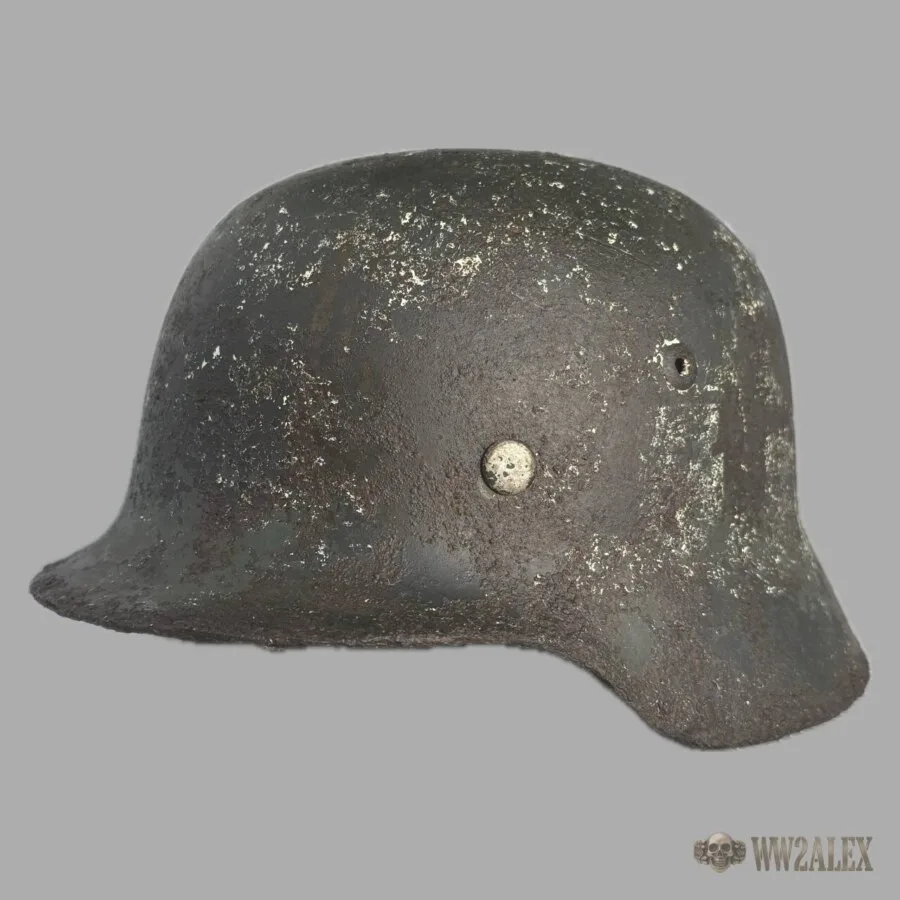
The M35 was adopted in June 1935. It was developed together with the Eisenhüttenwerke Thale and is smaller and lighter than the First World War helmets, with a shorter visor and skirt. The shell was pressed from molybdenum steel and its edge is rolled under.
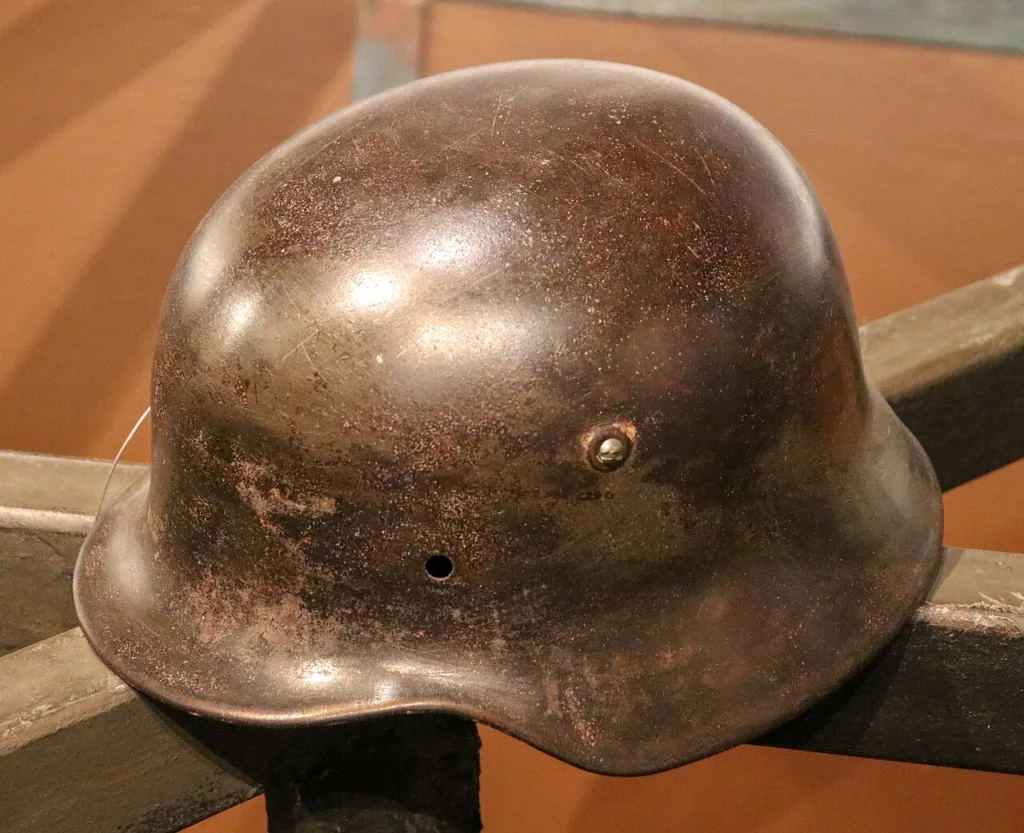
- Vents: a separate hollow grommet is fitted into a hole on each side. This is the quickest way to recognise an M35.
- Liner: the M31 liner, a leather crown cut into fingers and pulled together by a drawstring, on a metal band. Early bands were aluminium; later ones zinc-plated steel.
- Rivets: three split rivets hold the liner, one at each temple and one at the back.
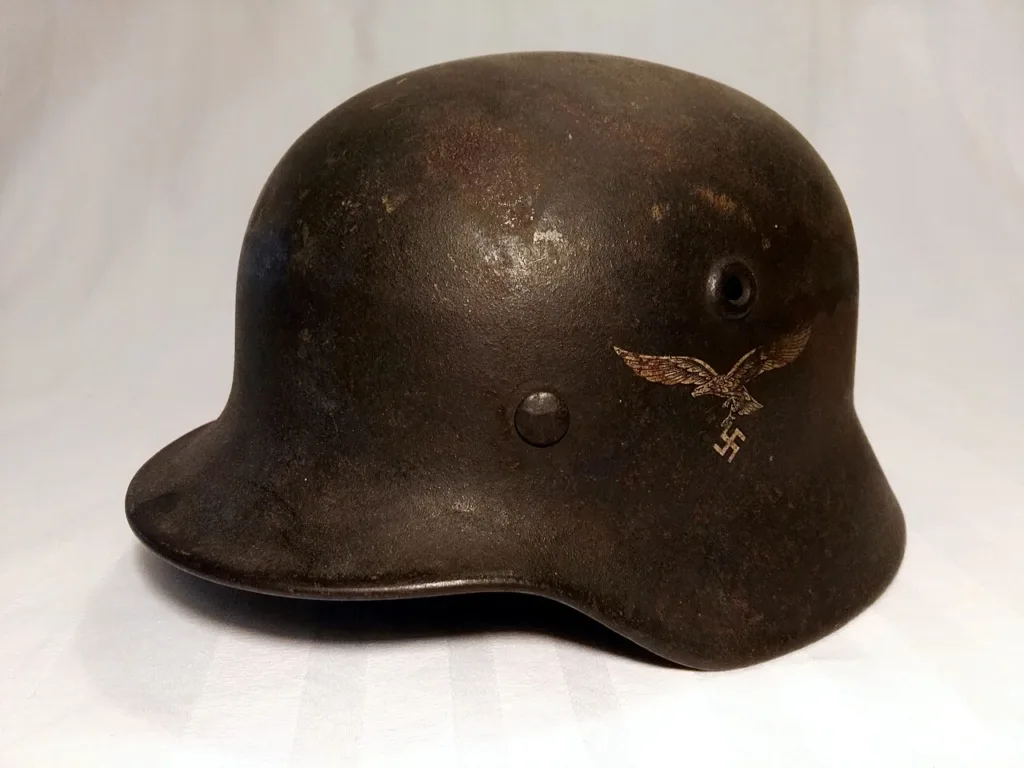
- Paint: early helmets have a smooth factory finish, field grey or a green-grey tone depending on the maker; Luftwaffe helmets were blue-grey. From 1940 many M35s were reissued with a darker, rough-textured repaint.
M40: vents stamped into the shell
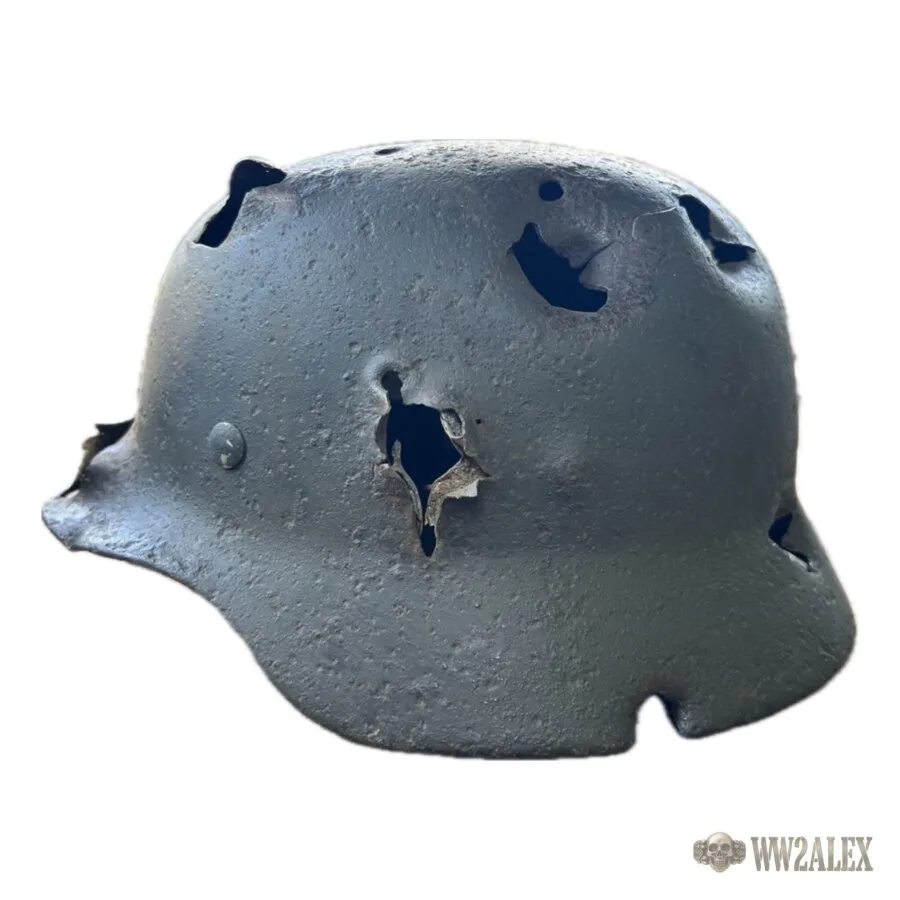
From 1940 the separate vent grommet was dropped and the vent was pressed directly into the shell. The steel also changed, from molybdenum to manganese-silicon steel. The rolled edge stayed.
M42: the simplified wartime helmet
In 1942 the rolled edge was abandoned. The edge of the shell was simply left raw, and it flares slightly outwards. This saved a production step and some steel. Late-war M42s often show rougher finishing, and liners and chinstraps of lower quality. Decals are uncommon on an M42; a factory double-decal M42 is practically unknown, so one should be treated with suspicion.
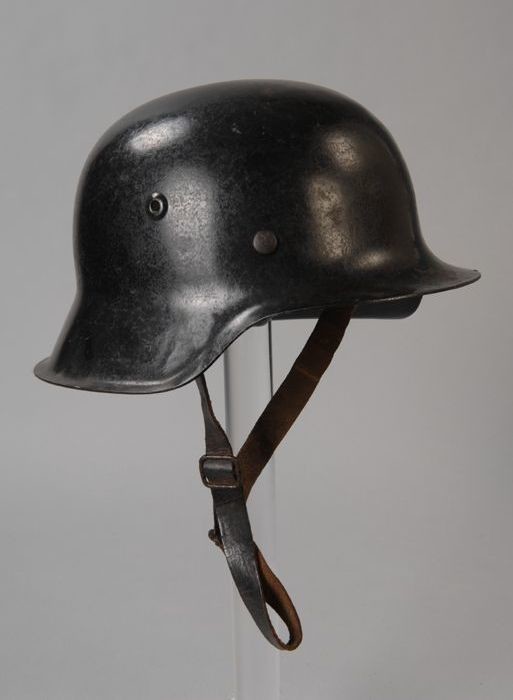
Paratrooper helmets. The Fallschirmjäger wore a different helmet, the M38, without the projecting visor and flared skirt, with a heavily padded liner bolted to the shell and a multi-point chinstrap. It is a separate model and not covered in detail here.
Decals and what they tell you
- Before 1940: two decals. The national shield in black, white and red on the right side, and the eagle of the branch of service on the left.
- 1940: the national shield was ordered removed (for the army in March 1940). Helmets made after that carry a single decal.
- 1943: the use of decals was ordered discontinued altogether. In practice some factories went on applying them for a while.
- Branches: the army (Heer) used a silver-grey eagle, the navy a gold eagle, the Luftwaffe its own flying eagle. SS helmets carried the runes on the right and a swastika shield on the left. Police helmets kept two decals until the end of the war.
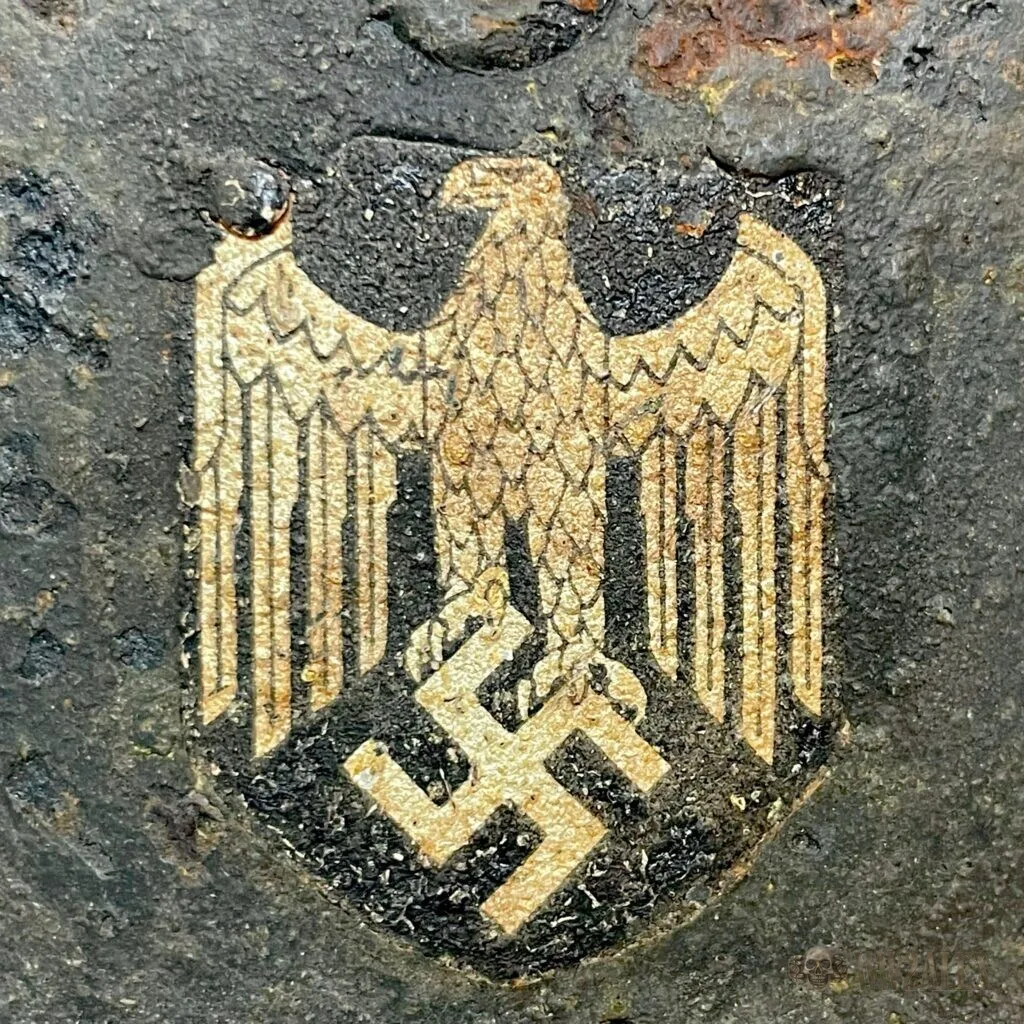
Many helmets were repainted in the field, so a missing decal does not always mean a late helmet. On battlefield finds a decal is often only partly preserved.
Maker codes
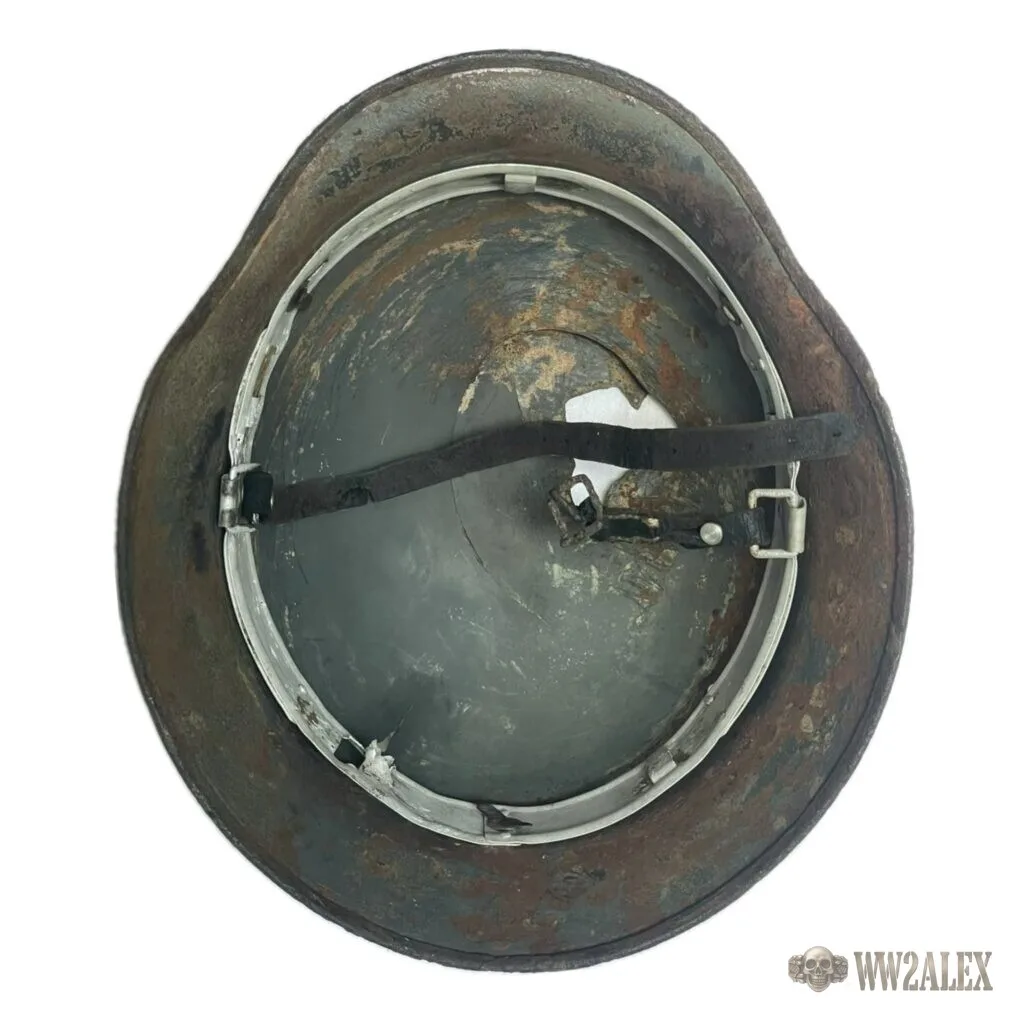
Five factories made the bulk of German helmets. Each stamped its code inside the skirt of the shell.
| Code | Factory | Town |
|---|---|---|
| ET, later ckl | Eisenhüttenwerke Thale | Thale (Harz) |
| EF | Emaillierwerke AG | Fulda |
| NS | Vereinigte Deutsche Nickelwerke | Schwerte |
| SE, later hkp | Sächsische Emaillier- und Stanzwerke | Lauter (Saxony) |
| Q | F.W. Quist GmbH | Esslingen |
“ckl” and “hkp” are wartime code letters that replaced the original factory initials of Thale and Lauter. Quist kept making helmets with a rolled edge late into the war, so a rolled-edge helmet marked Q is not necessarily early.
Sizes and stamps: what “ET64” means
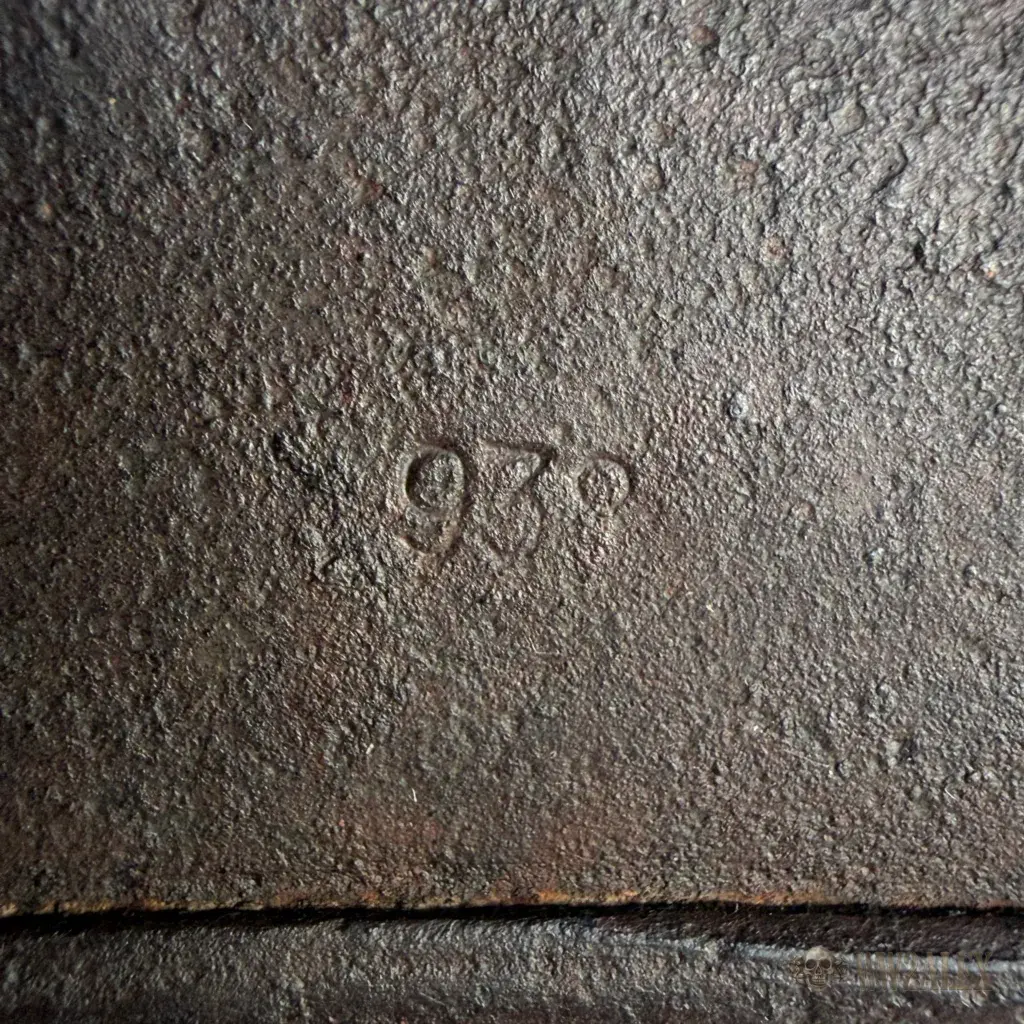
A stamp such as ET64 means the shell was made by Eisenhüttenwerke Thale (ET) in shell size 64. Shells were made in even sizes, from 60 up to 70 and, rarely, 72; 62 and 64 are the most common. The shell size is not the head size: the liner, sized in centimetres of head circumference, is roughly 8 smaller than the shell.
| Shell size | Usual liner (head) size, cm |
|---|---|
| 60 | 52–53 |
| 62 | 54–55 |
| 64 | 56–57 |
| 66 | 58–59 |
| 68 | 60–61 |
| 70 | 62–63 |
- Maker and size: on earlier helmets inside the left side of the skirt; on many later M40s and M42s inside the rear skirt.
- Lot number: a batch number for the sheet steel, stamped inside the rear skirt.
- Liner band: usually marked with the shell size, the head size, the maker and often the year.
Helmets found on the battlefield
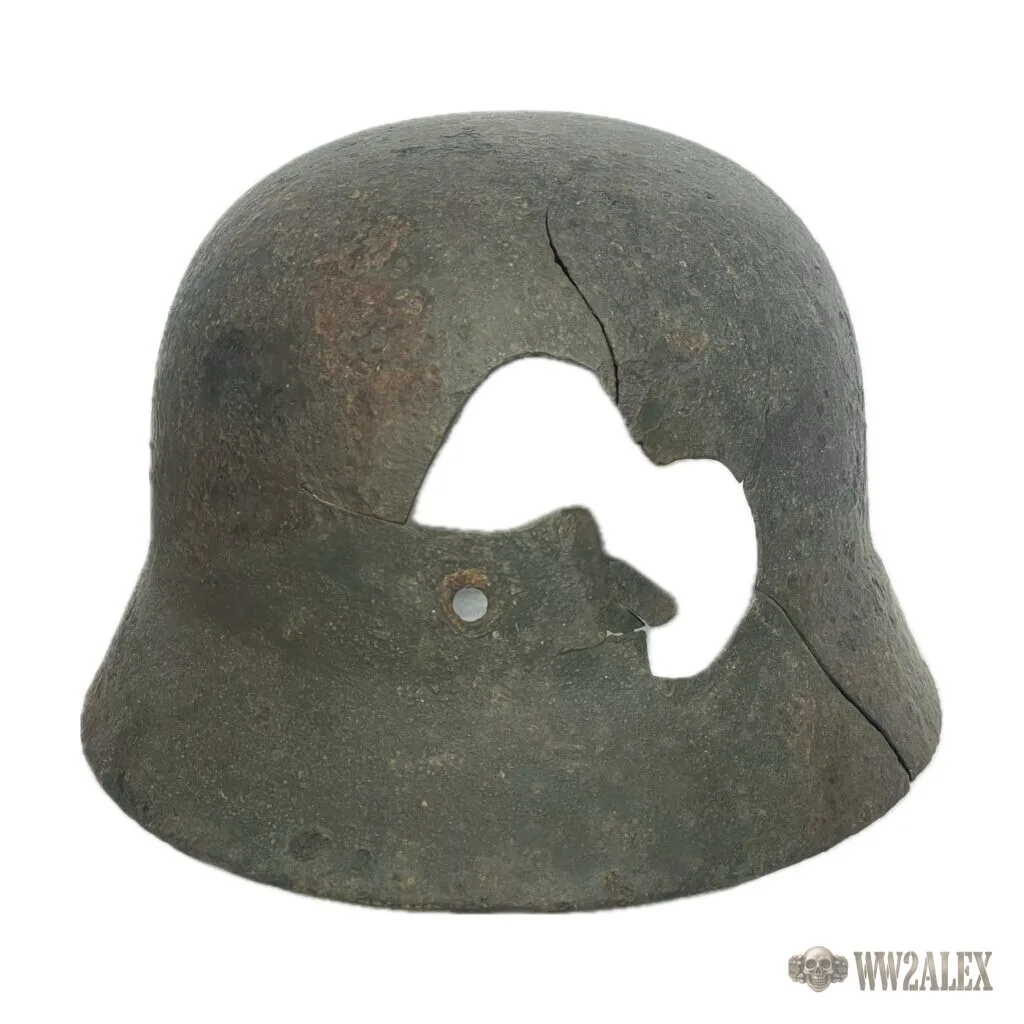
A helmet that spent eighty years in the ground or in a ruined bunker looks very different from one kept in an attic. Expect corrosion and scaling, little original paint, rust holes or shrapnel damage, and usually no liner or only fragments of it. Stamps and decals may be partly or completely lost to rust. None of this makes such a helmet less authentic; it is part of its history, and the find location is often the most interesting fact about it.
Our listings say where a helmet was found, which parts are original and what has been restored. The exact meaning of words such as “original”, “untouched”, “refurbished” and “restored” is explained on How we describe items.
Warning signs of reproductions and fakes
- Decals that feel like a plastic film, look bubbled from heat “ageing”, or lack the fine cracking of an old decal.
- Fresh paint over old rust, or rust and wear that look applied rather than grown.
- A liner that does not fit the shell, or rivets that have been bent back and re-closed, a sign the liner was swapped.
- Combinations that make little sense, such as a double-decal M42.
- SS and camouflage helmets are faked more often than any others and deserve the closest inspection.
Browse our original German helmets, or see restored items and replicas, where each listing states exactly what is original. Questions about a particular helmet are welcome through the contact form.