The Wound Badge (Verwundetenabzeichen) is one of the most common German decorations of the Second World War, and one of the most personal: every one was earned by a man wounded in action. This guide explains the three classes of the 1939 pattern, how they were made, how they were worn, and the rare special version created after 20 July 1944.
From 1918 to 1939
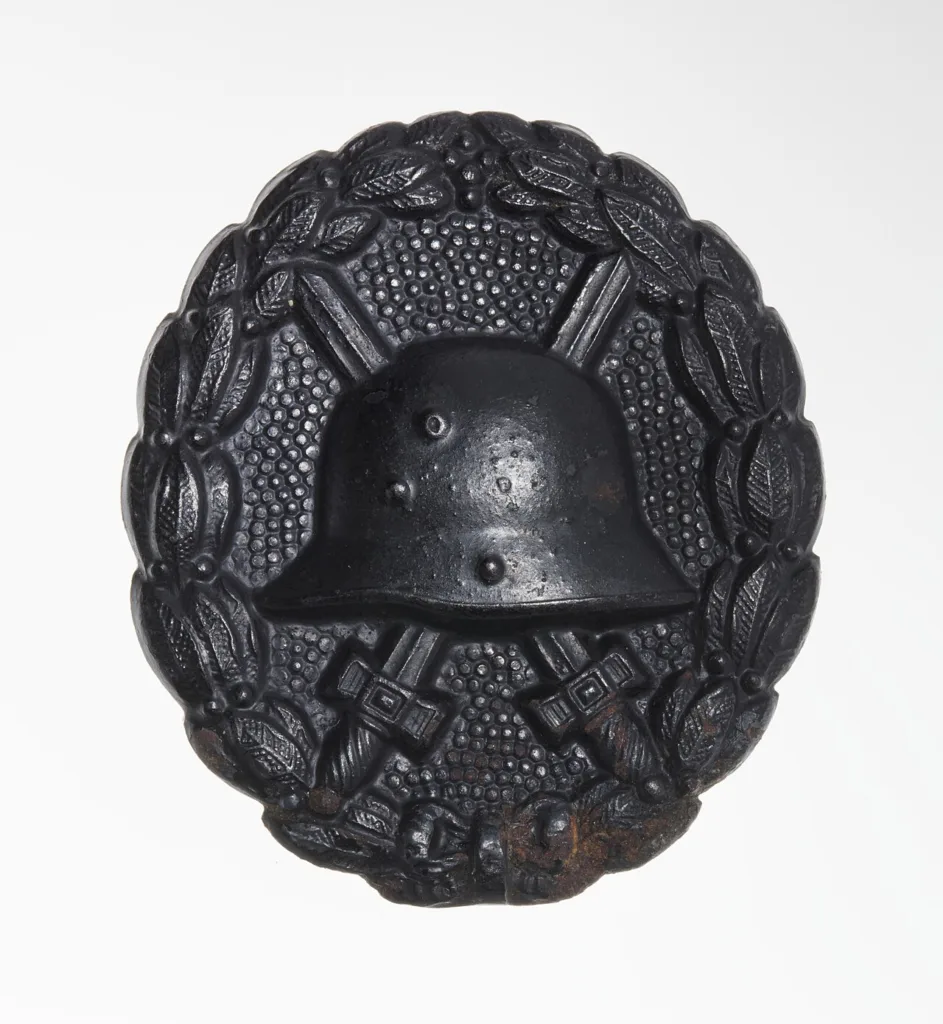
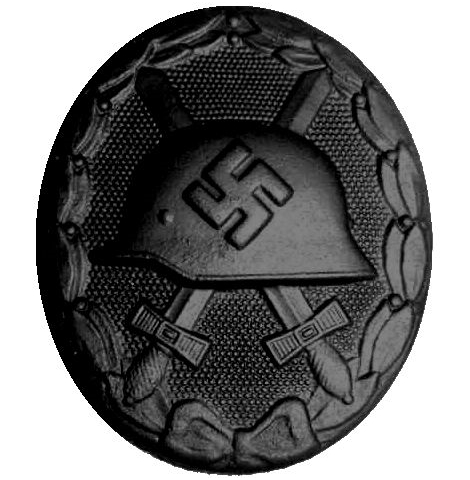
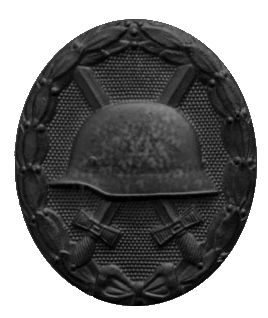
The first Wound Badge was instituted by Emperor Wilhelm II on 3 March 1918 for soldiers of the German Army wounded in the First World War. Between the wars it was also awarded to Germans wounded fighting on the Nationalist side in the Spanish Civil War. In September 1939 the badge was reinstated for the new war. The main change was the helmet in the centre: the First World War helmet was replaced by the 1935 pattern steel helmet over crossed swords, framed by a wreath of laurel.
During the Second World War the badge was awarded to members of the Wehrmacht, the SS and the auxiliary service organisations, always for wounds caused by enemy action. From March 1943, as Allied bombing increased, it could also be awarded to civilians wounded in air raids.
The three classes
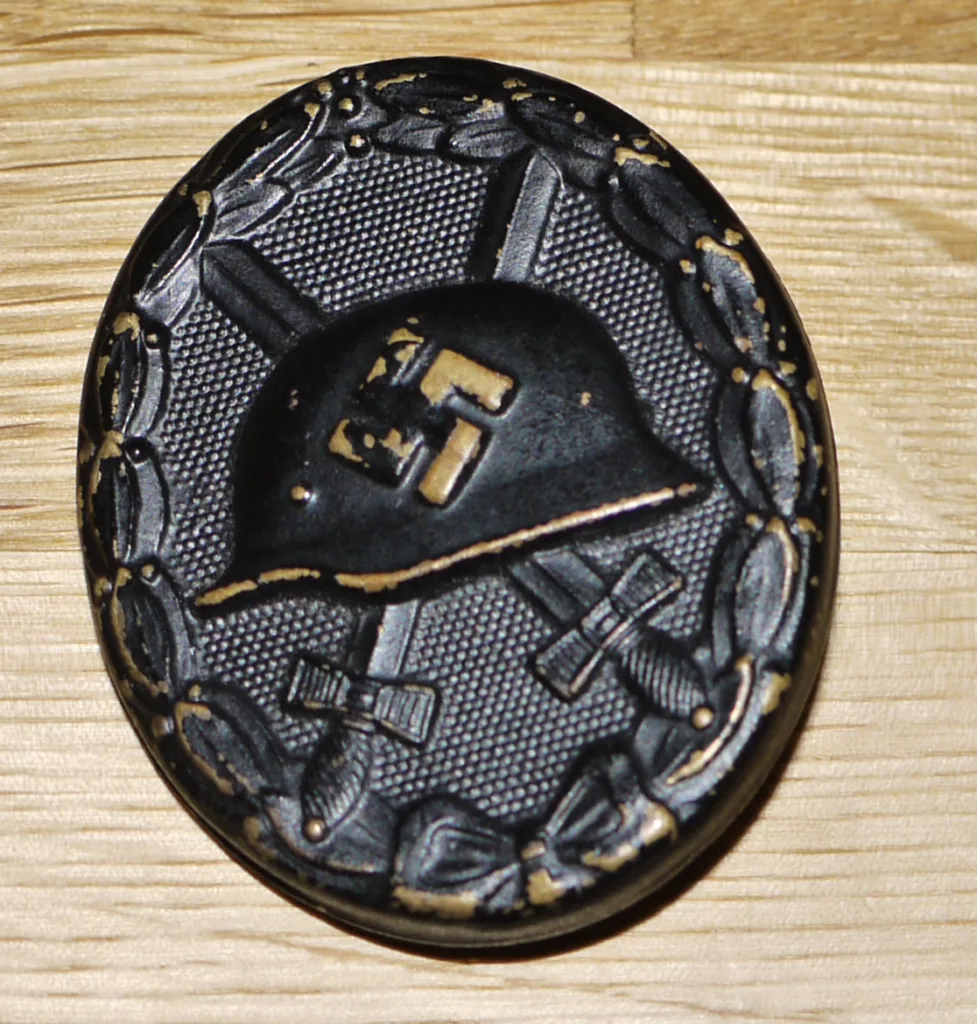
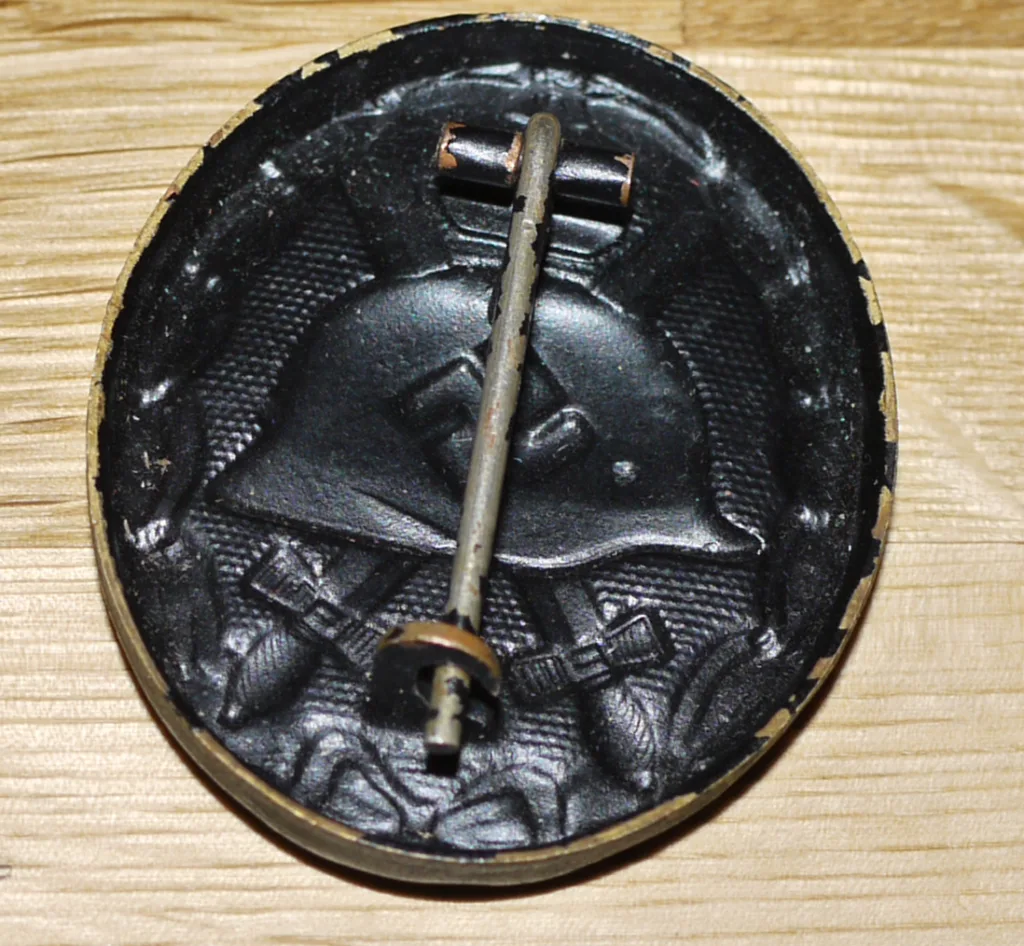
Black (3rd class) – for those wounded once or twice. The early black badges were stamped from sheet brass, painted a semi-matte black, and had a hollow back with a pin, though solid examples also exist. From 1942 they were made of steel.
Silver (2nd class) – for being wounded three or four times. The silver badge was solid. Before 1942 it was made of silver-plated brass, and later of lacquered zinc, with either a needle pin or a broad flat pin on the back.
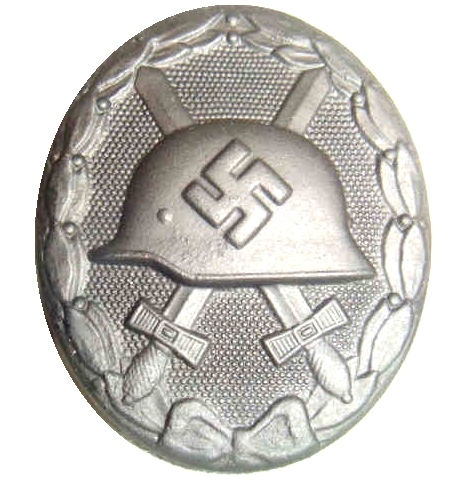
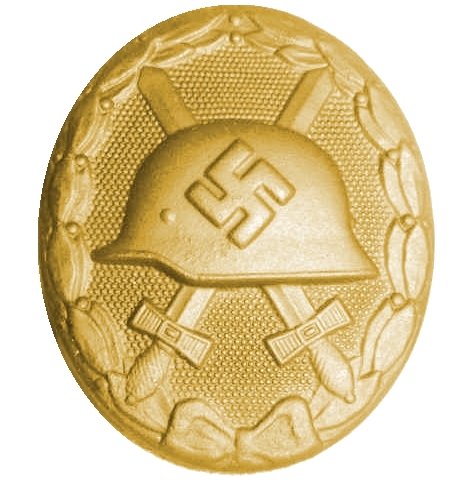
Gold (1st class) – for being wounded five or more times, and it could be awarded posthumously. It was a gilded version of the silver badge. The number of wounds was not the only rule: after a severe wound, such as the loss of a limb or of eyesight, the silver badge was awarded even if a man had been wounded fewer than three times, and death or total disability brought the gold badge.
Makers, materials and how it was worn
Twenty-four firms were approved to make the Wound Badge, so small differences in the stamping, the pin and the finish are normal. The materials changed with the war: brass for the early badges, then steel for the black class and zinc for the silver and gold from 1942. The back of a badge – hollow or solid, the type of pin and catch, and any maker’s mark – is therefore as important for identification as the front.
All classes were worn on the lower left breast of the tunic, below all other awards on that side. The Wound Badge ranked below the combat badges, such as the Infantry and General Assault Badges. Only the highest class a man had received was worn.
The 20 July 1944 Wound Badge
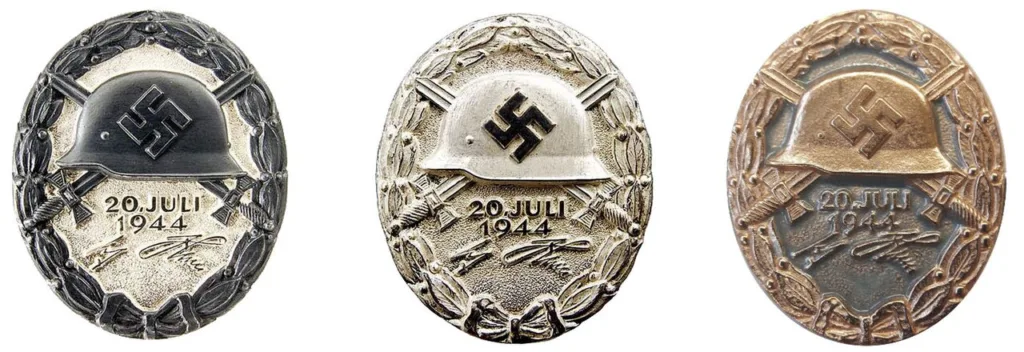
A special version was made for the men wounded by the bomb at the Wolf’s Lair headquarters in East Prussia on 20 July 1944. Twenty-four people were in the room when it exploded. The badge follows the normal design, but the helmet is slightly larger and higher, and below it are the date “20 Juli 1944” and a facsimile signature. It was also made in black, silver and gold, all of solid hallmarked silver by the firm of C. E. Juncker, and only a small number were ever made.
The 1957 version
In 1957 the Federal Republic of Germany allowed veterans to wear certain wartime decorations again, provided the swastika was removed. A redesigned Wound Badge without the swastika was authorised in black, silver and gold, and older badges could be worn if the swastika was ground off. Collectors should know this version, because it is a post-war award and not a wartime piece.
Before you buy
- Check the material against the class and the period: brass, steel or zinc, and whether the back is hollow or solid.
- Look at the pin and catch – their type and the way they are fitted should match a wartime maker.
- Be aware of the 1957 version and of modern copies, which are common.
- Ask for clear photographs of the back as well as the front.
More: German WW2 awards: Iron Cross, Panzer Badge and Crimea Shield · German combat badges · the Eastern Medal and campaign shields · awards and badges in the shop