Three German awards of the Second World War turn up again and again on the Eastern Front: the Iron Cross of 1939, the Panzer Badge and the Crimea Shield. This guide explains what each one was, who could receive it and how it was worn, so that you can read an original piece correctly. It is an introduction, not an authentication service: for any expensive award, get the opinion of an experienced specialist.
The Iron Cross, 1939
The Iron Cross was first created in Prussia in 1813 and was revived for the Franco-Prussian War of 1870 and the First World War. It was re-established for the Second World War by a decree of 1 September 1939. The 1939 series had three levels: the Iron Cross itself (2nd and 1st Class), the Knight’s Cross and the Grand Cross. It is estimated that about four and a half million Iron Crosses 2nd Class and some 300,000 of the 1st Class were awarded during the war.
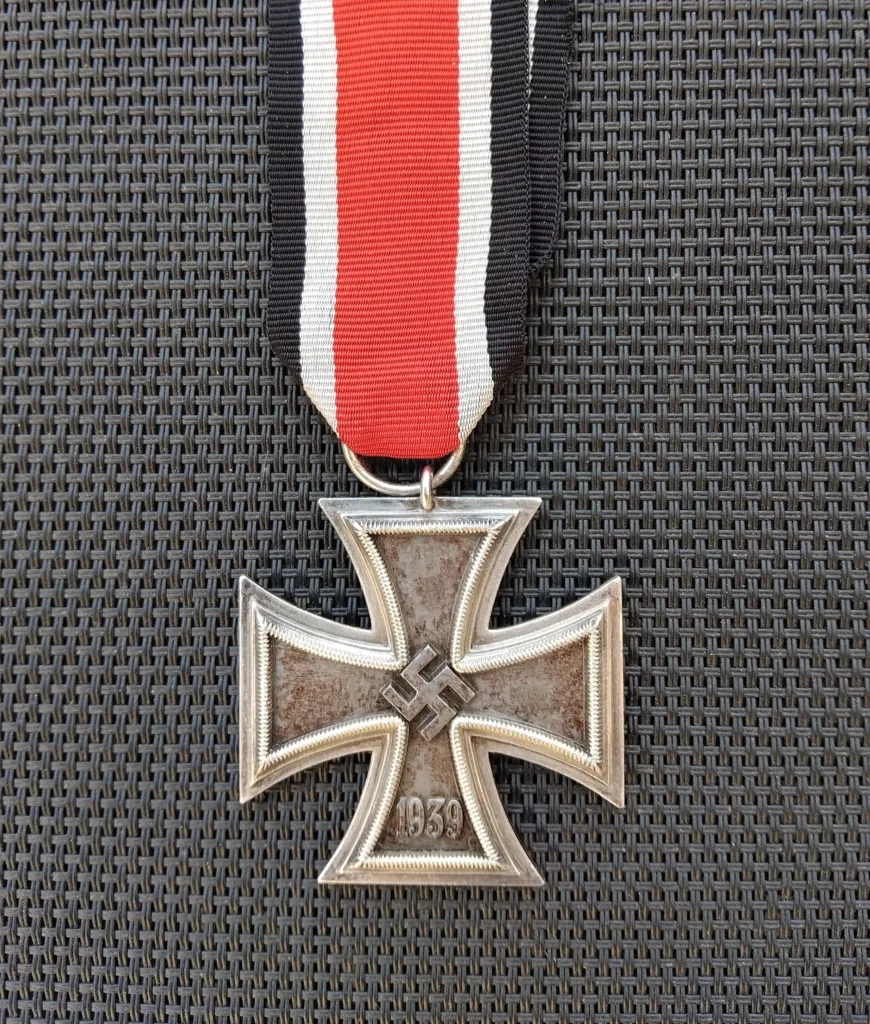
- Dates. The 1939 cross carries the year “1939” on the lower arm of the front, with a swastika in the centre. The back of the 2nd Class carries the year “1813”, the year the award was founded.
- 2nd Class. Issued with a ribbon in black, white and red. It was worn from the second buttonhole of the tunic; in everyday wear only the ribbon was worn there.
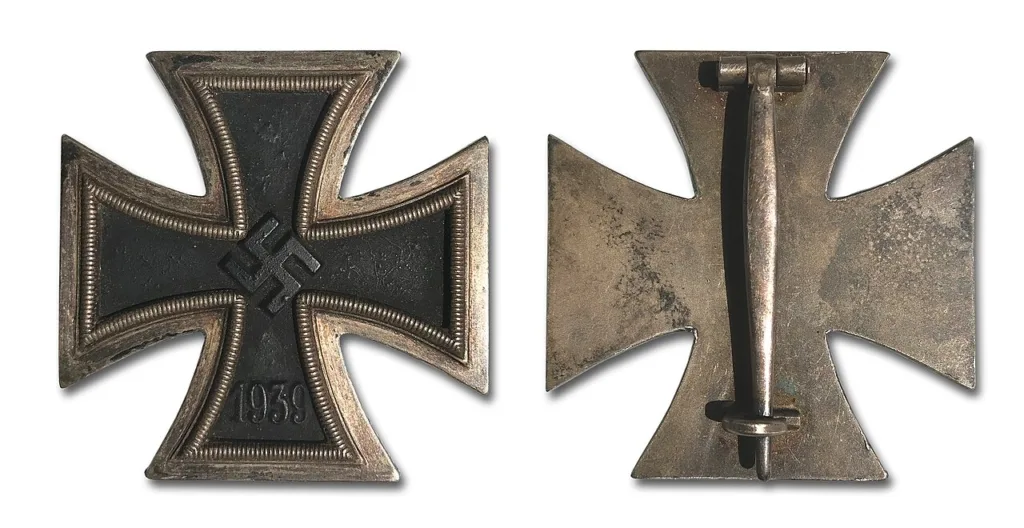
- 1st Class. Has no ribbon. It is fastened with a pin or screw posts on the back and was worn on the left breast.
- The 1957 version. When West Germany again allowed wartime decorations to be worn in 1957, a version was made with an oak-leaf cluster in place of the swastika. These post-war pieces are not wartime originals.
- The 1939 clasp. Men who already held the Iron Cross of 1914 received a clasp (Spange) with an eagle and the date 1939, worn with the older cross.
The Panzer Badge
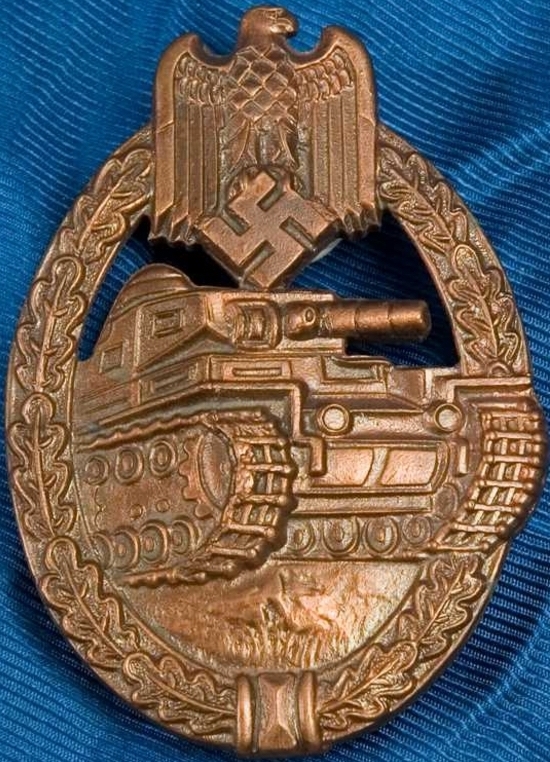
The Panzer Badge (Panzerkampfabzeichen) was introduced on 20 December 1939 for tank crews who had taken part in three armoured assaults on three different days. On 1 June 1940 a bronze version was added for panzer grenadiers and other units serving with the panzer divisions, such as armoured reconnaissance, signals and medical units; the silver badge remained for tank crews. From June 1943 higher grades were introduced for 25, 50, 75 and 100 engagements.
The badge is oval: a tank seen three-quarters from the front, inside an oak wreath, under the Wehrmacht eagle and swastika. The silver or bronze finish tells you which of the two groups it was meant for.
The Crimea Shield
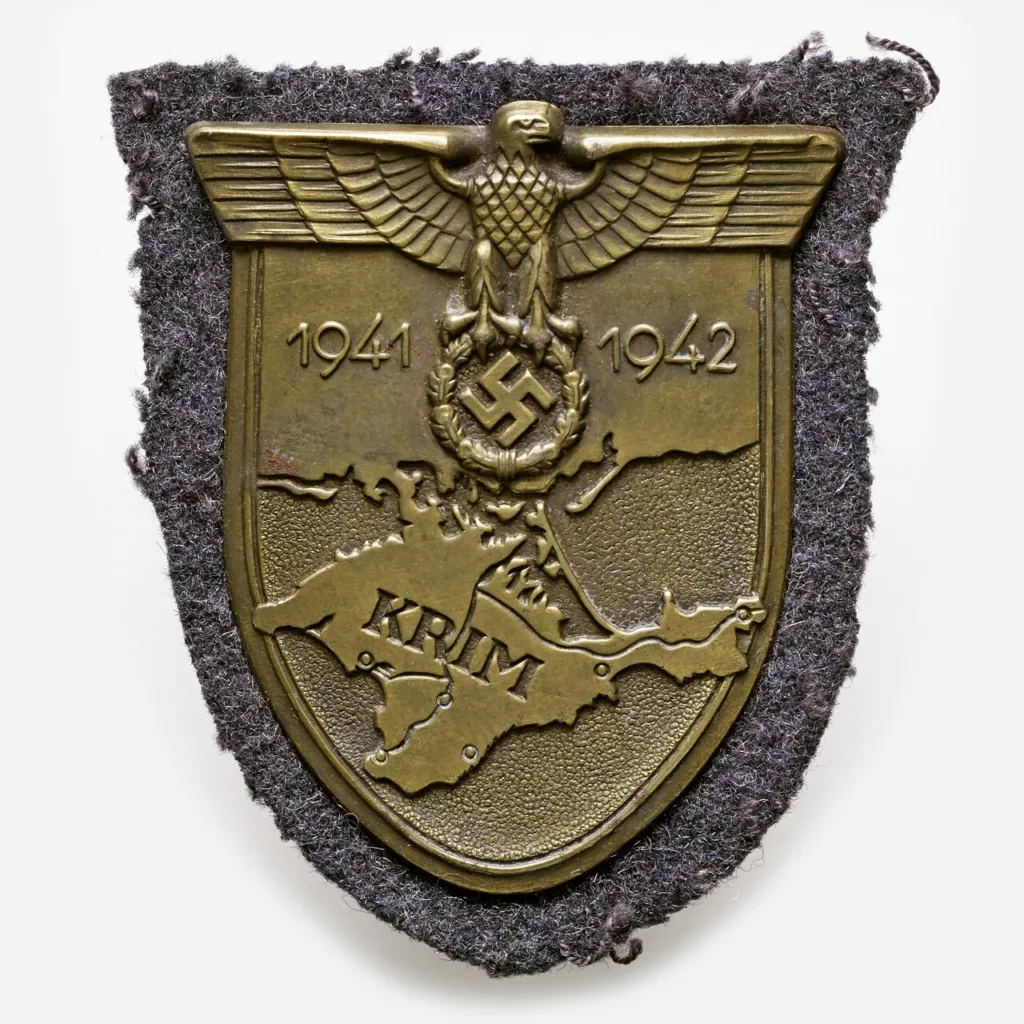
The Crimea Shield (Krimschild) was instituted on 25 July 1942 for the forces under Field Marshal Erich von Manstein that fought in the Crimea between 21 September 1941 and 4 July 1942, when Sevastopol fell. Air force, naval and Romanian troops in the campaign were also eligible. A man qualified if he had served in the area for at least 90 days, had been wounded there, or had taken part in at least one major operation. With about 250,000 awarded, it was the most widely issued German campaign shield.
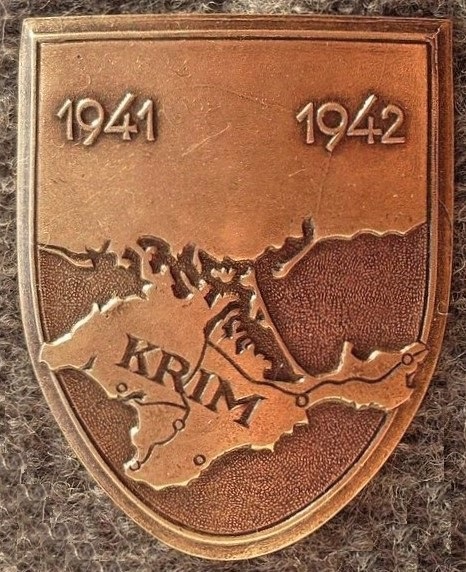
The shield is stamped sheet metal with a bronze finish: an eagle with a wreath and swastika, the dates 1941 and 1942, and a map of the Crimean peninsula with the word KRIM. It was issued on a cloth backing in the colour of the recipient’s service and sewn onto the upper left sleeve of the tunic and greatcoat. A 1957 version exists without the eagle and swastika.
Before you buy
- Reproductions of all three awards are common. A low price for a “rare” piece is a warning sign.
- Ask for clear photographs of the front, the back and the fittings (ribbon ring, pin or prongs).
- Ground-dug and relic examples are honest pieces of history, but their condition should be described plainly.
- Be careful with any story attached to an award. A name, unit or battle should be backed by documents, not by a seller’s word.
See what is available now in Awards & Badges. Related reading: German soldier’s equipment · the Battle of Kursk · all collector guides.
More award guides: the Wound Badge · combat badges · the Eastern Medal and campaign shields · Soviet orders and medals