
The Battle of Berlin, from 16 April to 2 May 1945, was the last great offensive of the war in Europe. Three Soviet fronts broke through the German defences on the Oder, encircled the capital and took it street by street. Hitler killed himself on 30 April; the Berlin garrison surrendered on 2 May, six days before the end of the war in Europe.
The Oder and the Seelow Heights
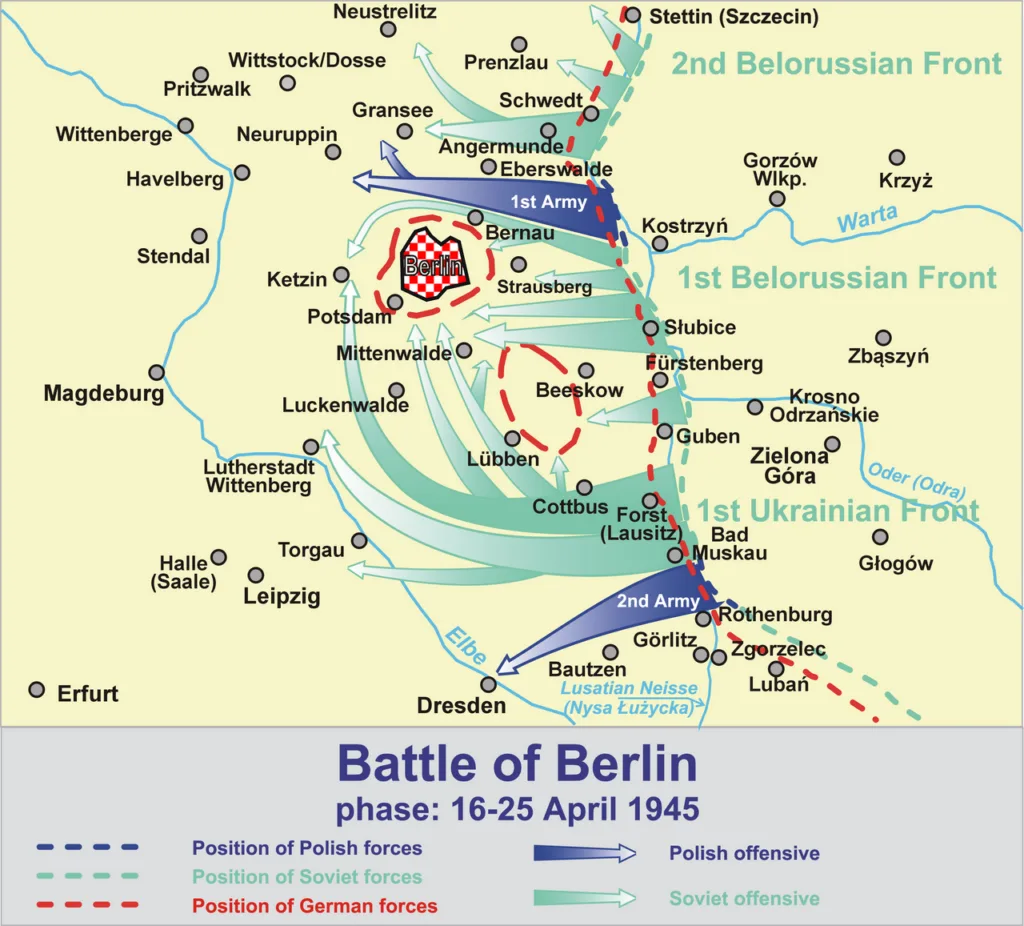
By early 1945 the Red Army stood on the Oder, about 70 kilometres from Berlin. The offensive opened on 16 April. Marshal Georgy Zhukov’s 1st Belorussian Front attacked from the Küstrin bridgehead against the Seelow Heights, where German defences on the high ground held it up for several days of costly fighting. To the south, Marshal Ivan Konev’s 1st Ukrainian Front crossed the Neisse and advanced quickly; in the north, Marshal Konstantin Rokossovsky’s 2nd Belorussian Front attacked across the lower Oder.
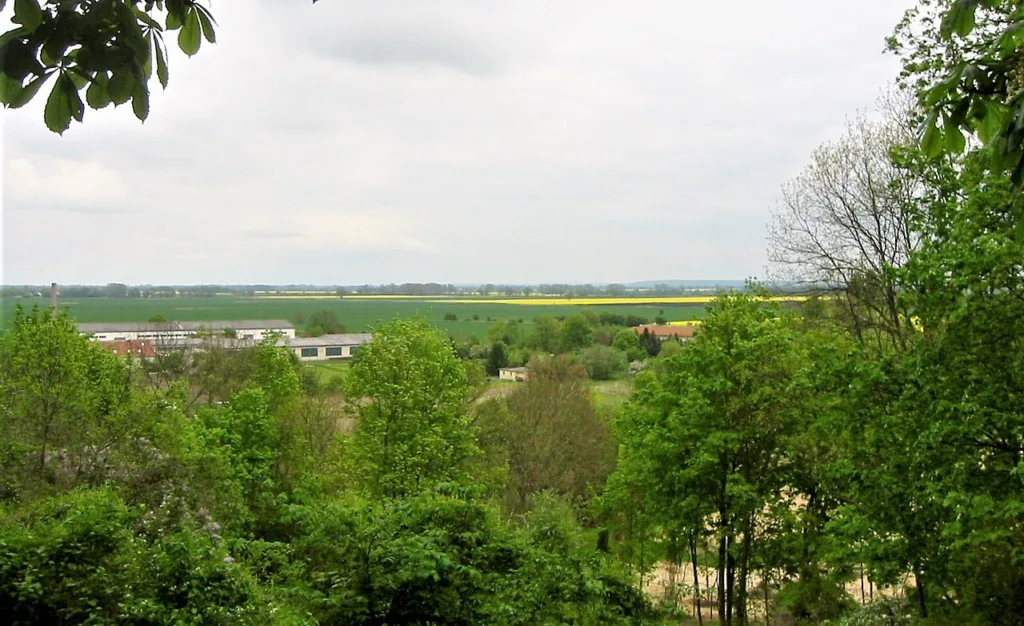
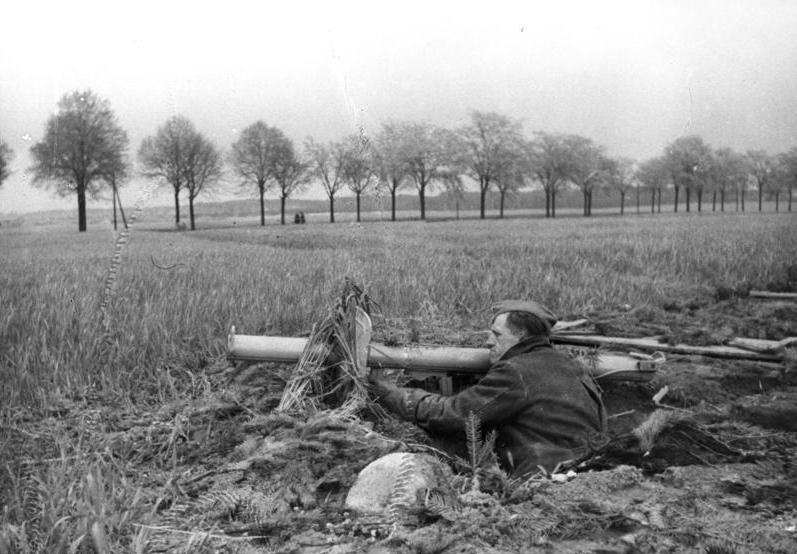
Close to a million soldiers of the 1st Belorussian Front took part in the attack on the Seelow Heights, among them 78,556 soldiers of the Polish 1st Army. In the early hours of 16 April the offensive opened with a massive bombardment by some 9,000 guns and Katyusha rocket launchers, and the infantry and tanks went forward with searchlights lighting up the battlefield. The German defenders on the heights above the marshy Oderbruch valley fought hard, and the heights were taken only on 19 April, after three days of fighting.
Encirclement and the fight for the city
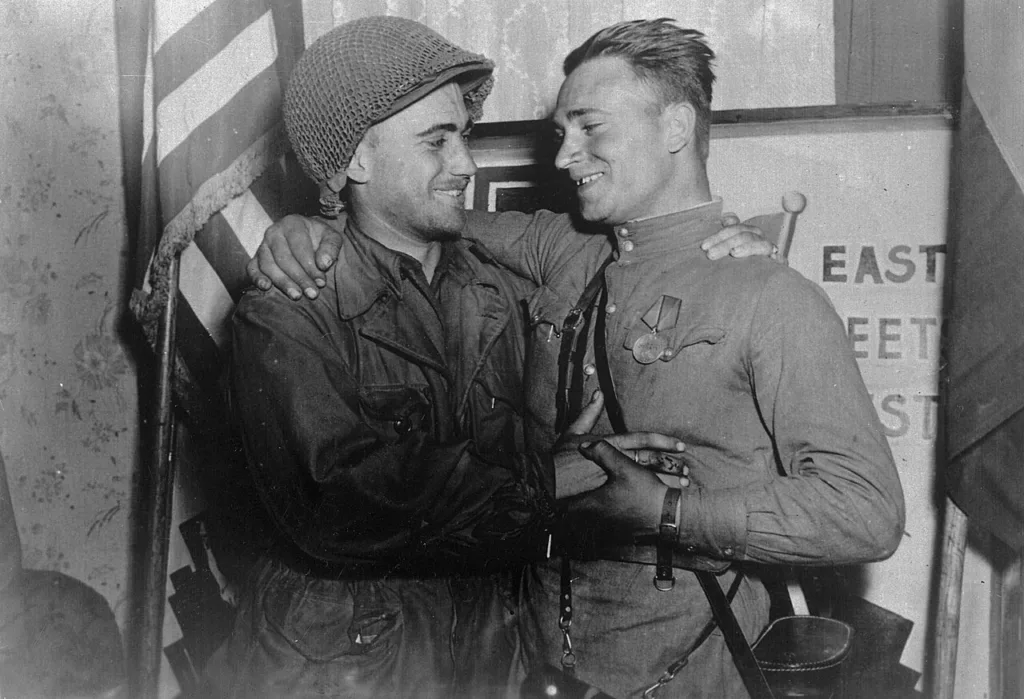
After the breakthrough the Soviet fronts encircled Berlin, while much of the German 9th Army was trapped south-east of the city near Halbe. On 25 April Soviet and American troops met on the Elbe near Torgau. On 23 April General Helmuth Weidling had taken command of the city’s defence, with depleted army and Waffen-SS divisions, Volkssturm militia and Hitler Youth. Soviet assault groups fought their way towards the government quarter, and the Reichstag building was stormed at the end of April.
Hitler killed himself in his bunker on 30 April. Weidling surrendered the garrison on 2 May 1945. Fighting continued north-west, west and south-west of Berlin until the end of the war in Europe on 8 May (9 May in the Soviet Union).
The storming of the Reichstag
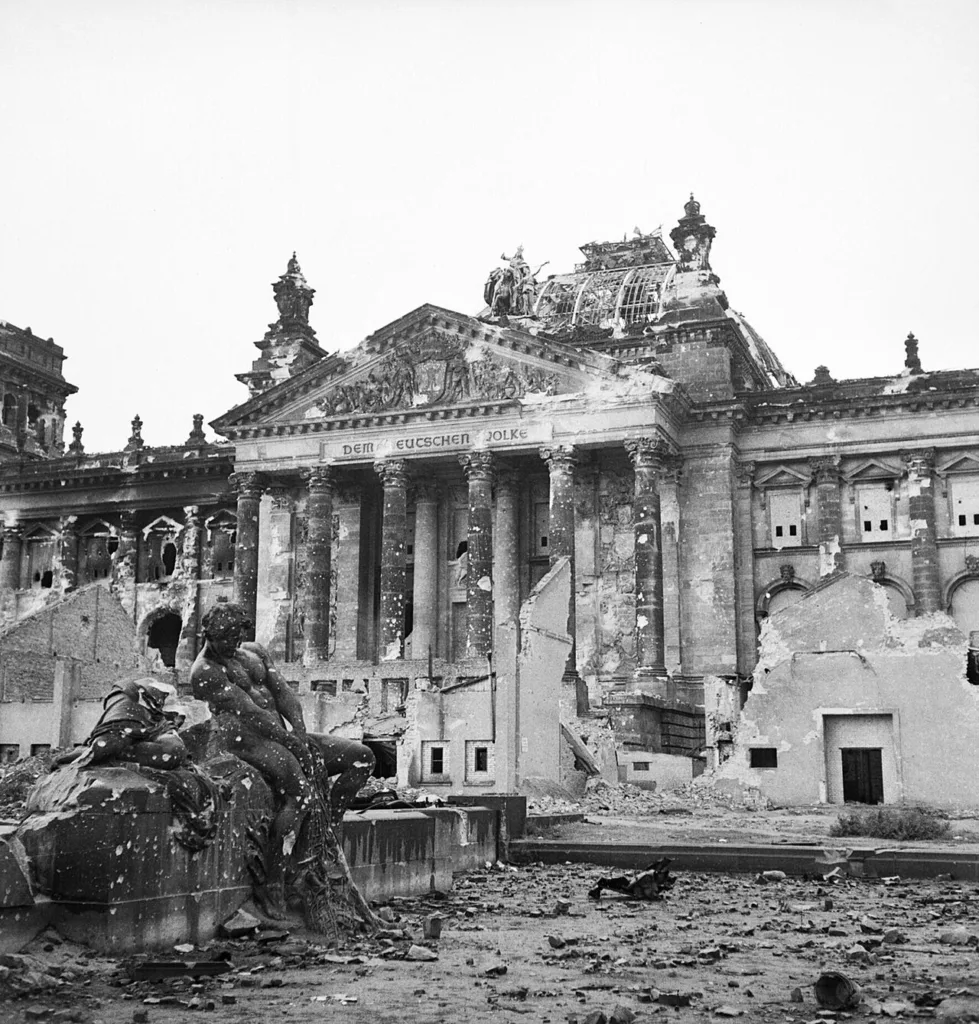
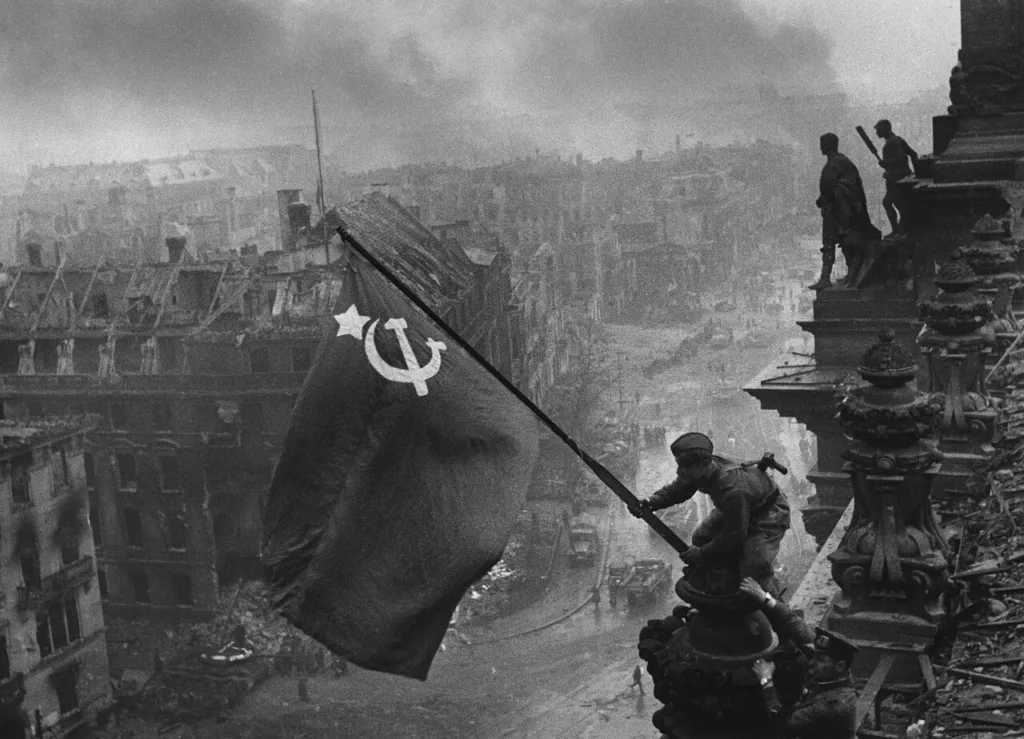
From 26 April General Vasily Chuikov’s 8th Guards Army and the 1st Guards Tank Army fought through the southern districts towards Tempelhof airport and across the Landwehr Canal into the Tiergarten, while the 3rd Shock Army advanced on the government quarter from the north. The Reichstag building was strongly held. At 6 a.m. on 30 April Soviet troops attacked it with artillery support, but German fire from the trenches around it and from the heavy anti-aircraft guns on the Zoo flak tower held them back, and only in the evening did they get inside. The fighting went on from room to room, with German soldiers in the basement counter-attacking, and only on 2 May was the whole building in Soviet hands. The Victory Banner was raised over it, and Yevgeny Khaldei’s photograph of soldiers raising a flag over the Reichstag became one of the best-known images of the war.
Surrender
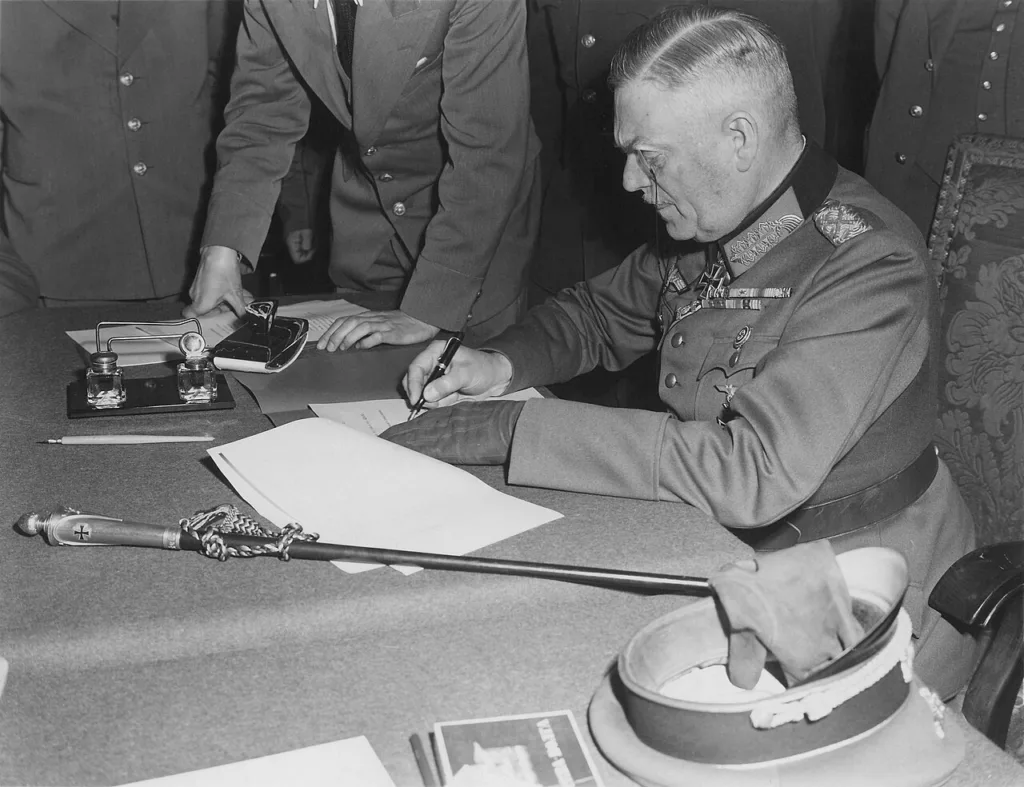
In the early hours of 1 May General Hans Krebs, the chief of the German general staff, came to Chuikov’s headquarters to negotiate, but the Soviet command demanded unconditional surrender. On 2 May General Weidling ordered the garrison to lay down its arms, and the fighting in the city ended. Late on 8 May 1945, at the Soviet headquarters in the Berlin suburb of Karlshorst, Field Marshal Wilhelm Keitel signed the unconditional surrender of the German armed forces in the presence of Marshal Zhukov and representatives of the Western Allies.
The cost
According to Grigoriy Krivosheev, declassified Soviet archival data give 81,116 Soviet dead for the whole operation, including the Seelow Heights and Halbe, and 280,251 wounded or sick. German research puts the number of German military dead between 92,000 and 100,000. Some 125,000 civilians are estimated to have died during the operation.
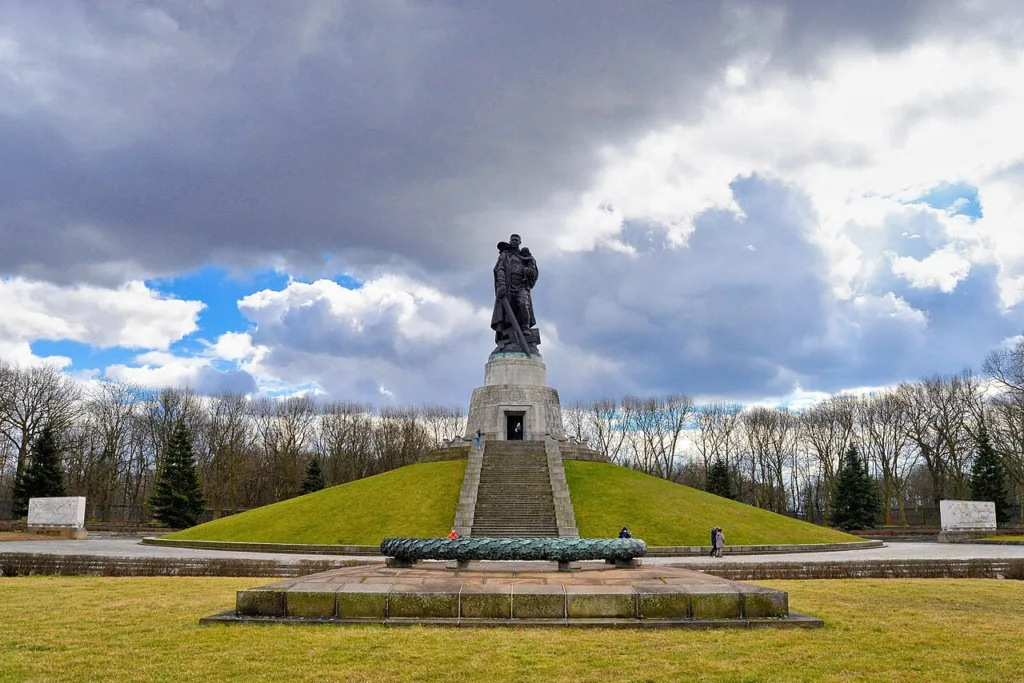
Many of the Soviet soldiers who fell in Berlin are buried in the city’s Soviet war memorials. The largest, in Treptower Park, was opened in 1949; its centrepiece is a twelve-metre statue of a Soviet soldier holding a rescued German child.
Read also about the Battle of Moscow, where the German advance was first stopped in 1941, and see the other history pages.
Sources and further reading
- Battle of Berlin – Wikipedia
- Battle of the Seelow Heights – Wikipedia
- Antony Beevor, Berlin: The Downfall 1945 (2002).
- G. F. Krivosheev (ed.), Soviet Casualties and Combat Losses in the Twentieth Century (1997).
Written by WW2ALEX from the sources listed above. Images from Wikimedia Commons are credited in their captions.