
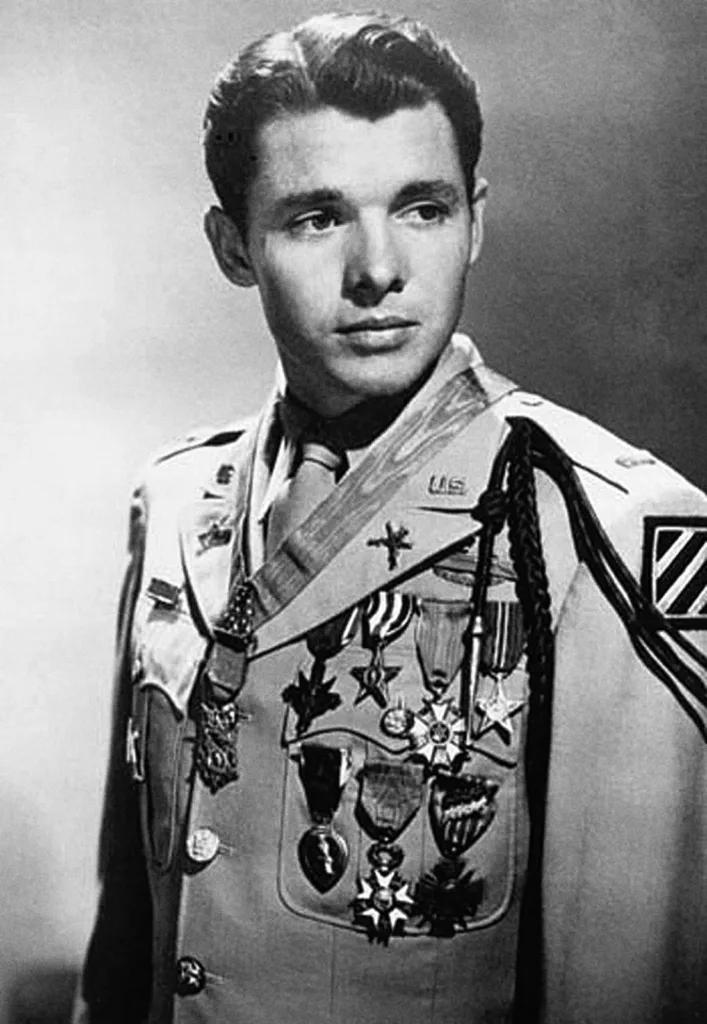
Audie Leon Murphy (1925–1971) was the most decorated American combat soldier of the Second World War. A small, poor farm boy from Texas who was turned down by the Marines for being too light, he fought from Sicily to Germany with the 3rd Infantry Division, rose from private to lieutenant, received the Medal of Honor for holding off a German attack almost single-handed, and later played himself in the film of his own memoir.
From Texas to North Africa
Murphy was born on 20 June 1925 near Kingston in Hunt County, Texas, the seventh of twelve children of a poor sharecropping family. His father left the family, and his mother died when he was a teenager. After the attack on Pearl Harbor he tried to join up, but the Army, the Navy and the Marine Corps all turned him down at first for being underweight. He was finally accepted by the Army on 30 June 1942.
He was assigned to Company B, 1st Battalion, 15th Infantry Regiment, 3rd Infantry Division, and joined the division in North Africa, where it trained for the invasion of Sicily.
Sicily, Anzio and southern France
Murphy went ashore at Licata, Sicily, on 10 July 1943 as a division runner, and fought on into Italy. In 1944 he took part in the bitter fighting at the Anzio beachhead, the advance on Rome and, in August, the landings in southern France. There, after his best friend was killed by Germans who had pretended to surrender, Murphy stormed the German position alone; for this action he received the Distinguished Service Cross. Wounded several times, he kept returning to his unit, and on 14 October 1944 he received a battlefield commission as a second lieutenant and became a platoon leader.
Holtzwihr, January 1945
In January 1945 the 3rd Infantry Division was fighting in the Colmar Pocket in Alsace in deep snow. On 26 January, near the village of Holtzwihr, Murphy’s company was attacked by German tanks and infantry. Ordering his men back to the woods, he climbed onto a burning M10 tank destroyer that had been abandoned near his position and, wounded in the leg, fired its .50 calibre machine gun at the advancing Germans for about an hour, while directing artillery fire by field telephone. When his ammunition ran out he went back to his men and led them in a counter-attack that drove the Germans off. For this action he received the Medal of Honor.
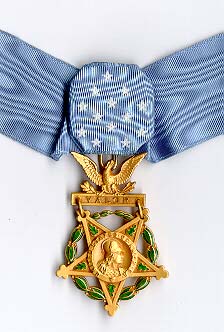
By the end of the war Murphy had received every American award for valour available to an Army ground soldier, together with French and Belgian decorations, including the French Legion of Honour and Croix de Guerre.
Hollywood and the cost of war
After the war Murphy became a film actor. His memoir To Hell and Back appeared in 1949, and in 1955 he played himself in the film based on it. He made more than forty films, mostly westerns, and also wrote country songs. He suffered from what is now called post-traumatic stress disorder – then known as “battle fatigue” – and spoke openly about it, at a time when this was rarely done, calling for help for returning veterans.
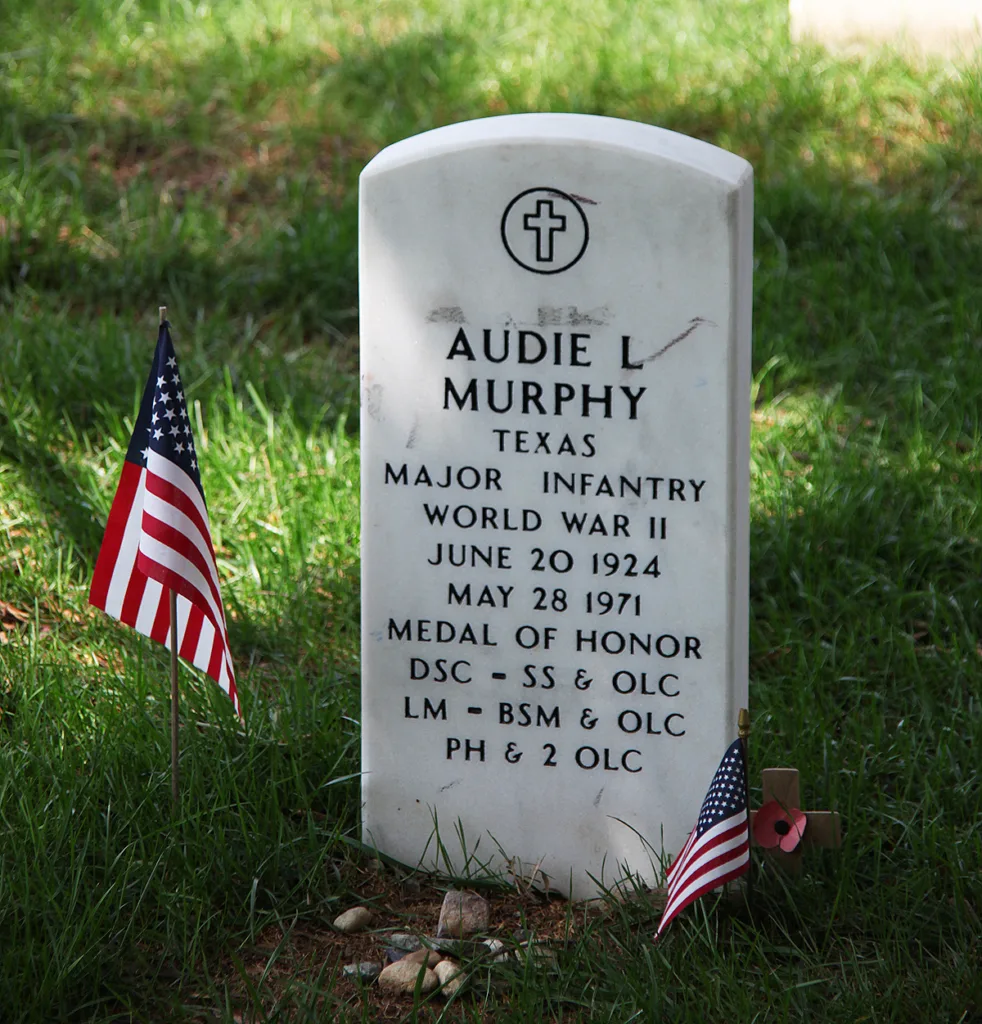
Murphy died in a plane crash in Virginia on 28 May 1971, shortly before his 46th birthday. He was buried with full military honours at Arlington National Cemetery.
More: Desmond Doss · Witold Pilecki · all heroes of the war
Sources and further reading
- Audie Murphy – Wikipedia
- Audie L. Murphy – Congressional Medal of Honor Society
- Audie Murphy, To Hell and Back (1949).