
Lydia Vladimirovna Litvyak (1921–1943), known to her comrades as Lilya, was a Soviet fighter pilot who fought over Stalingrad and the Donbas and became the most successful woman fighter pilot in history. She flew with men’s fighter regiments, was wounded twice, destroyed a heavily defended German observation balloon, and was killed in an air battle over the Mius front on 1 August 1943, a few weeks before her 22nd birthday. In 1990 she was made a Hero of the Soviet Union.
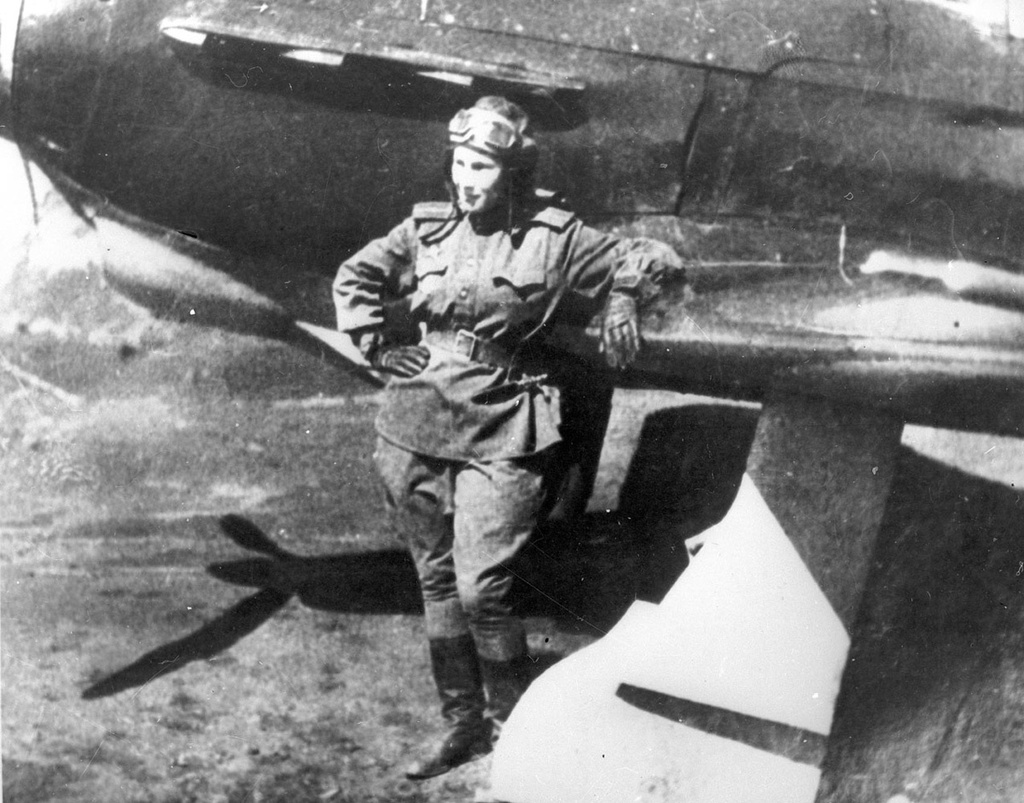
A Moscow flying instructor
Litvyak was born in Moscow on 18 August 1921. Her mother worked in a shop and her father was a railwayman. She was fascinated by flying from childhood: at fourteen she joined a flying club, at fifteen she made her first solo flight, and she went on to graduate from the Kherson flying school. Before the war she worked as an instructor at the Kalinin aero club, where she trained 45 pilots.
When Germany invaded in June 1941 she tried to join a military aviation unit but was turned down for lack of experience. She added a hundred hours to her logged flying time and was accepted into the 586th Fighter Aviation Regiment, the all-women air defence regiment formed by Marina Raskova, where she trained on the Yakovlev Yak-1.
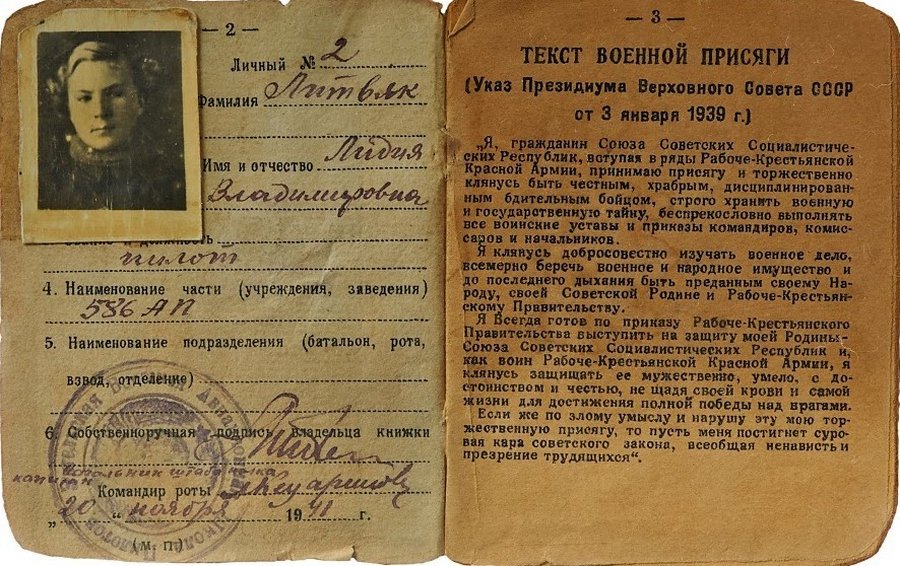
Over Stalingrad, September 1942
Litvyak flew her first combat patrols over Saratov in the summer of 1942. In September she and three other women pilots – Raisa Belyaeva, Yekaterina Budanova and Mariya Kuznetsova – were sent with their ground crews to the 437th Fighter Aviation Regiment, a men’s unit fighting over Stalingrad. They reached the regiment’s airfield on the east bank of the Volga on 10 September, found it under attack, and moved to another field at Srednyaya Akhtuba.
Three days later, on 13 September 1942, on her third mission over the city, four Yak-1s attacked a formation of Junkers Ju 88 bombers escorted by Messerschmitt Bf 109 fighters. Litvyak was credited with a Ju 88 and with a Bf 109 that was on the tail of her flight leader, Belyaeva – among the first air victories ever won by a woman fighter pilot. Regimental commander Boris Yeremin later described her as “a born fighter pilot”.
From October 1942 to January 1943 Litvyak and Budanova flew in the Stalingrad area with the 9th Guards Fighter Regiment under Lev Shestakov. When that regiment converted to the American P-39 Airacobra, the two women moved to Nikolai Baranov’s 296th Fighter Regiment, later the 73rd Guards, so that they could keep flying the Yak.
Free hunter, 1943
In February 1943 Litvyak received the Order of the Red Star, was commissioned as a junior lieutenant and was chosen for the okhotniki – “free hunters”, pairs of experienced pilots who searched for targets on their own initiative. On 22 March, flying in a group of six Yaks against a dozen Ju 88s, she shot down one of the bombers and was then wounded by the escorting Messerschmitts. She shot down one of them as well, and brought her damaged fighter back to the airfield despite losing a lot of blood. As a free hunter she twice had to make forced landings in aircraft damaged in combat.
In the 73rd Guards she often flew as wingman to the ace Captain Alexei Solomatin. On 21 May 1943 Solomatin was killed in a crash in front of the whole regiment while training a new pilot. In a letter to her mother, Litvyak wrote that only after his death had she understood that she loved him. Her mechanic, Inna Pasportnikova, remembered that from then on she wanted nothing but to fly combat missions.
The observation balloon
On the Mius front a German artillery observation balloon was directing fire onto the Soviet positions. Several pilots had tried to destroy it, but each was driven off by the dense anti-aircraft fire around it. Litvyak volunteered, was turned down, and insisted, explaining her plan: she would fly a wide circle around the battlefield, deep over German-held territory, and attack the balloon from the rear. On 31 May 1943 the plan worked, and the hydrogen-filled balloon went up in flames under her fire.
On 13 June 1943 she was made a flight commander in the 3rd Squadron. On 16 July, when six Yaks met some thirty Ju 88 bombers with fighter escort, she shot down a bomber and shared another, but was hit and had to belly-land; wounded for the second time, she refused to go on medical leave. On 19 and 21 July she shot down two more Messerschmitts. On 22 July she was awarded the Order of the Red Banner.
The last mission, 1 August 1943
On 1 August 1943 Litvyak flew her fourth sortie of the day from the airfield at Krasny Luch, escorting Il-2 ground-attack aircraft. While she was attacking a large group of German bombers, a pair of Bf 109s dived on her. Her comrade Ivan Borisenko last saw her through a gap in the clouds, her Yak-1 trailing smoke and pursued by several Messerschmitts. She did not return. She was 21 years old.
For years her grave was unknown. Inna Pasportnikova, her former mechanic, searched for it for decades with the help of volunteers, relatives and the press, examining dozens of crash sites. In 1979 the searchers found the grave of a woman pilot in the village of Dmitrievka in the Shakhtyorsk district, which was identified as Litvyak’s, and in 1988 her name was placed on the grave. On 5 May 1990 she was posthumously made a Hero of the Soviet Union, with the rank of senior lieutenant.
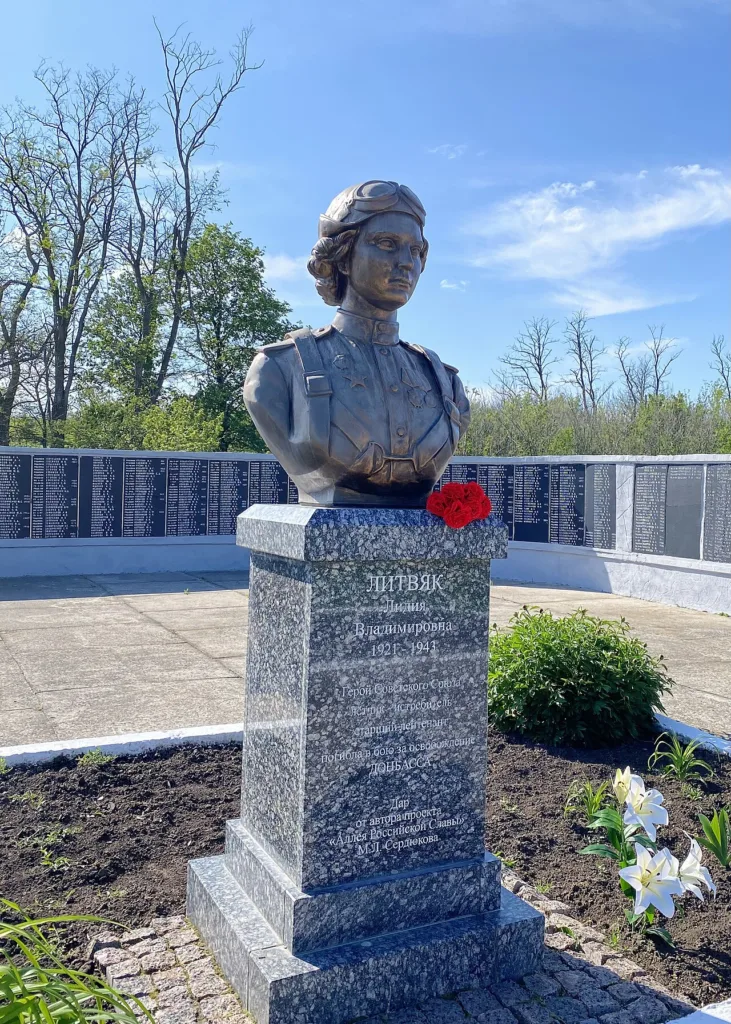
Memory
Besides the Gold Star and the Order of Lenin, Litvyak held the Order of the Red Banner, the Order of the Patriotic War 1st Class and the Order of the Red Star. A monument to her has stood in the central square of Krasny Luch since 1977, next to the school that bears her name, and a street in the town is named after her; in 2018 a memorial plaque was unveiled in Moscow. The Guinness Book of Records lists her as the woman pilot with the most air victories in the history of military aviation. In the English-speaking world she became known as the “White Rose of Stalingrad”.
More: Alexander Pokryshkin · Ivan Kozhedub · the Battle of Stalingrad · all heroes of the war