
Roza Georgiyevna Shanina (1924–1945) was a Soviet sniper credited with fifty-nine confirmed kills. A kindergarten teacher from the far north of Russia, she volunteered after her brother was killed, commanded a platoon of women snipers, was decorated for bravery, and was killed in East Prussia at the age of twenty. The war diary she kept at the front is one of the most personal Soviet records of a sniper’s war.
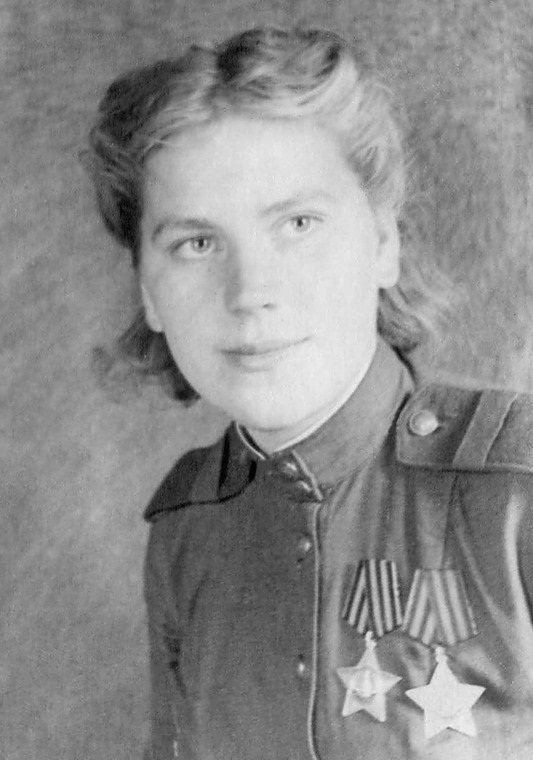
A girl from the taiga
Shanina was born on 3 April 1924 in the village of Yedma in the Arkhangelsk region of northern Russia, one of seven children of a collective-farm family. As a girl she walked 13 kilometres each way to the nearest middle school. At fourteen, against her parents’ wishes, she walked some 200 kilometres across the taiga to the railway station and travelled to Arkhangelsk to study at a college there. To support herself she took a job in a kindergarten, which came with a room, and studied in the evenings.
Volunteer
After the German invasion Arkhangelsk was bombed by the Luftwaffe; Shanina and other townspeople fought fires and kept watch on the rooftops to protect the kindergarten. Her two elder brothers volunteered for the army, and in December 1941 the family learned that nineteen-year-old Mikhail had been killed near Leningrad. Shanina went to the military commissariat and asked to serve; two more of her brothers would die in the war. In June 1942 she joined the universal military training programme, and after several applications the military commissariat allowed her to enrol in the Central Women’s Sniper Training School. There she trained with high marks and made close friends with two other girls, Aleksandra Yekimova and Kaleriya Petrova; she called the three of them “the vagrant three”.
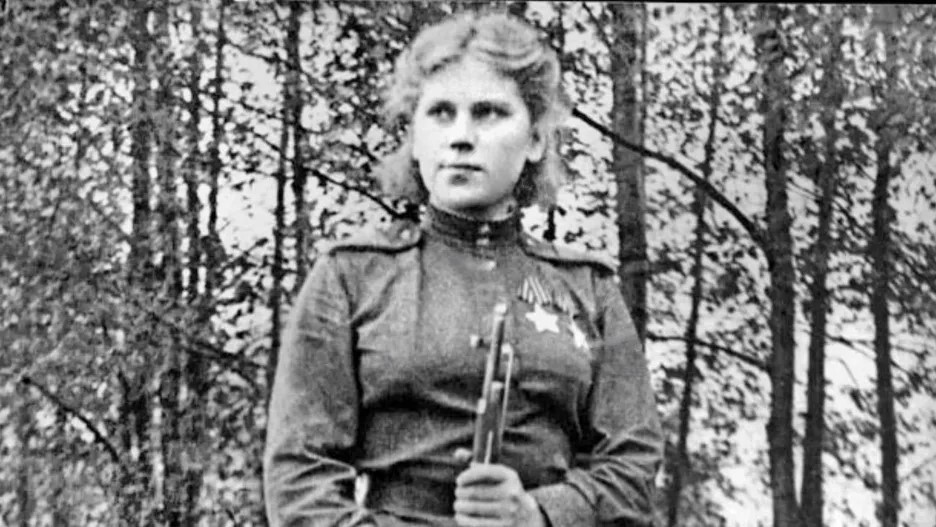
At the front, 1944
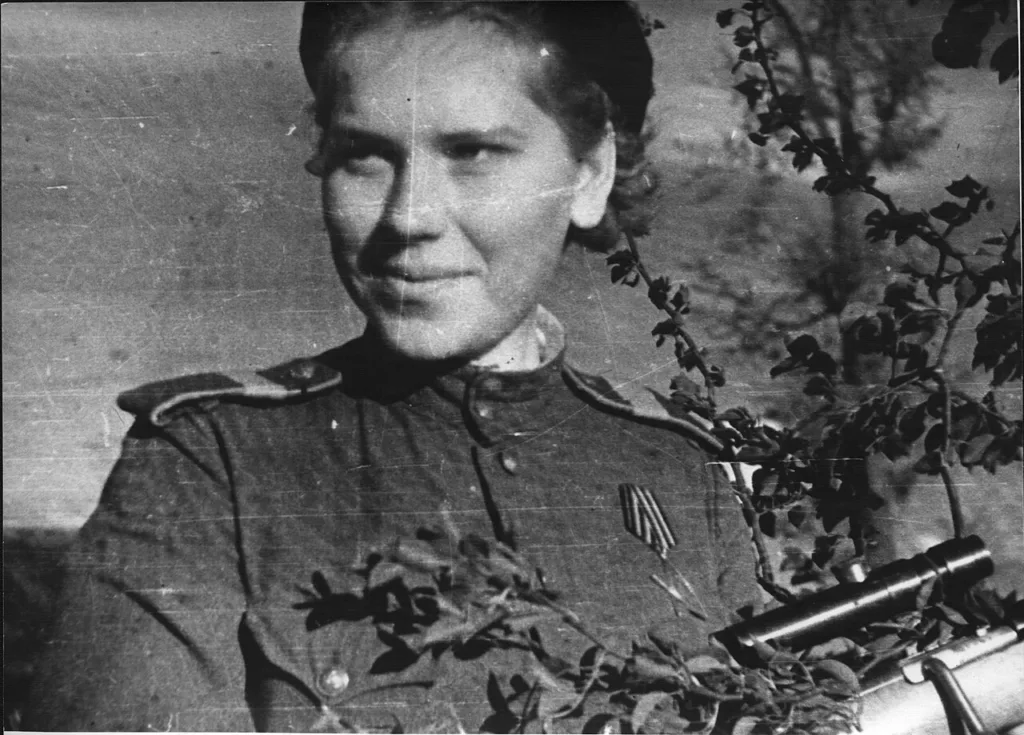
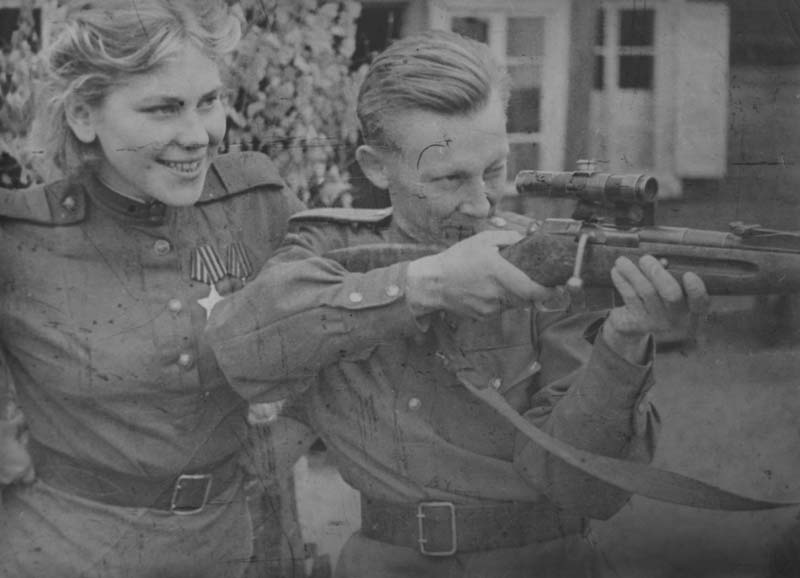
On 2 April 1944 she joined the 184th Rifle Division, where a separate platoon of women snipers had been formed, and she was made its commander. Three days later, south-east of Vitebsk, she killed her first German soldier. She was able to hit enemy soldiers with great precision and became known for her “doublets” – two hits with two shots fired in quick succession.
Her commendations followed quickly. On 18 April 1944 she received the Order of Glory 3rd Class – the first servicewoman of the 3rd Belorussian Front to be given it – for killing thirteen enemy soldiers while under fire. Later that year she received the Order of Glory 2nd Class, and for her actions in a battle near Schlossberg (today Dobrovolsk) in October 1944 she was awarded the Medal for Courage. During the Battle of Vilnius in July 1944 she killed twelve enemy soldiers. Her final tally was fifty-nine confirmed kills, and the Red Army newspaper Krasnaya Zvezda named her one of the best snipers in her unit.
Snipers were supposed to be kept away from ordinary infantry fighting, but Shanina wanted to be where the battle was and went into the front line without permission; she was sanctioned for it, though she was not court-martialled. In 1944 a Canadian newspaper called her “the unseen terror of East Prussia”.
Death in East Prussia
In January 1945 her division took part in the East Prussian offensive. On 27 January Shanina was severely wounded by a shell fragment while shielding the wounded commander of an artillery unit. She died the next day near the Reichau estate, today Cherepanovo in the Kaliningrad region. She was buried there and later reburied in Wehlau, today Znamensk.
The diary
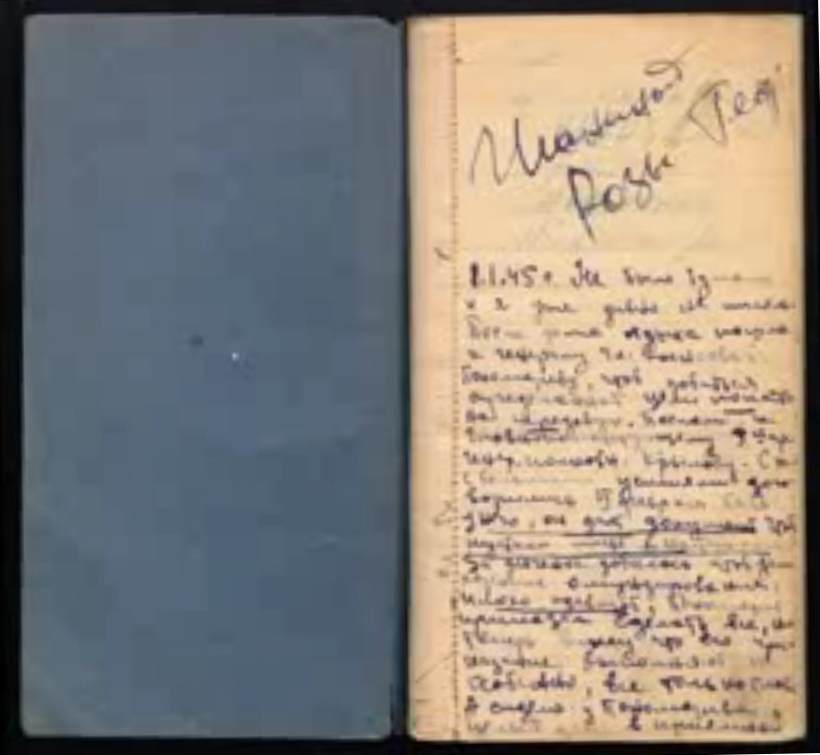
At the front Shanina kept a diary from 6 October 1944 to 24 January 1945, four days before her death. In it she wrote about the fighting, her friends, her fears and her hopes for life after the war – she wanted to go to university or, if that was not possible, to bring up orphans. The diary was first published in 1965 and has since been translated into English. Streets in Arkhangelsk, Shangaly and Stroyevskoye are named after her, and her home village of Yedma has a museum dedicated to her.
More: Lyudmila Pavlichenko · Vasily Zaitsev · all heroes of the war