
Yakov Fedotovich Pavlov (1917–1981) was the sergeant whose name was given to one of the most famous buildings of the Second World War: “Pavlov’s House” in Stalingrad. In September 1942 he and three soldiers took the four-storey apartment block from the Germans, and for almost two months a small garrison held it against constant attacks.
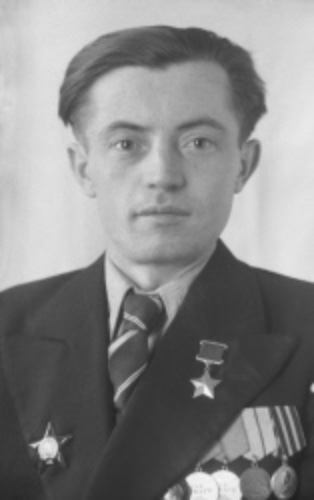
A sergeant of the 13th Guards
Pavlov was born on 17 October 1917 in the Novgorod region. He was called up in 1938 and during the war served as a machine-gun section commander, artilleryman and reconnaissance leader. In September 1942 he was a sergeant in the 42nd Guards Rifle Regiment of General Alexander Rodimtsev’s 13th Guards Rifle Division, which crossed the Volga into the burning centre of Stalingrad on 14–15 September and stopped the German advance to the river.
The house on 9 January Square
On the night of 27 September 1942 Pavlov led a group of four soldiers that drove the Germans out of a four-storey residential building on 9 January Square (today Lenin Square). The building stood at right angles to the Volga embankment and gave a view far over the German positions to the west, north and south. A few days later the group was reinforced; under the command of Lieutenant Ivan Afanasyev a garrison of between 30 and 50 men of several nationalities held the house.
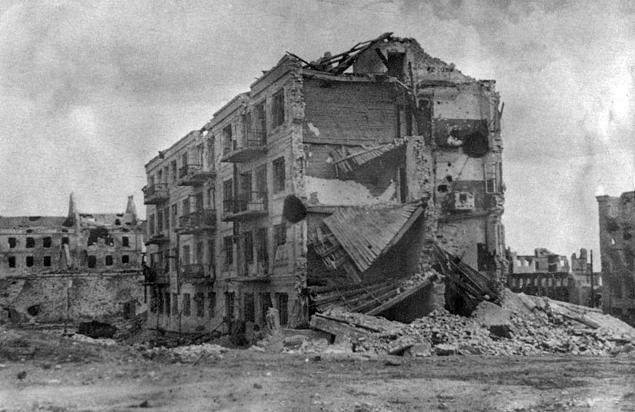
The defenders turned the house into a fortress. They laid mines on every approach to the square, put barbed wire round the building, set machine guns in the windows and placed an anti-tank rifle on the upper floors. A trench was dug from the back of the house to the Volga bank, so that ammunition, food and reinforcements could be brought in and the wounded taken out. Civilians sheltered in the basement throughout the fighting.
58 days
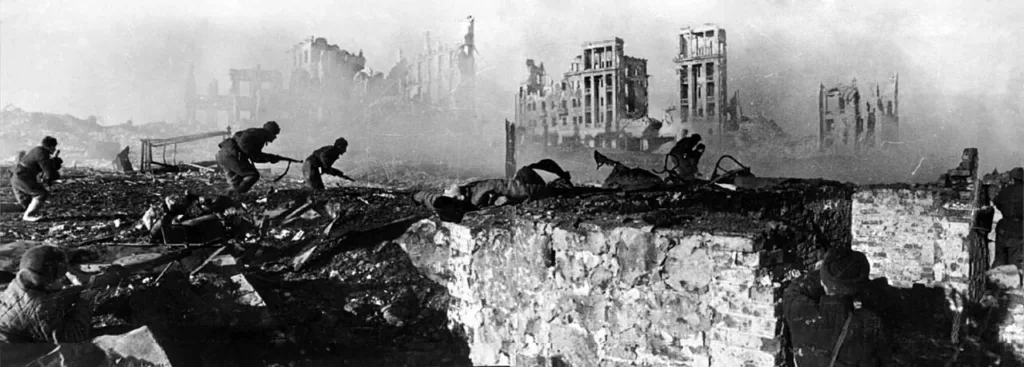
For 58 days, from 27 September to 25 November 1942, the Germans attacked the house with infantry, tanks and artillery, and every attack was beaten off. The garrison was relieved only when the great Soviet counter-offensive around Stalingrad had begun. General Vasily Chuikov, commander of the 62nd Army, later said that the Germans lost more men trying to take Pavlov’s House than they had lost taking Paris.
To the end of the war
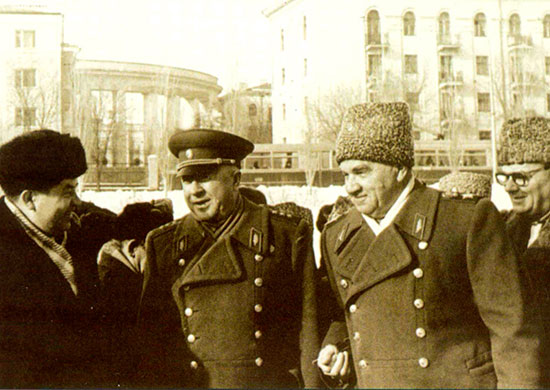
Pavlov went on fighting to the end of the war on the 3rd Ukrainian and 2nd Belorussian Fronts. On 17 June 1945 he was made a Hero of the Soviet Union for the defence of the house; he also received the Order of Lenin, the Order of the October Revolution and two Orders of the Red Star. After the war he returned to the Novgorod region, joined the Communist Party and was three times elected a deputy of the Supreme Soviet of the Russian Federation. He died on 28 September 1981 and is buried in Veliky Novgorod.
The house today
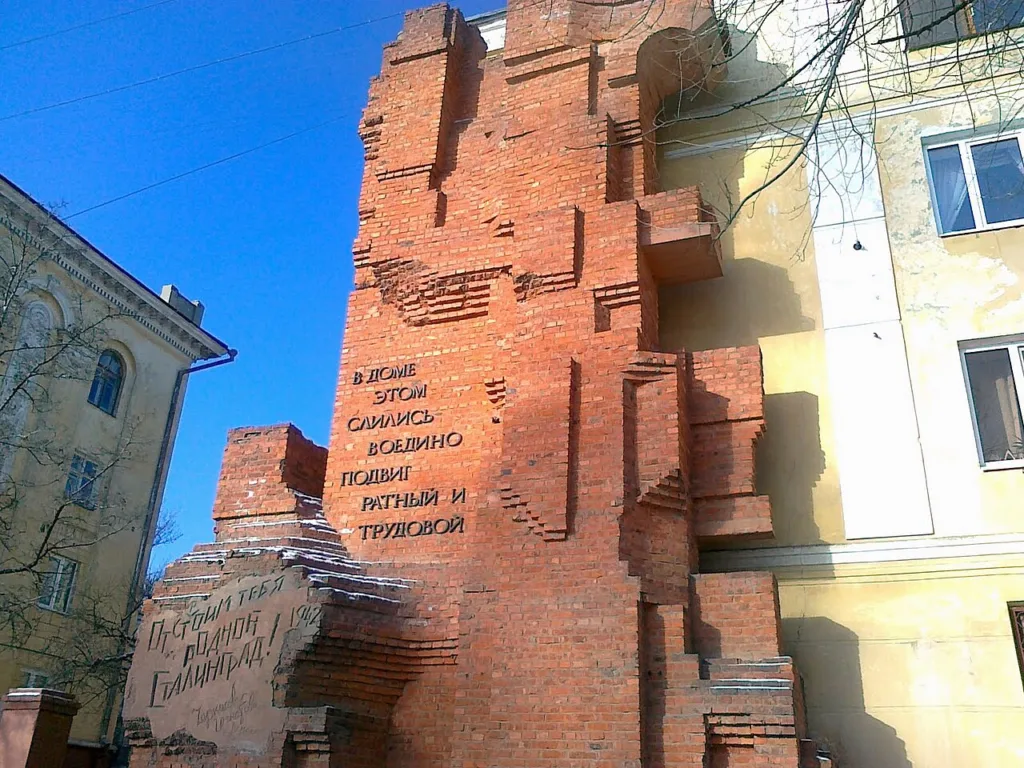
Pavlov’s House was one of the first buildings in Stalingrad to be rebuilt after the war, and it is still a residential building. A memorial wall made from the bricks of the ruined city stands at its end facing Lenin Square, with the words “In this house were joined in fusion the heroism of arms and the heroism of labour”.
More: the Battle of Stalingrad · Vasily Zaitsev · all heroes of the war