
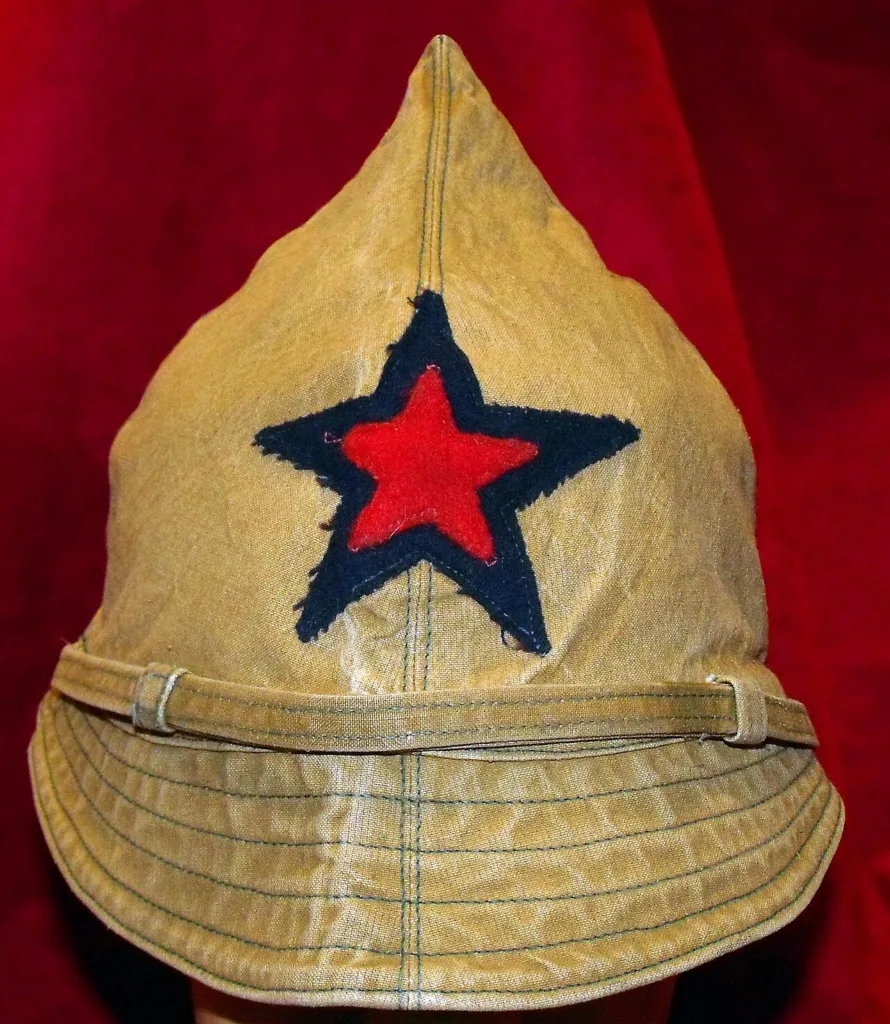
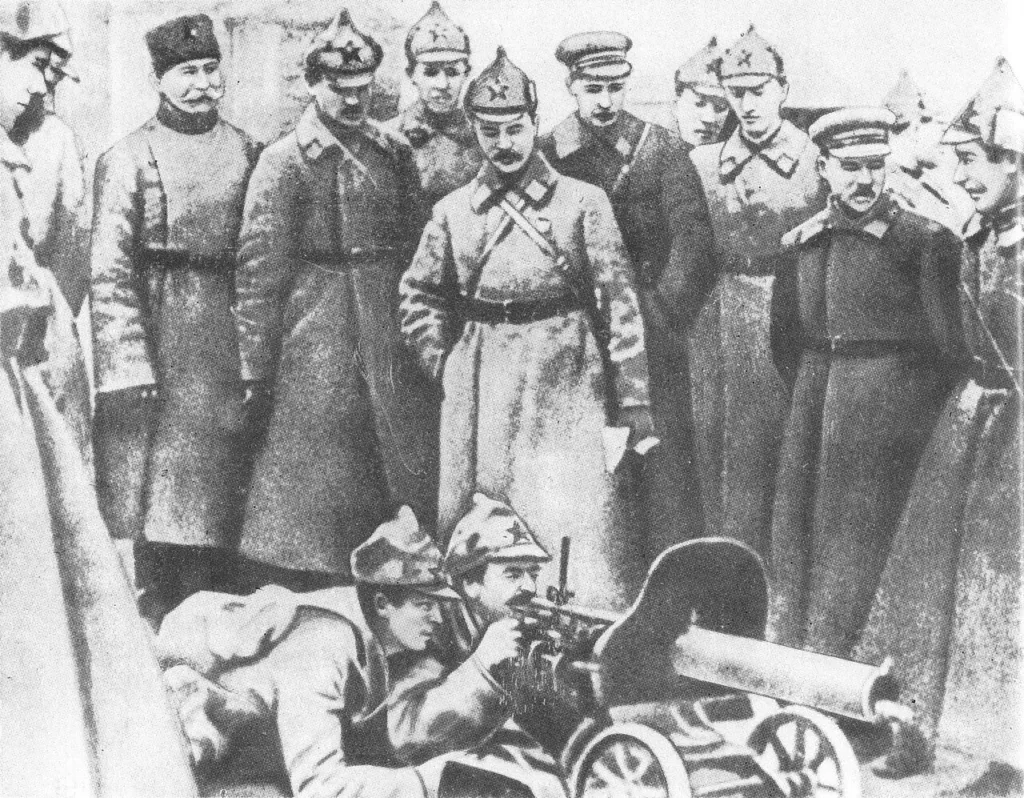
The budenovka – the pointed cloth helmet with a star on the front – is the most recognisable headgear of the early Red Army. It belongs to the Russian Civil War and the interwar years rather than to the Great Patriotic War, but it was still seen in 1939–1941. This guide explains where it came from, how it changed and why it disappeared.
Name and origin
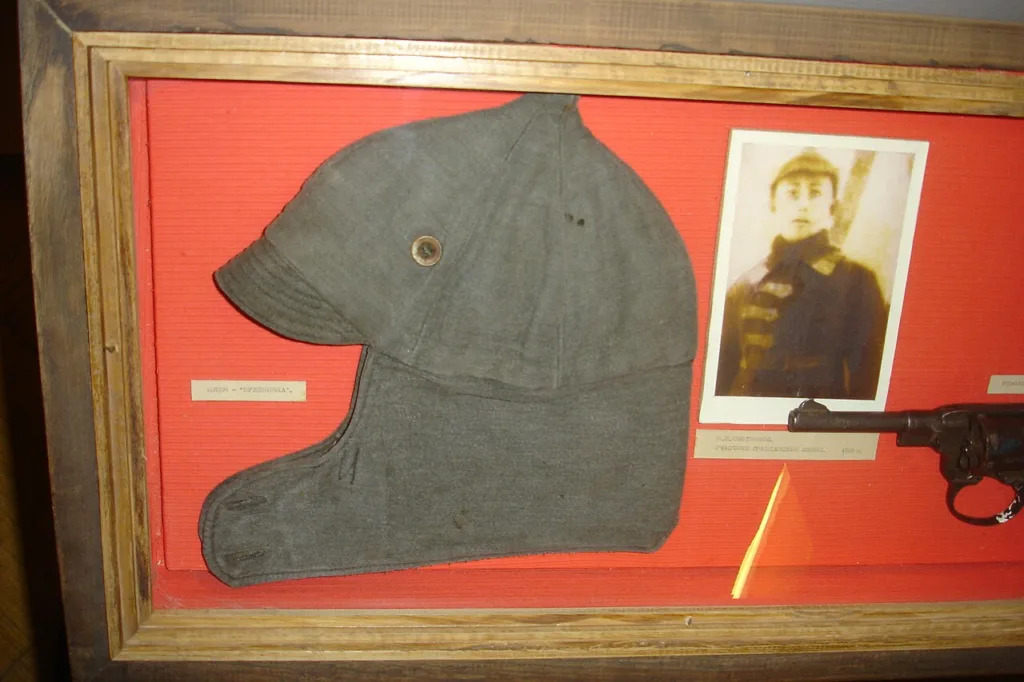
Its official name was the “cloth helmet” (shlem sukonny). It was called the budenovka after the cavalry commander Semyon Budyonny, and it was also known as the frunzenka after Mikhail Frunze. The design is credited to the painter Viktor Vasnetsov, who took his inspiration from a 12th-century warrior’s helmet. The budenovka entered service in 1918, and in January 1919 it was authorised as winter headgear.
The 1919 regulations and the coloured stars
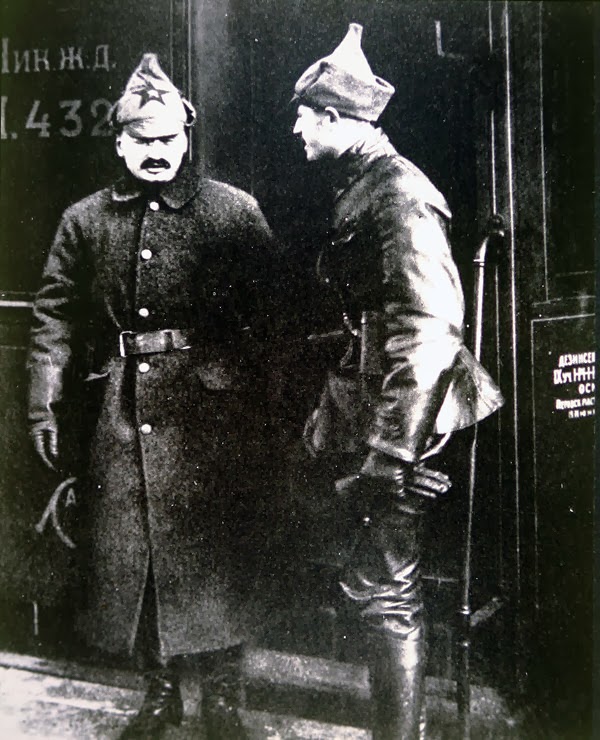
An order of the Revolutionary Military Council of 16 January 1919 (No. 116) fixed the winter helmet as a cap of khaki cloth on a cotton-wadding lining, with a peak at the front and a neck flap at the back whose long ends could be buttoned under the chin; folded up, the flap was buttoned to the crown. Above the peak was sewn a five-pointed cloth star, and in its centre was fixed a metal badge – a red-enamelled star with a crossed plough and hammer.
The colour of the cloth star, and of the cloth covering the helmet’s buttons, showed the soldier’s branch of service. The same order set six colours:
- Infantry – crimson
- Cavalry – blue
- Artillery – orange (black from 31 January 1922)
- Air fleet – light blue
- Engineers – black
- Border guards – green
An order of 8 April 1919 changed the silhouette slightly and enlarged the star. Until February 1922 the cloth star was edged with a narrow black piping – red on black stars. From April 1919 to February 1922 the budenovka was worn all year round, and in the hard conditions of the Civil War many were made with only approximate regard to the regulations, often without the metal badge. It also had less respectful nicknames, such as the “lightning rod”, because of its tall point.
How to recognise it
- Material. Khaki woollen broadcloth.
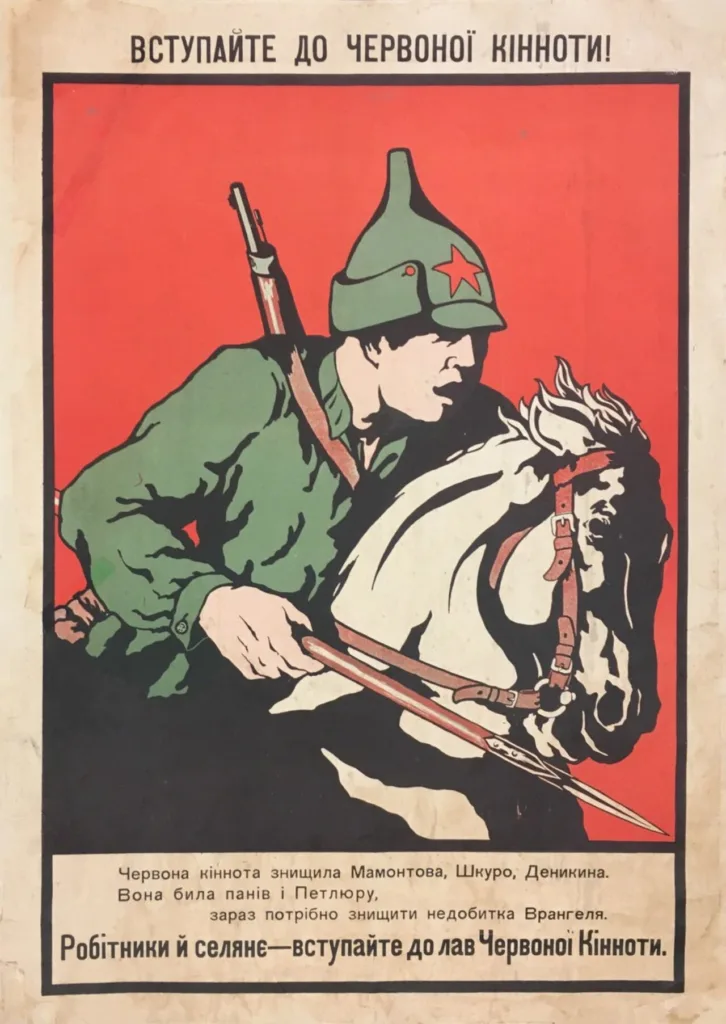
- The point. The spike on top was formed by a stiffened coil sewn into the crown and covered with cloth. The first model had a high point; in 1927 it was replaced by a more practical model with a lower point.
- Flaps. A peak at the front and flaps covering the ears and neck that could be let down and buttoned under the chin.
- The star. A cloth star sewn on the front.
- Summer version. A lighter summer budenovka without flaps existed for a short time.
Why it disappeared
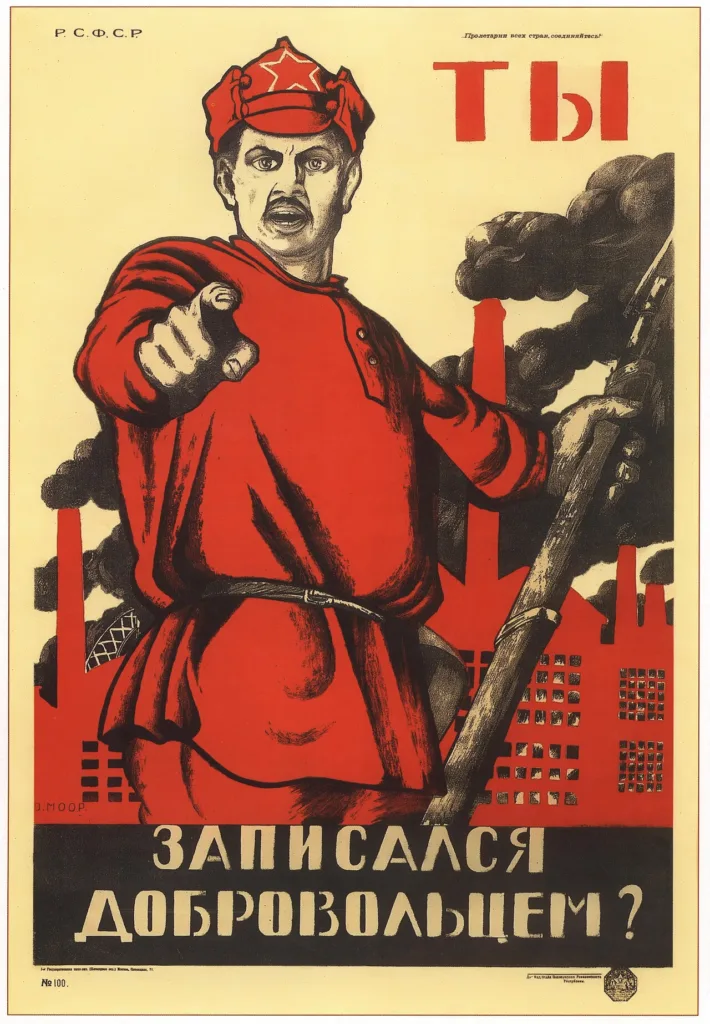
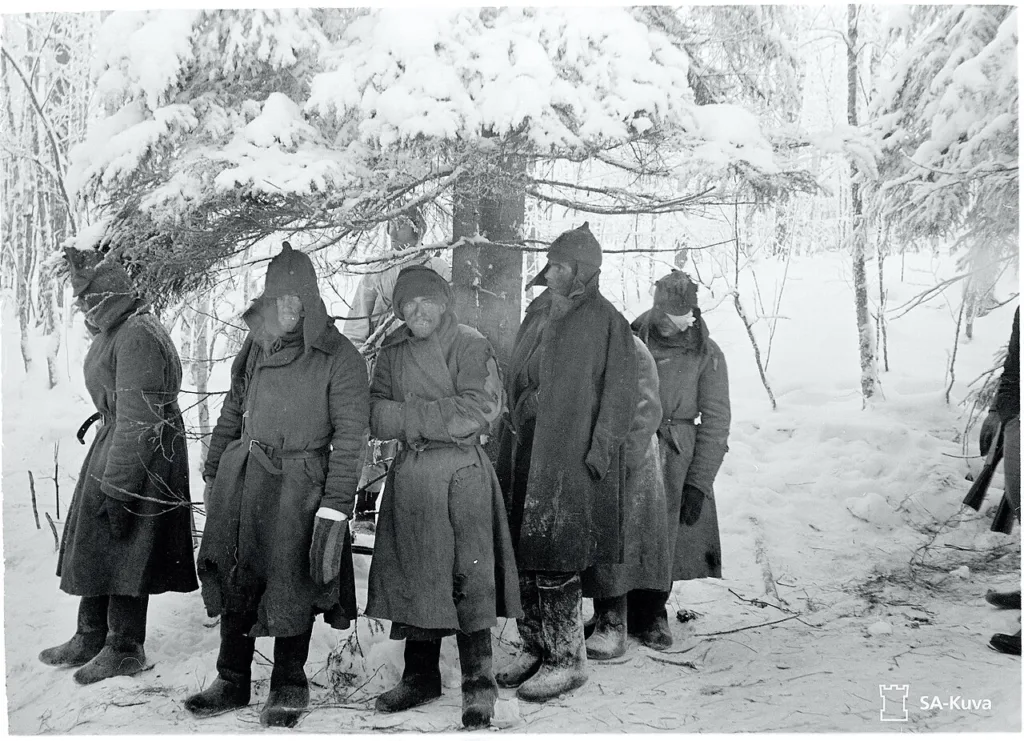
The budenovka was easy to make but needed expensive wool, gave poor protection in real cold and could not be worn under a steel helmet. It began to be phased out in the army reforms of the mid-1930s, from 1935. It was still worn in the Winter War against Finland in 1939–1940, where Soviet equipment and clothing failed badly, and after that war the Red Army moved to the pilotka side cap and the fur ushanka. By June 1941 the budenovka had mostly been replaced, although some were still used by reserve troops, factory militia and partisans.
In 1922 a summer helmet of the same shape, made of lighter cotton fabric, was introduced for all branches instead of the peaked cap, and was worn for a short time. From December 1935 the winter helmets of the air force commanders were dark blue and those of the armoured troops steel-grey. In 1940, after the Soviet–Finnish war had shown that the cloth helmet was too cold for real winter conditions, an order of the People’s Commissar of Defence replaced it with the fur ushanka as the Red Army’s winter headgear.
For collectors
Because it was largely withdrawn before June 1941, an original budenovka is a pre-war Red Army item rather than typical wartime headgear. Stylised budenovkas were also made as children’s hats in Soviet times, and modern copies are common, so material and construction should be checked carefully.
Related: an original pre-war budenovka in the shop · equipment of the Red Army rifleman · Soviet WW2 helmets · all collector guides