
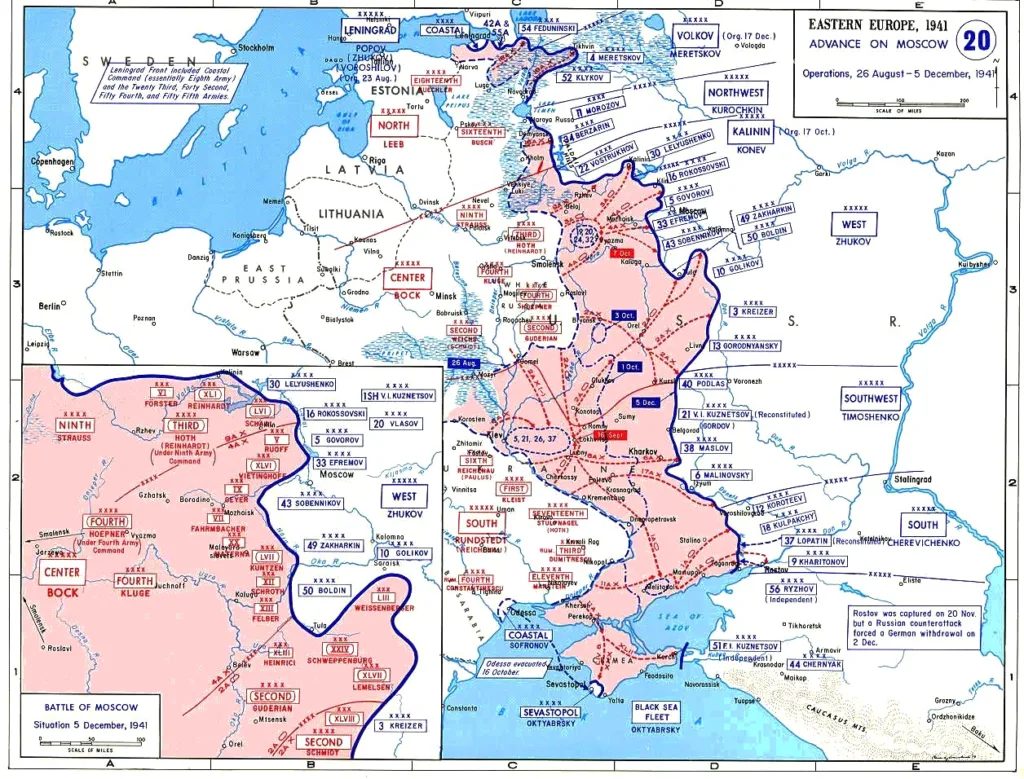
The Battle of Moscow, fought from the end of September 1941 to the early weeks of 1942, was the first major defeat of the German army in the Second World War. The German offensive, codenamed Operation Typhoon, came within about 30 kilometres of the Kremlin before it was stopped in the winter of 1941 and driven back by a Soviet counteroffensive.
Operation Typhoon
After the summer of 1941, in which German forces had turned south to Kiev and north to Leningrad, Army Group Centre resumed the advance on Moscow on 30 September 1941. In the first weeks of October it encircled large Soviet forces near Vyazma and Bryansk. Several hundred thousand Soviet soldiers were taken prisoner in the two pockets.
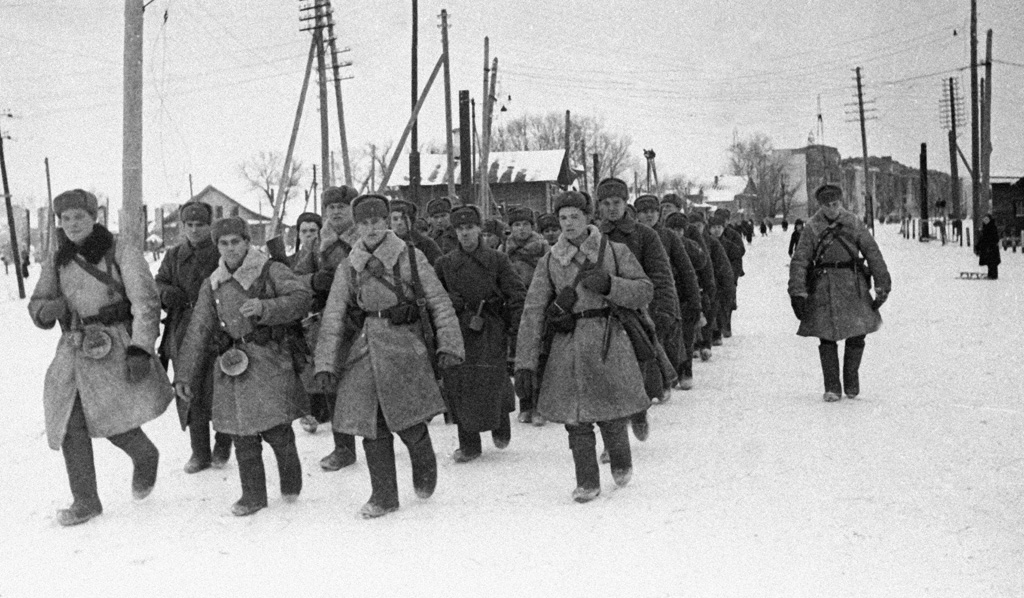
General Georgy Zhukov took command of the defence in October and concentrated the remaining forces on the Mozhaisk line west of the city. Autumn rain turned the roads to mud and slowed the German advance. On 7 November, the anniversary of the revolution, Stalin had the traditional parade held on Red Square; troops marched past the Kremlin and went straight on to the front.
The Podolsk cadets
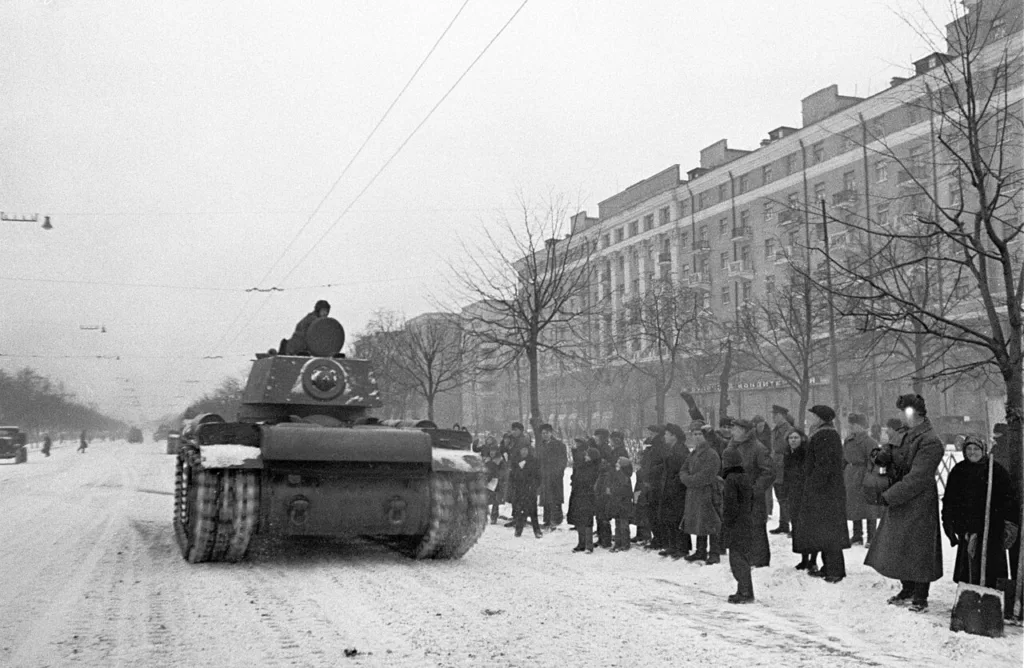
In the first days of October 1941 the road to Moscow through Maloyaroslavets was almost open: the Mozhaisk defence line was unfinished and the reserves were still on their way. Some 3,500 cadets of the Podolsk artillery and infantry schools were sent to hold the Ilyinskoye positions. An advance detachment of cadets fought German motorised troops from 6 to 10 October, and then the main body held the line in fierce fighting from 12 to 20 October, until it was ordered to withdraw. Most of the cadets were killed, but they won the days the command needed to bring up fresh troops.
The capital prepares
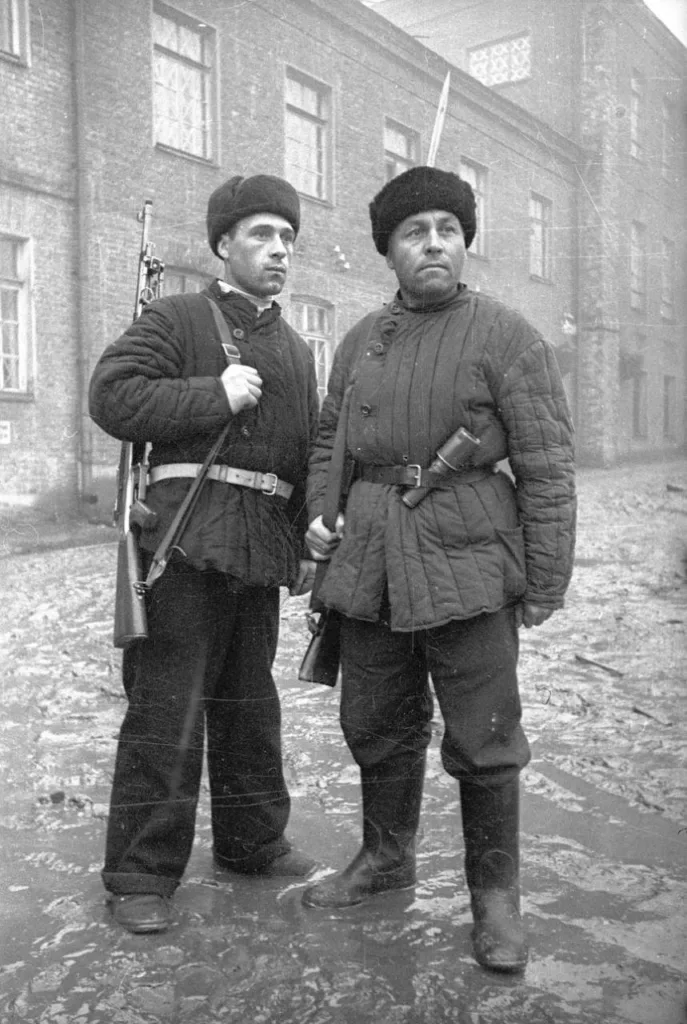
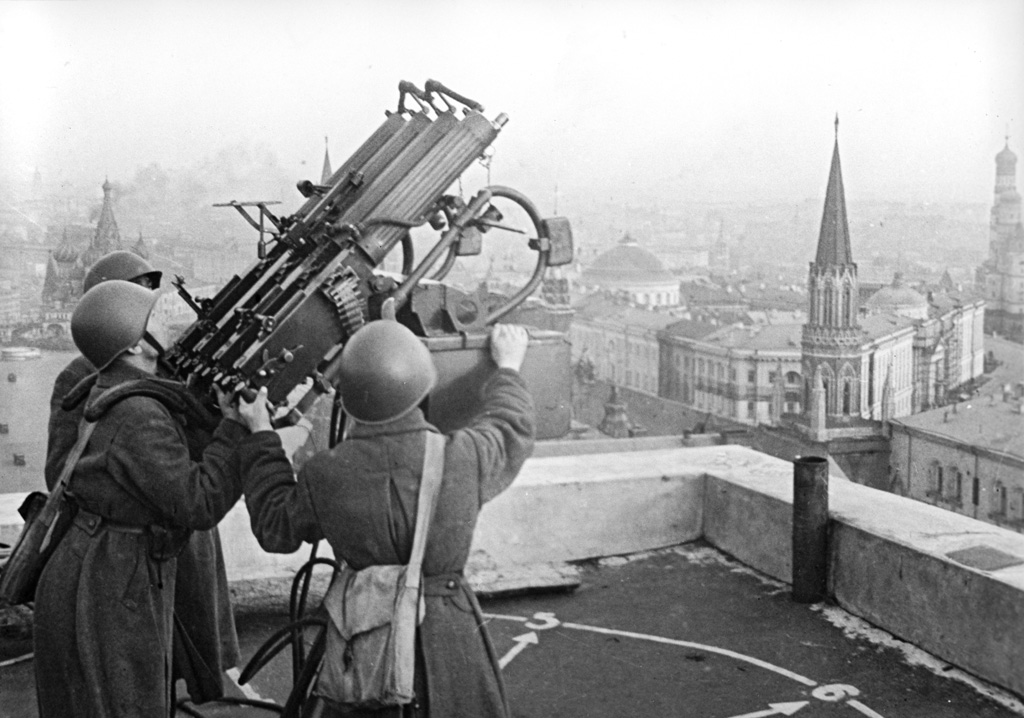
Moscow itself became a front-line city. Hundreds of thousands of Muscovites, most of them women, dug anti-tank ditches and trenches on the approaches to the city, and factory workers and office staff joined the divisions of the people’s militia. Anti-aircraft guns stood on the roofs of the city centre, barrage balloons rose over the streets at night, and before radar was widely available, sound locators listened for approaching German bombers.
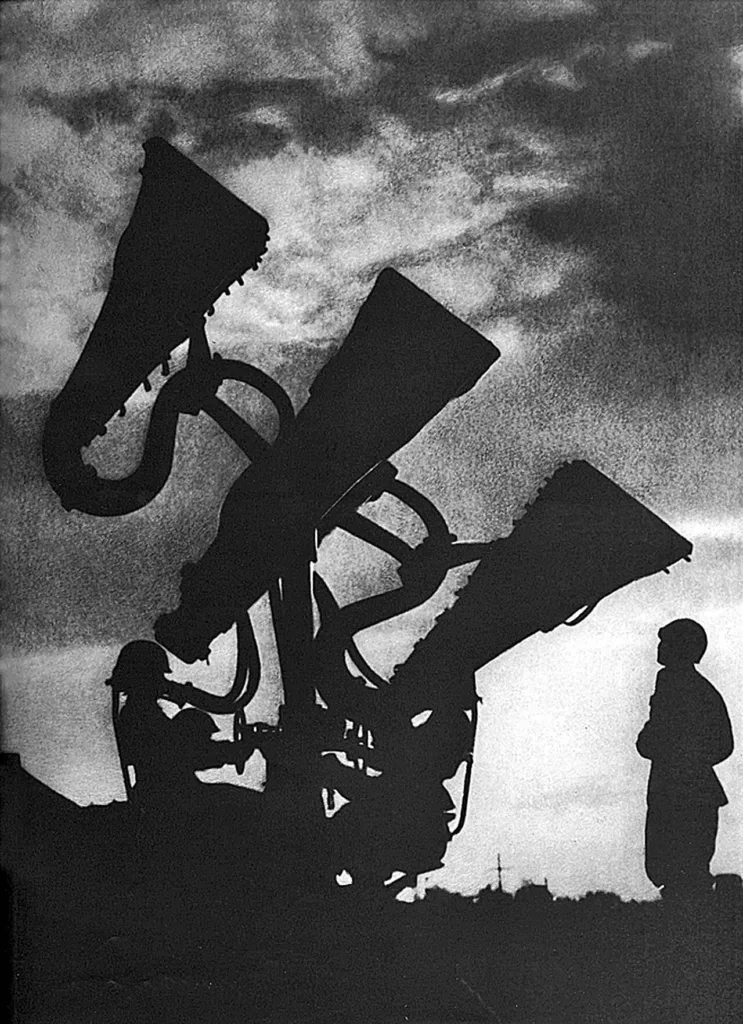
The closest approach
When the frost hardened the ground in November, the German armies attacked again, north and south of the city. In the north they crossed the Moscow–Volga Canal and reached Krasnaya Polyana, a little more than 29 kilometres from the Kremlin; in the south Guderian’s Second Panzer Army failed to take Tula. By the start of December the German divisions were exhausted, short of fuel and without winter clothing in temperatures far below freezing.
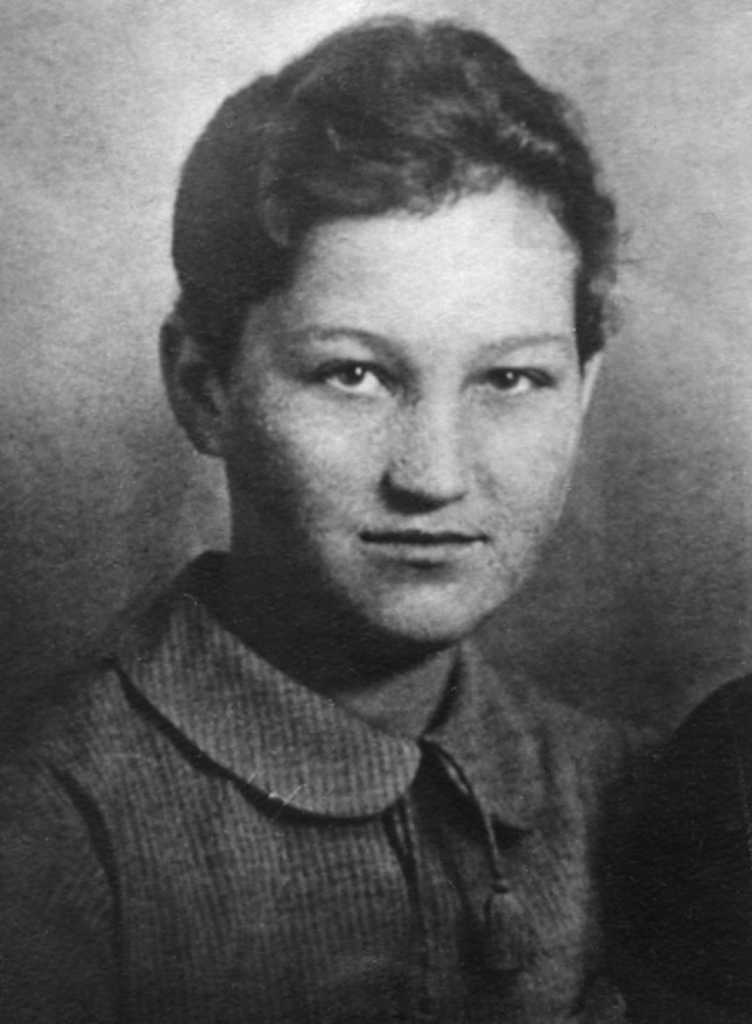
Zoya Kosmodemyanskaya
Behind the German lines, small groups of volunteers carried out sabotage missions. In October 1941 Zoya Kosmodemyanskaya, an eighteen-year-old Moscow schoolgirl, volunteered for partisan unit 9903 of the Western Front staff. On 27 November she and two comrades were sent to the village of Petrishchevo, where German troops were quartered, and set fire to three houses. Returning alone to continue the mission, she was captured. The next morning she was led through the village with a board round her neck and hanged on 29 November 1941. In February 1942 she was posthumously made a Hero of the Soviet Union; her brother Alexander, a tank officer, was also made a Hero of the Soviet Union after he was killed in 1945.
The Soviet counteroffensive
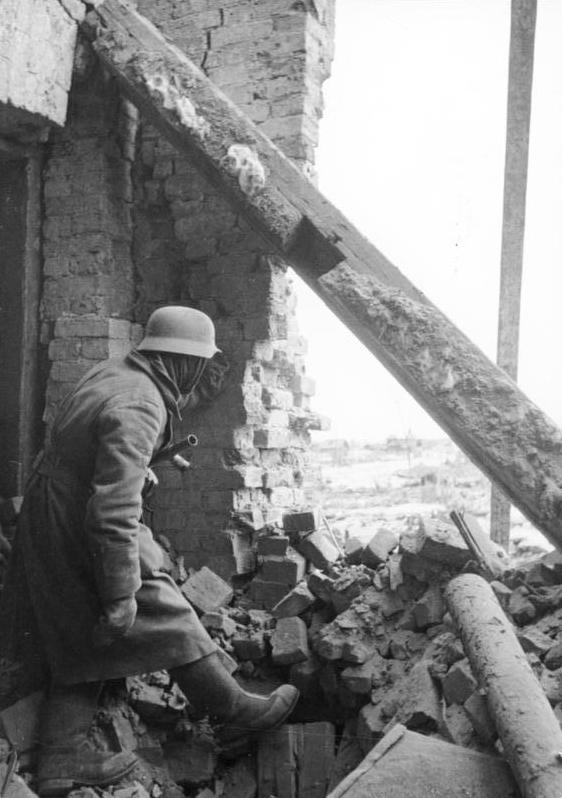
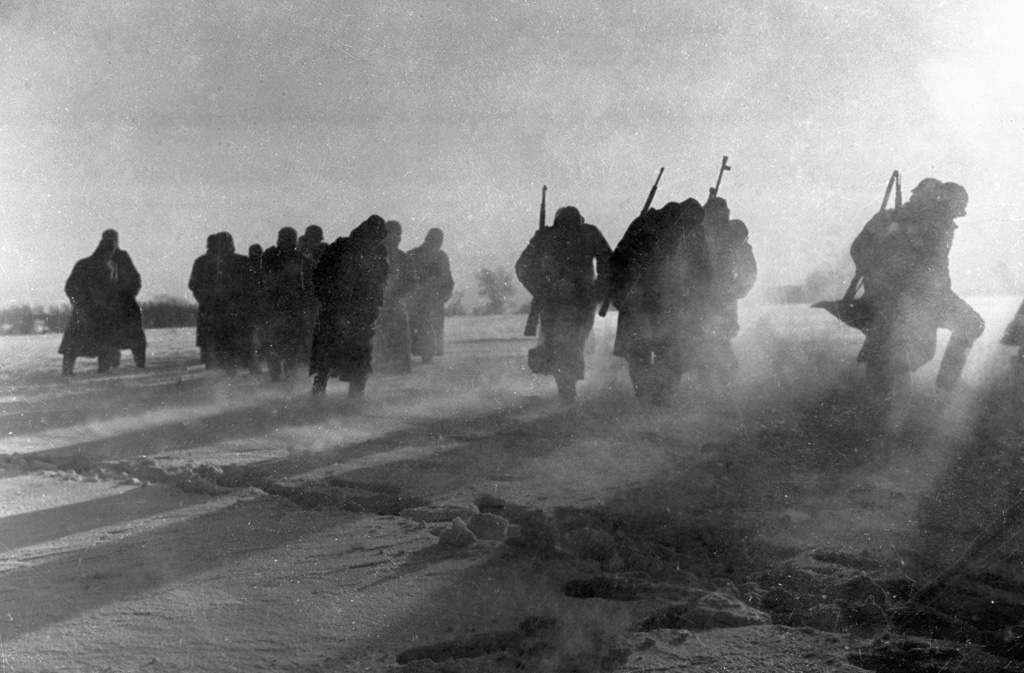
On 5 and 6 December 1941 the Kalinin, Western and South-Western Fronts went over to the attack, using fresh reserves, including divisions brought from the Far East. Tula was relieved on 16 December, and by early January 1942 the German armies had been pushed back from Moscow. In the north the advance was held near Rzhev, where a salient formed that was fought over until March 1943. The fighting west of Moscow continued in the Rzhev–Vyazma operation from January 1942.
Losses and significance
The losses were enormous on both sides. John Erickson, in Barbarossa: The Axis and the Allies, gives 653,924 Soviet casualties between October 1941 and January 1942. German losses ran into the hundreds of thousands. The battle ended German hopes of defeating the Soviet Union in a single campaign.
Helmets and equipment are still found on the battlefields west of Moscow, from the Vyazma area to Rzhev. See our helmets, the guides to German and Soviet soldiers’ equipment, and the other history pages.
Sources and further reading
- Battle of Moscow – Wikipedia
- Битва за Москву – Wikipedia (Russian)
- John Erickson and David Dilks (eds.), Barbarossa: The Axis and the Allies (1994).
- David M. Glantz, Barbarossa Derailed (2010–2015).
Written by WW2ALEX from the sources listed above. Images from Wikimedia Commons are credited in their captions.