
Practical guides for collectors of Second World War helmets and relics: how to identify a model, what the stamps mean, and what to expect from an item recovered from a battlefield. Written from the helmets we handle and checked against published references.
Helmet guides
- German WW2 helmets: M35, M40 and M42 – how to tell the versions apart, decals, maker codes such as ET, EF, NS, SE and Q, and what “ET64” means.
- Soviet WW2 helmets: SSh-36, SSh-39 and SSh-40 – the comb, three rivets or six, factory and size stamps.
- Hungarian and Romanian WW2 helmets – why one Hungarian helmet has three names (35M, M38, M37), and the Dutch-designed Romanian M39.
Equipment guides
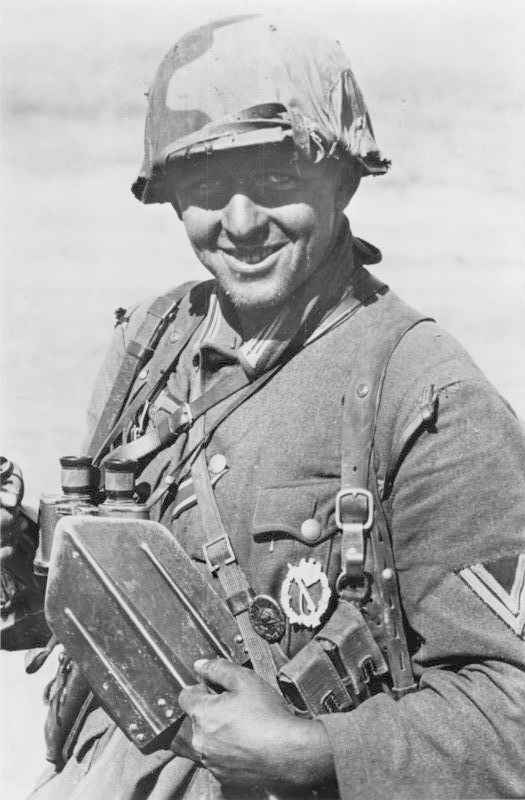
- German soldier’s equipment – belt and buckle, Y-straps, K98k pouches, bread bag, canteen, mess tin, gas mask canister, shelter quarter, identity disc; with wartime photographs.
- Soviet soldier’s equipment – gymnastyorka, belt and pouches, MPL-50 spade, flask, kit bag, rain cape and the soldier’s medallion.
Awards and headgear
- German WW2 awards – the Iron Cross of 1939, the Panzer Badge and the Crimea Shield: who received them, how they were worn, and the post-war 1957 versions.
- The German Wound Badge – the black, silver and gold classes of 1939, how they were made and worn, and the rare 20 July 1944 version.
- German combat badges – the Infantry Assault Badge, the General Assault Badge and the Close Combat Clasp, with their criteria and grades.
- The Eastern Medal and campaign shields – the medal for the winter of 1941/42 and the Narvik, Cholm, Demyansk and Kuban shields.
- Soviet WW2 orders and medals – the Red Star, the Medal For Courage, the Order of the Patriotic War, the Order of Glory and the Victory Medal.
- The budenovka – the Red Army cloth helmet of the Civil War and the interwar years, and why it disappeared before 1941.
For the battles where our items were found, and the people who fought in them, see WW2 history.
How we describe items
Every listing uses the same words for the same things: original, untouched, refurbished, restored, reproduction. See How we describe items.